

Three days in Cairo sounds tight until you realize that most visitors spend half their time lost in traffic, arguing with ticket touts, or waiting in the wrong queue at the wrong pyramid. After spending years guiding travelers through this city — from the plateau at Giza in the early morning light to the narrow alleyways of Coptic Cairo in the afternoon heat — I’ve mapped out the routes that actually work.
This 3-day Cairo itinerary covers the Pyramids and Grand Egyptian Museum on day one, the ancient burial grounds of Saqqara and Dahshur plus Islamic and Coptic Cairo on day two, and the living, breathing heart of Islamic Cairo — the Khan el-Khalili bazaar, the Citadel, and a Nile felucca ride — on day three. It’s structured around traffic patterns, opening hours, and the honest truth about what takes longer than guidebooks admit.
Whether this is your first time in Egypt or you’re finally getting to see the pyramids you’ve dreamed about since childhood, this guide gives you what you need — and keeps the fluff out.
Prefer a guided experience? Browse Egypt Day Trips from Cairo or build a custom journey with Egypt Vacation Packages.
Is 3 Days Enough For Cairo?
Three days is the ideal minimum for a first visit. It lets you cover the Giza Plateau and Grand Egyptian Museum without rushing, spend a full day at the pyramid fields of Saqqara and Dahshur, and still have time to wander through Coptic Cairo and the medieval streets of Islamic Cairo. You won’t see everything — no one does — but you’ll leave with a real sense of the city, not just a checklist of monuments.
If you have a fourth day, add a half-day at the National Museum of Egyptian Civilization (NMEC) in Fustat, or an afternoon exploring the City of the Dead. Cairo rewards patience.
Quick Overview: A Summary of Your 3 Days
| Day | Morning | Afternoon | Evening |
|---|---|---|---|
| Day 1 | Giza Pyramids + Great Sphinx | Grand Egyptian Museum | Khan el-Khalili for dinner |
| Day 2 | Memphis + Saqqara | Dahshur Pyramids | Nile felucca ride |
| Day 3 | Coptic Cairo | Citadel + Mosque of Muhammad Ali | Islamic Cairo / Al-Muizz Street |
Getting around Cairo: What really works
Cairo’s traffic is the first test of every itinerary. The standard advice — “take a taxi, it’s easy” — ignores the reality of a city of 21 million people whose rush hours run from 8–10 am, 1–3 pm, and 5–8 pm. Plan your sightseeing around those windows.
Uber and Careem are the most reliable options for tourists. Both apps work well in Cairo, pricing is transparent, and you avoid the haggling that comes with street taxis. Always pay through the app.
Private driver for the day is worth considering for Day 2 (Saqqara and Dahshur), since these sites are spread across the western desert plateau and public transport won’t get you there. A full-day private car with driver runs roughly $50–80 USD, negotiated the night before through your hotel.
Cairo Metro is excellent for Zamalek to Downtown or Coptic Cairo — fast, cheap (around 10–15 EGP per trip), and genuinely used by locals. Not useful for Giza or the plateau sites.
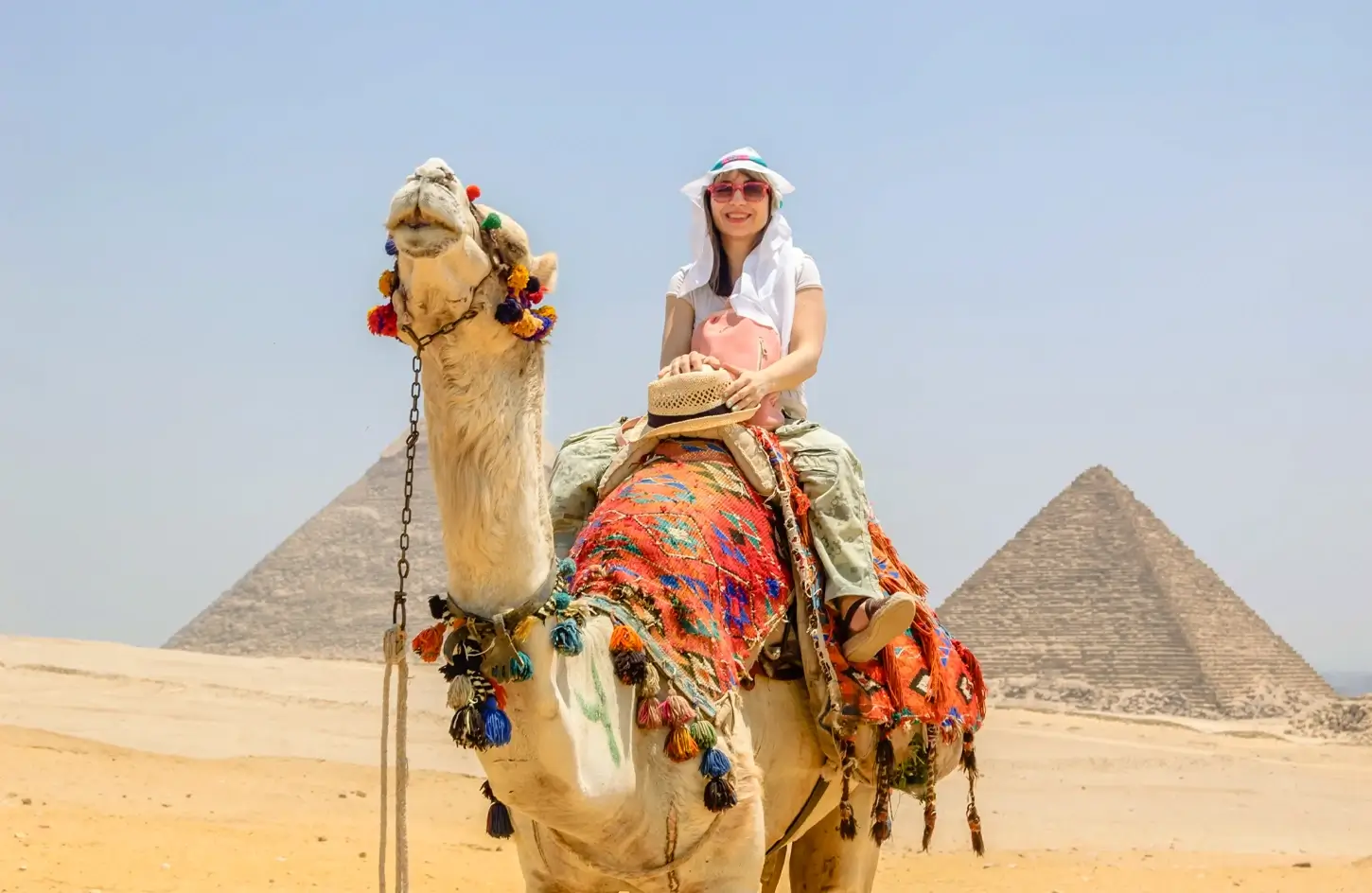
For the Giza Pyramid Complex itself: enter from the main gate on Pyramids Road. Agree on camel or horse ride prices before you mount — EGP 250–400 for a circuit around the plateau is reasonable.
Where to Stay in Cairo
The location question matters more in Cairo than almost anywhere else, because traffic can turn a 5-kilometer journey into a 45-minute crawl.
For the Giza sites (Day 1): Stay on the Giza side — the Marriott Mena House, with the pyramid literally visible from some rooms, is the historic choice. More budget-conscious travelers do well at the Pyramids View Inn or similar guesthouses on the plateau road.
For central access to everything: Zamalek (an island in the Nile) balances proximity to Islamic Cairo, Coptic Cairo, and the Giza road without putting you in the thick of downtown congestion. The Sofitel Cairo Nile El Gezirah is the standout here.
For budget travelers: Downtown Cairo, around Tahrir Square, keeps you in the center. The area around Talaat Harb Street has reliable mid-range hotels within walking distance of the Egyptian Museum and easy metro access.
Browse Egypt Classic Tour Packages that include Cairo accommodation and guided transfers.
Day 1: The Pyramids of Giza, the Sphinx, and the GEM
Morning (7:00 am – 12:30 pm): The Giza Plateau
Arrive at the Giza Pyramid Complex when the gates open at 7:00 am. The difference between 7 am and 10 am at Giza is the difference between having the plateau to yourself and sharing it with forty tour buses. The light in the early morning is also better for photos — soft, directional, with the pyramids throwing long shadows across the sand.
The complex contains the three main pyramids — Khufu (the Great Pyramid), Khafre, and Menkaure — plus the Great Sphinx, the Valley Temple of Khafre, and a scattering of smaller queens’ pyramids and mastaba tombs. Give yourself at least three hours.
Practical notes for Giza:
- Standard entry is around EGP 450 for foreigners (verify current pricing at egypt. travel as fees update regularly)
- Entering the Great Pyramid costs extra (EGP 700–900) and involves a narrow, low ascending corridor — worth it if you don’t have claustrophobia concerns
- The Solar Boat Museum (Khufu’s boat, reassembled beside the Great Pyramid) is an underrated stop — a 43-meter cedarwood vessel buried for 4,500 years
- Hire a licensed Egyptologist guide at the main gate rather than accepting offers from tout guides near the entrance. The difference in quality of explanation is significant.
Afternoon (2:00 pm – 6:00 pm): Grand Egyptian Museum
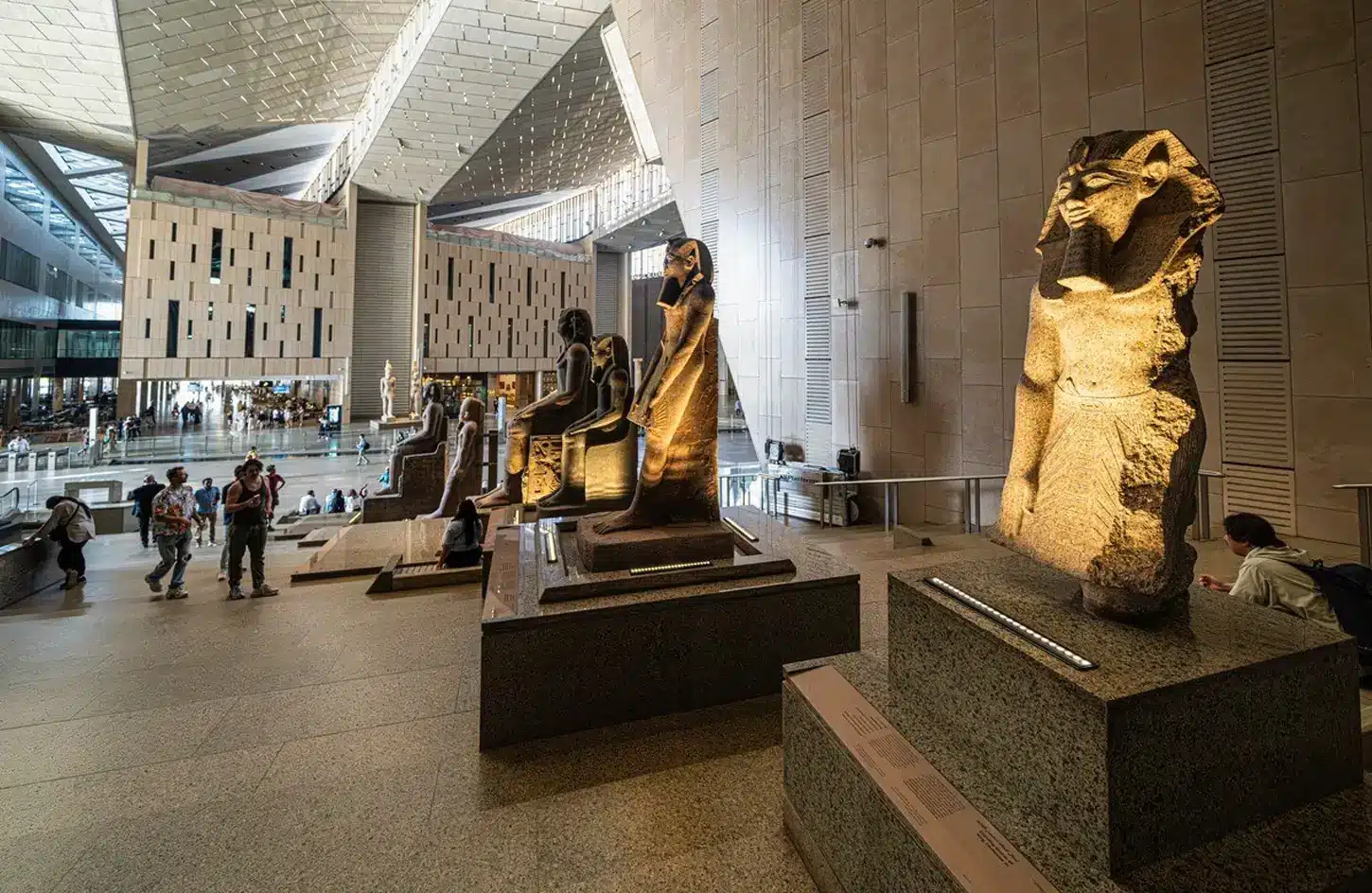
Located just 2 kilometers from the Giza Plateau, the Grand Egyptian Museum opened its full galleries in 2023 and is the world’s largest archaeological museum. Allocate three to four hours minimum — the Tutankhamun galleries alone contain over 5,000 objects, including the golden death mask, the alabaster canopic chest, and the royal chariots.
Don’t skip the Grand Staircase, where 87 colossal royal statues line the approach to the main hall. It’s one of the most dramatic museum entrances in the world.
What to prioritize inside the GEM:
- Tutankhamun’s complete treasure (Hall 44–54)
- The Narmer Palette and Early Dynastic artifacts (ground floor)
- Akhenaten and the Amarna collection
- The Royal Mummies Hall (separate ticket, around EGP 500 additional)
Book GEM tickets in advance at gem.gov.eg — evening sessions (open until 10 pm) are significantly less crowded than afternoon sessions.
Evening: Khan el-Khalili for Dinner
After the museum, head to Khan el-Khalili — Cairo’s 600-year-old bazaar in Islamic Cairo — for dinner. This isn’t just a tourist market (though it is that too). The surrounding streets of Al-Hussein and Al-Muizz are genuinely alive in the evening, with locals drinking tea at Fishawi’s Café (Cairo’s oldest coffeehouse, continuously open since 1773) and families browsing the gold and spice stalls.
For dinner, Naguib Mahfouz Restaurant on El-Badestan Lane serves solid traditional Egyptian food in a setting that won’t overwhelm a first-time visitor. El Fishawy’s is the place to go for tea and shisha before heading back to the hotel.
Book a Cairo Day Tour that covers Giza and the GEM with an Egyptologist guide and private transport.
Day 2: Saqqara, Dahshur, and Memphis – The Pyramids Trail
This is the day most travelers skip and later regret. While Giza gets all the attention, the pyramid fields stretching south from Cairo tell the fuller story: how Egyptian builders evolved from mastaba tombs to step pyramids to the first true smooth-sided pyramids across just a few generations. It’s architectural history playing out in stone across thirty kilometers of desert.
Start early — you’re covering three major sites and the distances between them matter.
Morning (7:30 am – 11:00 am): Memphis + Saqqara
Memphis was the first capital of unified Egypt, founded around 3100 BCE by Pharaoh Narmer (or Menes, depending on which ancient source you prefer). The open-air museum today holds a colossal limestone statue of Ramesses II, originally 13 meters tall, an alabaster sphinx, and various carved monuments. It’s a 30–45 minute stop — evocative rather than vast.
From Memphis, drive 15 minutes to Saqqara, the sprawling necropolis that served the ancient capital for over three millennia. The centerpiece is the Step Pyramid of Djoser, built by the architect Imhotep around 2650 BCE — the world’s oldest surviving stone building of significant size. The pyramid is now open following extensive restoration work.
Within the Saqqara complex, don’t miss:
- The Pyramid of Unas (contains the oldest surviving religious texts in the world — the Pyramid Texts — carved directly onto the burial chamber walls)
- The mastaba of Ti (extraordinary painted reliefs showing Old Kingdom daily life)
- The Serapeum (underground galleries where sacred Apis bulls were entombed in 70-ton granite sarcophagi)
Afternoon (12:00 pm – 3:30 pm): Dahshur
Twenty minutes south of Saqqara, Dahshur is where Pharaoh Sneferu — father of Khufu — built two pyramids that represent the final steps before Giza. The Bent Pyramid changed its angle halfway through construction (possibly due to structural concerns with the steep initial angle), and the Red Pyramid, immediately after, is the world’s first successfully completed smooth-sided pyramid.
Dahshur is rarely crowded. You can often walk to the base of the Red Pyramid and enter its interior with just a handful of other visitors — a stark contrast to the Giza experience. The interior descent is steep, and the air is thick with ammonia from centuries of bat habitation, but emerging into the corbelled burial chamber is genuinely memorable.
Entrance fees: Saqqara complex around EGP 450; Dahshur around EGP 180 (verify current pricing)
Evening: Nile Felucca Ride
Return to Cairo in the late afternoon and end the day with a traditional felucca ride on the Nile at sunset. Catch the boats from the Dokki or Agouza corniche — negotiate EGP 150–250 per hour for the boat (not per person). Watch the city skyline shift from gold to violet as the sun drops behind Giza. It’s the counterweight to a day spent in the desert.

Day 3: Coptic Cairo, the Citadel, and Islamic Cairo
Day three moves from ancient Egypt into the layered religious and medieval history that makes Cairo unlike any other city in the world. You’ll cover Coptic Cairo in the morning, climb to the Citadel’s panoramic heights at midday, and spend the afternoon lost — intentionally — in the streets of Islamic Cairo.
Morning (9:00 am – 12:00 pm): Coptic Cairo
Old Cairo (Mar Girgis neighborhood) is one of the oldest continuously inhabited areas of the city, with a Christian community dating to the first century CE. The area is compact, walkable, and surprisingly calm compared to the rest of Cairo.
What to see:
- The Hanging Church (Al-Muallaqah): Cairo’s most famous Coptic church, built over the gatehouse of a Roman fortress. The suspended nave — which gives the church its name — dates to the 7th century CE. The wooden iconostasis inside is extraordinary.
- The Coptic Museum: Houses the world’s largest collection of Coptic Christian art, from early papyrus manuscripts to medieval textiles and carved stone reliefs
- The Ben Ezra Synagogue: One of the oldest synagogues in Egypt, built on the site where, according to tradition, Moses was found in the rushes
- The Church of Saints Sergius and Bacchus (Abu Serga): Built over a crypt said to be where the Holy Family sheltered during their flight to Egypt
Allow two to two-and-a-half hours. Entry to the Coptic Museum is around EGP 100 for foreigners.
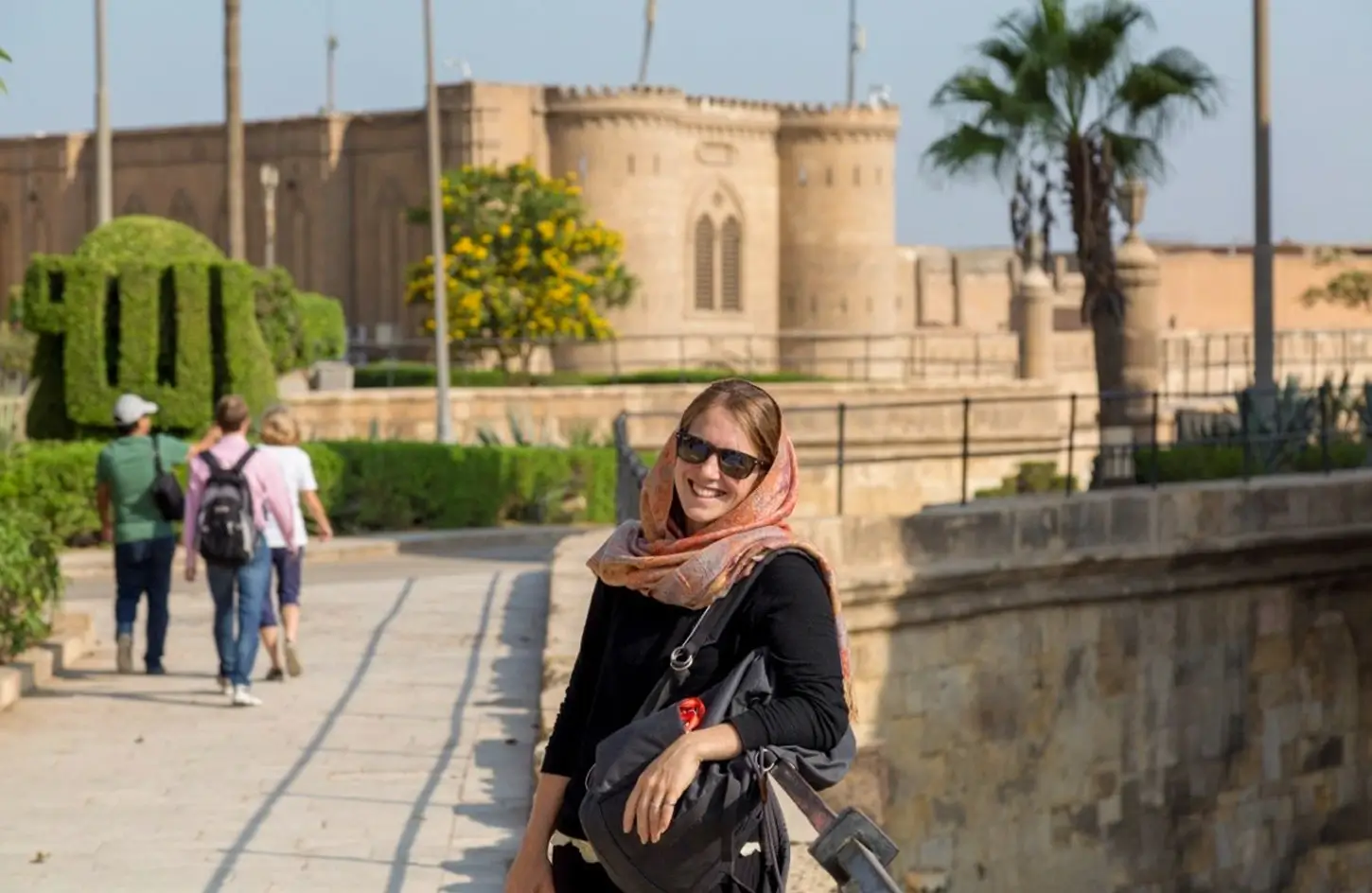
Note on dress: Both the Coptic churches and, later, the mosques in Islamic Cairo require modest dress — covered shoulders and knees for all visitors. Women will be offered a headscarf at mosque entrances. Remove shoes before entering any place of worship.

Afternoon (1:30 pm – 5:00 pm): The Citadel of Salah El-Din
The Citadel dominates Cairo’s eastern skyline from a limestone spur of the Muqattam hills. Built by Salah El-Din (Saladin) in the 12th century as a fortified headquarters against Crusader threats, it served as the seat of Egyptian government for nearly 700 years.
Inside the complex, the Mosque of Muhammad Ali Pasha — built by Egypt’s 19th-century ruler in Ottoman style — is the headline attraction. Its twin minarets and alabaster-clad courtyard are among Cairo’s most photographed landmarks. On a clear day, the view from the esplanade takes in the entire city from Giza to the desert edge.
Also within the Citadel walls: the Military Museum (housed in the former haremlek palace), the Police Museum, and the smaller Mosque of Sultan Al-Nasir Muhammad — a Mamluk masterpiece that predates the Muhammad Ali Mosque by five centuries.
Entry to the Citadel complex is around EGP 450 for foreigners.
Lunch option: Naguib Mahfouz Restaurant in Khan el-Khalili (a short drive from the Citadel) or the cafés along the Citadel esplanade for something lighter.
Evening: Al-Muizz Street & Islamic Cairo
End your Cairo itinerary the right way: on foot through Al-Muizz Li-Din Allah Street, one of the oldest streets in Cairo and a UNESCO-protected collection of medieval Islamic architecture. The street runs from Bab al-Futuh (a 11th-century gate) south through the heart of Fatimid Cairo, lined with merchant khans, domed mausoleums, madrasas, and mosques.
Stop at the Mosque and Madrasa of Sultan Hassan and the Al-Rifa’i Mosque — directly opposite each other on Salah El-Din Square, and together one of the great architectural pairings in the Islamic world. The royal tombs inside Al-Rifa’i include Shah Mohammed Reza Pahlavi of Iran, buried here in exile.
The evening energy on Al-Muizz is unlike anything in daytime Cairo — vendors selling grilled corn, families out for their evening walk, the call to prayer echoing between stone facades. Finish at Fishawi’s Café in Khan el-Khalili for one last glass of mint tea.
An alternative 3-day Cairo itinerary: Option 2
For travelers who have visited the Pyramids and wish to explore Cairo’s culture more deeply, or for those combining visits to Cairo, Luxor, and Aswan, and wanting to cross the plateau:
| Day | Focus |
|---|---|
| Day 1 | Grand Egyptian Museum (full day) + Coptic Cairo + Khan el-Khalili |
| Day 2 | Islamic Cairo in depth: Al-Azhar, Mosque of Ibn Tulun, City of the Dead, Al-Muizz Street |
| Day 3 | Day trip to Alexandria: Bibliotheca Alexandrina, Qaitbay Citadel, Catacombs of Kom el-Shoqafa |
This option is better suited to history-focused independent travelers who want to go deeper rather than broader.
Ready to book? Explore Egypt Vacation Packages or Egypt Short Breaks designed around Cairo and the Nile.
Essential tips for traveling to Cairo
Practical costs (2026 estimates)
| Item | Cost (EGP) | Cost (approx. USD) |
|---|---|---|
| Giza Pyramid Complex entry | 450 | ~9 |
| Grand Egyptian Museum entry | 450 | ~9 |
| GEM Royal Mummies Hall | +500 | ~10 |
| Saqqara complex entry | 450 | ~9 |
| Dahshur entry | 180 | ~3.50 |
| Citadel of Cairo entry | 450 | ~9 |
| Coptic Museum | 100 | ~2 |
| Private guide (full day) | 1,200–2,000 | ~25–40 |
| Private car + driver (full day) | 2,500–4,000 | ~50–80 |
| Uber/Careem (per trip, Cairo city) | 80–200 | ~1.60–4 |
| Felucca hire (per hour) | 150–250 | ~3–5 |
Note: EGP rates fluctuate. Check the current exchange rate before travel.
Dress code and customs
Egypt is a predominantly Muslim country, and conservative dress is both respectful and practical. For the Giza Plateau — all open desert — light, loose clothing covering shoulders and knees protects against the sun as much as it respects custom. For mosques, this is a firm requirement. Shoes must be removed at every mosque entrance; socks are recommended.
Photography inside the Pyramids and certain museum galleries is restricted or charged separately. Always ask before pointing a camera inside religious sites.
Vendor interaction at Giza
The Giza Plateau has a well-established ecosystem of unofficial guides, camel operators, souvenir sellers, and “friends” who want to show you a special viewpoint. None of this is dangerous; all of it is negotiable. The ground rule: agree on any price before accepting a service, and “just looking” means just looking — you’re allowed to say no.
Food to try in Cairo
- Koshari: Egypt’s national street dish — lentils, pasta, rice, fried onions, tomato sauce, and a hit of vinegar. Around EGP 20–40 from street stalls.
- Ful medames: Slow-cooked fava beans with olive oil and cumin, eaten at breakfast across the city
- Ta’ameya: Egyptian falafel made with fava beans rather than chickpeas — lighter and grassier than the Lebanese version
- Hawawshi: Spiced minced meat baked inside crispy bread — the Egyptian equivalent of a meat pie
FAQs About: 3 Day Cairo Itinerary
Is 3 days enough to see Cairo?
Three days covers the essential Cairo experience — the Giza Pyramids, the Grand Egyptian Museum, Saqqara, Coptic Cairo, and Islamic Cairo — without feeling rushed. A fourth day lets you go deeper into the Islamic Cairo district or add a visit to the National Museum of Egyptian Civilization.
What is the best time of year to visit Cairo?
October through April is ideal. Temperatures between November and February are comfortable for long days walking the plateau — typically 15–22°C. Summer (June–August) brings temperatures above 40°C at Giza, which is manageable early in the morning but exhausting by midday. Ramadan doesn’t prevent visiting, but some sites have shorter hours,s and restaurants may be closed until sunset.
How do I get from Cairo airport to the city?
Uber and Careem operate from Cairo International Airport — book in the app before leaving the arrivals hall. A taxi from the official airport taxi desk is also reliable; agree on EGP 400–600 for the journey to central Cairo or Giz, depending on traffic and time of day.
Do I need a guide for the Pyramids?
Not legally, but yes,s practically. A licensed Egyptologist guide at the Giza Plateau adds context that the site itself — which has almost no interpretive signage — doesn’t provide. EgyVacations can arrange private Cairo day tours with an Egyptologist guide and private vehicle.
Can I enter the Great Pyramid of Khufu?
Yes. Entry requires a separate ticket (around EGP 700–900), which must be purchased on-site. The interior features a steep, ascending passage — roughly 660 meters long at a 2626-degree angle with low clearance. It’s genuinely worth the experience, but skip it if you’re prone to claustrophobia.
Is Cairo safe for tourists?
Cairo is generally safe for international tourists. The historical sites, hotel areas, and tourist neighborhoods are well-monitored. Standard urban caution applies — watch your belongings in crowded markets, use app-based transport rather than flagging down random taxis, and keep a photocopy of your passport separate from the original.
How much cash should I bring to Cairo?
Budget roughly $150–200 USD per person per day in Egyptian pounds if you’re paying for entry fees, meals, transport, and guides independently. Larger hotels and some restaurants accept credit cards; markets, entry booths, and local cafés are cash only. ATMs are available at all airports, major hotels, and shopping malls.
What’s the difference between the Egyptian Museum and the Grand Egyptian Museum?
The Egyptian Museum on Tahrir Square (now called the National Museum of Egyptian Civilization or NMEC at its Fustat location) is the older institution, opened in 1902. The Grand Egyptian Museum (GEM) at Giza opened its full galleries in 2023 and houses the complete Tutankhamun collection. If you can only visit one, the GEM is the current priority for its Tutankhamun treasure and modern presentation.
