


The Middle East is one of those regions where reality hits harder than research. You can read everything about Petra and still not be ready for the first glimpse of the Treasury at the end of the Siq. You can know intellectually that Egypt has five thousand years of history, but standing at the base of Khufu’s pyramid at 6 am with no one else around is a different matter entirely.
Yasser Shoaib, an Egyptian tour guide at EgyVacations, has been running private and small-group tours across this region for fifteen years — Egypt, Jordan, Morocco, the UAE, Oman, Turkey, and increasingly Saudi Arabia. This guide is built on that experience: what to prioritize, what’s overhyped, how long you actually need, and what the practical trip-planning decisions look like in 2026.
Quick Answer: The best places to visit in the Middle East in 2026 are Egypt, Jordan, Dubai (UAE), Oman, Morocco, Turkey, and Saudi Arabia (AlUla). For first-timers, Egypt and Jordan are the strongest combination. For luxury, Oman and the UAE. For adventure, Morocco and Oman. For emerging destinations still ahead of mass tourism, AlUla in Saudi Arabia is the answer right now.
Egypt: Ancient Monuments, the Nile & the Red Sea
Egypt is the destination that most travelers say changed them. That sounds like marketing, but it keeps coming up, trip after trip, in the feedback we get from guests. There is something about the scale and age of what Ramesses II and his predecessors built that resets your sense of what humans are capable of.
Top experiences:
- Sunrise at the Pyramids of Giza and the Great Sphinx — go before 7 am in winter, before the buses arrive
- A Nile cruise between Luxor and Aswan, stopping at Karnak, the Valley of the Kings, and Philae Temple
- The Grand Egyptian Museum in Cairo, which finally houses Tutankhamun’s complete treasure collection under one roof
- Snorkeling or diving off Hurghada or Sharm el-Sheikh — among the most biodiverse reef systems in the world
- Islamic Cairo and the Coptic Quarter — a half-day that most package tours skip and most travelers later say was a highlight
- A felucca afternoon between Aswan and Elephantine Island. It costs almost nothing and is one of the most genuinely peaceful hours you can buy in Egypt. Book it through your Aswan day tours operator rather than directly from the waterfront.
Insider tip from Yasser Shoaib: Most visitors spend two days in Cairo. Three is better. Abu Simbel — Ramesses II’s rock-cut temples relocated to save them from the Aswan High Dam — is worth the pre-dawn flight from Aswan. The light inside the inner sanctuary hits the statues for twenty minutes twice a year, but the site is extraordinary any morning.
Best time: October to April. Temperatures in Luxor and Aswan can hit 45°C in July and August — not impossible to visit, but a different experience entirely.
Budget: $80–$180/person/day for mid-range independent travel; luxury Egypt packages typically start from $250/day, including accommodation and guides.
Visa: eVisa available for most Western passports ($25 USD). Also, a visa on arrival at Cairo and Sharm airports.

Jordan: Petra, Wadi Rum & the Dead Sea
For many of our guests, Jordan is the unexpected highlight of the region. The country is compact — roughly the size of Portugal — but it packs in Petra (a site so spectacular it needs no superlatives), the sci-fi landscapes of Wadi Rum, the Dead Sea, one of the best-preserved Roman cities in the world at Jerash, and food that people still talk about weeks later.
Top experiences:
- The Siq approach to Petra — the narrow canyon walk before the Treasury comes into view is the best natural reveal in any archaeological site we know of
- A night at a Bedouin camp in Wadi Rum, sleeping under some of the darkest skies in the Middle East
- Floating in the Dead Sea — the saltiest large body of water on Earth. The buoyancy feels genuinely wrong until you stop fighting it.
- Jerash on a quiet weekday — the colonnaded Roman street and intact oval plaza put it ahead of many better-known Roman sites in Europe
- Hiking the Dana Biosphere Reserve through dry-stone Bedouin villages, down into the Wadi Araba lowlands
Insider tip: The Jordan Pass (JOD 70–80, approximately $100–$115) covers your visa fee and entry to Petra over multiple days, plus 40+ other sites, including Jerash. Buy it before you fly — it saves both money and queue time at the border. Our Jordan tours include it as standard.
Best time: March to May for hiking and outdoor sites. From September to November, if you want to avoid peak summer. Winter in Petra can get cold and occasionally rainy, but it’s dramatically quieter, and the light is extraordinary.
Budget: JOD 80–200/day ($110–$280) mid-range. The Jordan Pass makes a significant dent in the first-day cost.
Visa: Visa on arrival for most Western passports (included in Jordan Pass if purchased in advance).

Morocco: Medinas, the Sahara & the Atlas Mountains
Morocco sits at a crossroads of cultures that shape everything from the food to the architecture. Berber villages in the High Atlas, Arab medinas that predate the Crusades, Saharan dunes in Merzouga, and a coastline running from the Atlantic to the Mediterranean — it is a big country with a lot going on.
Top experiences:
- Fes el-Bali — the medieval medina is a UNESCO-listed labyrinth of around 9,000 streets, tanneries, madrasas, and workshops. Go early morning, before the crowds and before the smell from the Chouara tannery becomes overwhelming.
- Merzouga and the Erg Chebbi dunes — watching the sunset from the top of a 100-meter dune, followed by a night in a Berber camp, is the Sahara experience most travelers visualize
- A traditional riad in Marrakech — the contrast between the chaotic medina outside and the quiet courtyard inside is one of Morocco’s great design tricks
- Chefchaouen — the blue-painted mountain town is Instagrammed to death but still genuinely beautiful in person, especially early morning before the day-trippers arrive
- Hiking in the Atlas: Berber villages in the foothills are an hour from Marrakech, but feel substantially further in time
Insider tip: Fes is better than Marrakech for a slower, more genuine medina experience. Marrakech has more tourist infrastructure (and more hassle). If you can do only one, go to Fes. Our Morocco tours usually last three nights each.
Best time: March to May and September to November. The Sahara is cold at night in winter (sometimes below freezing), which surprises many visitors. Summer in Marrakech is seriously hot.
Budget: $60–$150/day mid-range. Morocco is one of the best value destinations in the region.
Visa: Visa-free for US, UK, EU, Canadian, and Australian passport holders.

Dubai & Abu Dhabi (UAE): Modern Spectacle + Cultural Depth
People either love or feel vaguely exhausted by Dubai. Both responses are fair. The city is genuinely extraordinary as an engineering and hospitality project — the Burj Khalifa, the Palm, the Museum of the Future — and it can feel like every superlative in travel writing is being used simultaneously. What gets overlooked is the older city: Deira, the Gold Souk, the abra water taxis crossing Dubai Creek.
Abu Dhabi deserves a separate two days. The Sheikh Zayed Grand Mosque is, without qualification, one of the most beautiful buildings in the world. The Louver Abu Dhabi and Yas Island’s theme parks add layers that make it a strong family destination.
Top experiences in Dubai:
- Sunset from the Burj Khalifa observation deck (book weeks ahead in peak season)
- A desert safari in the Dubai Desert Conservation Reserve — dune bashing, camel riding, and a Bedouin camp dinner
- The Gold Souk and Spice Souk in Deira — real commercial markets, not tourist recreations
- An abra ride across Dubai Creek for AED 1 (about $0.30) — the most underpriced experience in the city
Top experiences in Abu Dhabi:
- Sheikh Zayed Grand Mosque — go at dusk when the white marble and floodlighting are at their best
- Louver Abu Dhabi — the permanent collection spans civilizations in a way most regional museums don’t attempt
- Ferrari World and Yas Waterworld for families, or the F1 Grand Prix circuit if your timing is right
Best time: November to March. July and August regularly exceed 45°C outdoors. Check out our tour packages to Dubai
Budget: AED 500–1,500/day ($135–$410). The UAE is the region’s premium-price destination.
Visa: Visa on arrival for 100+ nationalities (30 days). eVisa for others.

Oman: The Gulf’s Most Underrated Country
Oman is what travelers who burned out on Dubai usually discover next — and then can’t stop talking about. It is cleaner, quieter, dramatically more beautiful, and largely untouched by the kind of mass tourism that has flattened other Gulf destinations. The infrastructure is excellent. The people are extraordinarily hospitable. The landscapes — from the fjord-like Musandam Peninsula to the vast orange dunes of the Wahiba Sands — are genuinely stunning.
Top experiences:
- Jebel Shams (the “Grand Canyon of Arabia”) in the Al Hajar Mountains — a 3-hour drive from Muscat, a world away in atmosphere
- The Musandam Peninsula fjords — rent a dhow for the day and snorkel in water that is improbably clear
- Wahiba Sands — spending a night in the desert here, away from any camp, is possible with a 4WD and about $30 of advance planning
- Nizwa Fort and the Friday livestock market — the goat market specifically is one of the most genuine and entertaining experiences in the region
- Ras Al Jinz Turtle Reserve — sea turtles nesting on a beach at 2 am is not a travel cliché; it is actually magnificent
- Salalah during the Khareef monsoon (July–August): the landscape turns green in a country most people only associate with sand
Insider tip: Rent a 4WD. Most of Oman’s best landscapes require it. A standard sedan will get you to Muscat, Nizwa, and the main highway. Everything else — Jebel Akhdar, Wadi Shab, the dunes — requires ground clearance. Our Oman tours include 4WD transport as standard for off-road sections.
Best time: October to April for the north. June to August for Salalah and the Khareef.
Budget: $100–$250/day mid-range. Luxury Six Senses and Alila properties are world-class.
Visa: eVisa, straightforward for most Western passports.

Turkey: Istanbul, Cappadocia & the Aegean Coast
Turkey spans two continents and something like 8,000 years of layered civilization — Byzantine, Ottoman, Greek, Roman, Hittite. It is a country of almost inexhaustible variety, and outside Istanbul and Cappadocia, it remains considerably less crowded than the attention it deserves.
Top experiences:
- A hot air balloon over Cappadocia’s fairy chimneys at sunrise — genuinely one of the great travel experiences, not hype
- Istanbul: Hagia Sophia and the Blue Mosque in Sultanahmet, the Grand Bazaar, the Bosphorus ferry
- A traditional Turkish hammam — most tourists skip it, most who try it become converts
- The Turquoise Coast by gulet (traditional wooden sailing boat) — Göcek, Ölüdeniz, Kaş
- Ephesus — the best-preserved large Roman city you can walk through without a permit
- The Lycian Way long-distance trail for serious hikers
Insider tip: Book your Cappadocia hot air balloon the moment you arrive, not the night before. The flights sell out weeks ahead in April–June and September–November. Our Turkey tours pre-book balloon flights as part of the itinerary.
Best time: April–June and September–November. Istanbul is pleasant year-round. The Aegean coast is best from May to October.
Budget: $70–$180/day mid-range. Turkey offers exceptional value for its quality of experience.
Visa: eVisa ($50–60 for most Western passports), takes minutes online.

Saudi Arabia: AlUla & the Rise of the Kingdom
Saudi Arabia was essentially closed to tourism until 2019. In five years, it has launched an e-visa system, a music festival circuit, and AlUla — one of the most extraordinary archaeological destinations on the planet that almost no one has heard of yet.
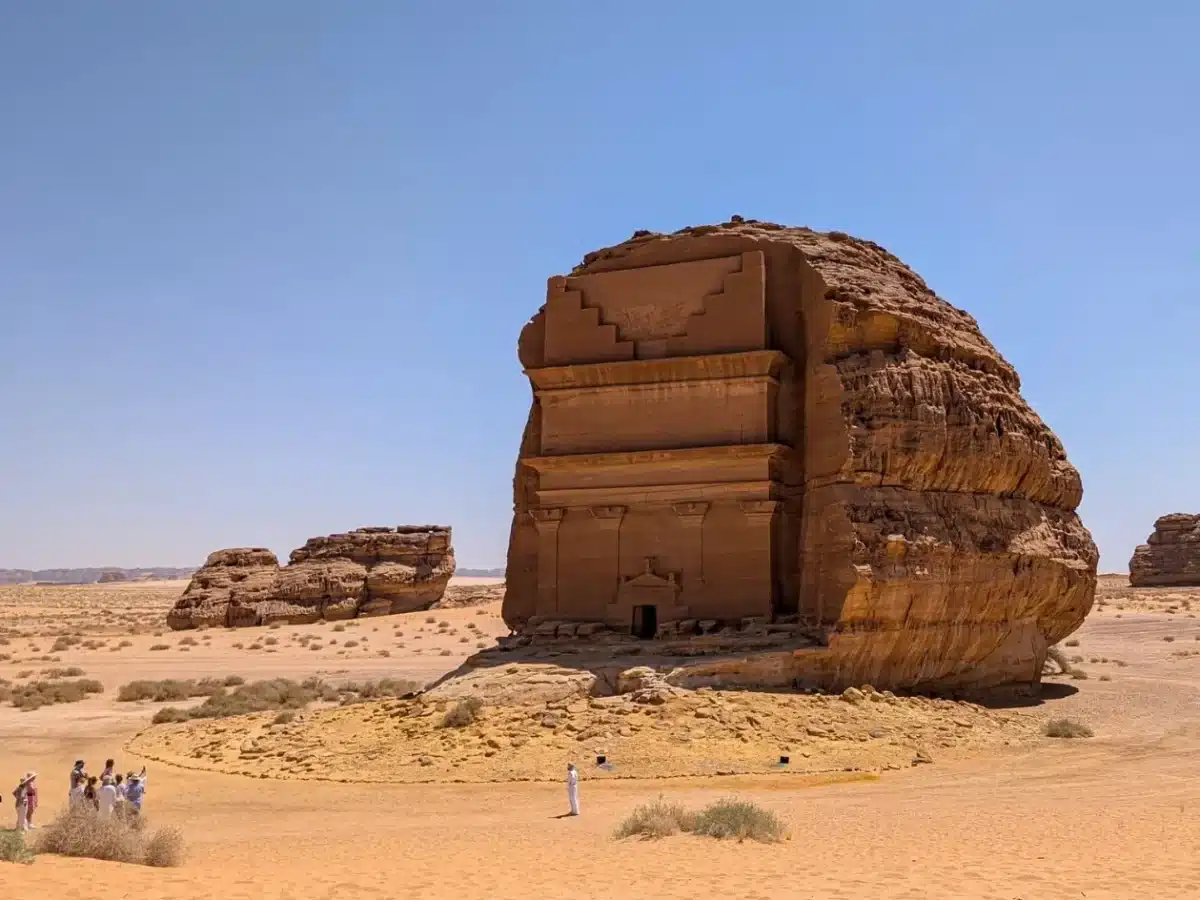
AlUla and Hegra: Saudi Arabia’s first UNESCO World Heritage Site contains 111 Nabatean tombs carved directly into sandstone outcrops. The Nabateans — the same civilization that built Petra in Jordan — created Hegra as a sister city. The comparison is apt: the scale and workmanship are similar, the crowds are a fraction. Elephant Rock, a 52-meter natural sandstone formation, is a ten-minute drive from the main site. Maraya, the world’s largest mirrored building (reflecting nothing but desert), hosts the Tantora winter music festival and occasional opera performances.
Jeddah’s Al-Balad: The UNESCO-listed old town of Jeddah, with its tower houses and coral-stone architecture, is an under-visited urban historical site that rewards a day of slow walking.
Insider note: AlUla is positioned as a premium destination — Saudi Arabia is investing heavily in it and prices reflect that. Visit now, before it gets the infrastructure and visitor numbers Petra has.
Best time: October to March. Summer temperatures are extreme.
Budget: SAR 800–2,000/day ($210–$530). AlUla is not a budget destination.
Visa: Saudi tourist e-visa for 49 nationalities. Quick application, usually approved within 24 hours.
Destination Comparison at a Glance
| Destination | Visa | Best Season | Safety | Daily Budget | Must-See |
|---|---|---|---|---|---|
| Egypt | eVisa / On Arrival ($25) | Oct–Apr | ★★★★ | $80–$180 | Pyramids, Nile Cruise |
| Jordan | On Arrival (free with Jordan Pass) | Mar–May | ★★★★★ | $110–$280 | Petra, Wadi Rum |
| Morocco | Visa-Free (most) | Mar–May | ★★★★ | $60–$150 | Fes Medina, Sahara |
| Dubai / UAE | On Arrival (100+ nationalities) | Nov–Mar | ★★★★★ | $135–$410 | Burj Khalifa, Desert Safari |
| Oman | eVisa | Oct–Apr | ★★★★★ | $100–$250 | Musandam, Wahiba Sands |
| Turkey | eVisa ($50–60) | Apr–Jun | ★★★★ | $70–$180 | Cappadocia, Istanbul |
| Saudi Arabia | eVisa (49 nationalities) | Oct–Mar | ★★★★★ | $210–$530 | AlUla / Hegra, Al-Balad |
Safety ratings based on Foreign Ministry travel advisories and visitor crime statistics, 2025–2026.
Multi-Country Middle East Itineraries
One of the practical advantages of traveling in this region is how close the destinations sit to each other. Cairo to Amman is a 90-minute flight. Istanbul to Dubai is four hours. Here are three itineraries that work well:
Egypt + Jordan (10–12 days) 3 nights Cairo (Pyramids, Grand Egyptian Museum, Islamic Cairo) → 3 nights Luxor/Aswan with a Nile cruise → fly to Amman → 2 nights Petra → 1 night Wadi Rum → 1 night Dead Sea. This is the classic combination for first-timers and runs year-round, October–April.
Egypt + Jordan + Dubai (14 days) Same as above, plus a 3-night Dubai extension. Dubai is a logical last stop — Emirates, flydubai, and Air Arabia all fly direct from Amman and Cairo.
Turkey + Oman (12 days) 3 nights Istanbul → 2 nights Cappadocia → fly to Muscat → 2 nights Muscat → 2 nights Nizwa/Jebel Akhdar → 2 nights Wahiba Sands. Less obvious pairing, excellent contrast between coastal Ottoman culture and Gulf Arabian wilderness.
For a bespoke itinerary across any combination of these destinations, see our Middle East multi-country tours.
Best Middle East Destination by Travel Style
For families: Dubai first — the theme parks, safety infrastructure, and variety work for mixed ages. Egypt’s second history that actually lands with older children. Jordan third — Petra and Wadi Rum are accessible and genuinely exciting.
For couples: Morocco’s riads are designed for exactly this. Oman’s luxury eco-lodges (Six Senses Zighy Bay, Alila Jabal Akhdar) are among the best in the world. Turkey’s gulet cruises along the Turquoise Coast are a strong third.
For solo travelers: Turkey is the easiest — excellent transport, strong hostel infrastructure, easy to navigate independently. Morocco works well with a bit more preparation. Egypt, with a reputable guide or tour operator, is very manageable — solo independent travel in Cairo is doable but requires more resilience.
For adventure: Oman for hiking and diving. Jordan for canyoning, climbing, and the Jordan Trail. Morocco for the Atlas trekking and the Sahara camping. All three reward travelers willing to get off the main circuit.
For solo female travelers: Oman and Jordan are consistently rated among the safest destinations worldwide for women traveling alone, not just in the Middle East. Morocco and Egypt require more street awareness, but are confidently navigated by thousands of solo female travelers every year. Dressing modestly, booking accommodation in advance, and using a reputable local guide for day trips make a significant practical difference.
For budget travelers: Morocco and Turkey offer extraordinary value — $60–$80/day in Morocco is a comfortable mid-range experience, not a budget compromise. Egypt outside peak season (July–September) is genuinely cheap.
For first-timers: Jordan for two weeks if you can only go once. Egypt + Jordan for two weeks if you can manage it. Both have the infrastructure for nervous first-timers and the history to completely reframe your understanding of human civilization.
FAQs About: Best places to visit in the Middle East
What is the safest country in the Middle East for tourists?
Oman, Jordan, and the UAE (including Dubai) are consistently among the safest tourist destinations globally — not just in the region. All three have extremely low crime rates, well-developed visitor infrastructure, and decades of experience with international tourism. Morocco and Egypt are safe in their main tourist corridors; Turkey’s western and central regions are widely and safely visited. Saudi Arabia has improved dramatically since opening to tourism in 2019.
Do I need a visa to visit the Middle East?
It depends on your passport and destination. Most Western passport holders can get a visa on arrival or eVisa for Egypt ($25 eVisa), Jordan (free with Jordan Pass), the UAE (on arrival for 100+ nationalities), Oman (eVisa), Turkey (eVisa, $50–60), Morocco (visa-free), and Saudi Arabia (eVisa for 49 nationalities). Always verify current requirements before traveling — policies change.
What is the best time of year to visit the Middle East?
October to April comfortably covers most of the region. The UAE and Oman are best from November to March. Egypt and Jordan are excellent in spring (March–May) and autumn (September–November). Morocco is pleasant almost year-round, but best in spring and autumn. Turkey peaks April–June and September–November. Saudi Arabia’s AlUla is open only from October to March — summer heat is extreme. The exception is Salalah in Oman, where the Khareef monsoon (July–August) turns the landscape green in a way that feels genuinely unlike the rest of the Arab world.
Which Middle East country is the cheapest to visit?
Morocco and Turkey offer the best value. Morocco’s $60–$80/day mid-range budget competes with Southeast Asia. Turkey is similarly priced. Egypt is very affordable outside Cairo’s international hotel market. The UAE and Saudi Arabia are the premium end — significantly more expensive than the rest.
Is the Middle East good for solo female travelers?
Yes, with appropriate preparation. Oman and Jordan are among the most comfortable destinations worldwide for women traveling solo. Morocco and Egypt require more street-level awareness — harassment in medinas and tourist areas is not uncommon — but both are managed confidently by thousands of solo female travelers each year. The practical differences: dress modestly at religious sites and in conservative areas; book accommodation in advance; use a local guide for isolated or off-circuit destinations. Egypt and Morocco are much easier with a reputable operator than independently.
What is the best way to travel between Middle Eastern countries?
Flying is the most practical option. Budget carriers — flydubai, Air Arabia, Fly Jordan, Nile Air — connect regional cities cheaply. The Amman–Cairo route has multiple daily flights. Jordan’s land borders (with Israel/Palestine and with Saudi Arabia) are viable for overland travelers. Our multi-country tours handle all logistics as part of the package.
Which Middle East country is best for a first visit?
Jordan. It is compact, extremely safe, and English is widely spoken in tourist areas; Petra delivers an experience that justifies the entire trip on its own. Egypt is equally rewarding but larger and more logistically demanding. Jordan is also an excellent gateway — it shares a land border with Israel/Palestine and has efficient flights to Cairo.
Related articles:
