

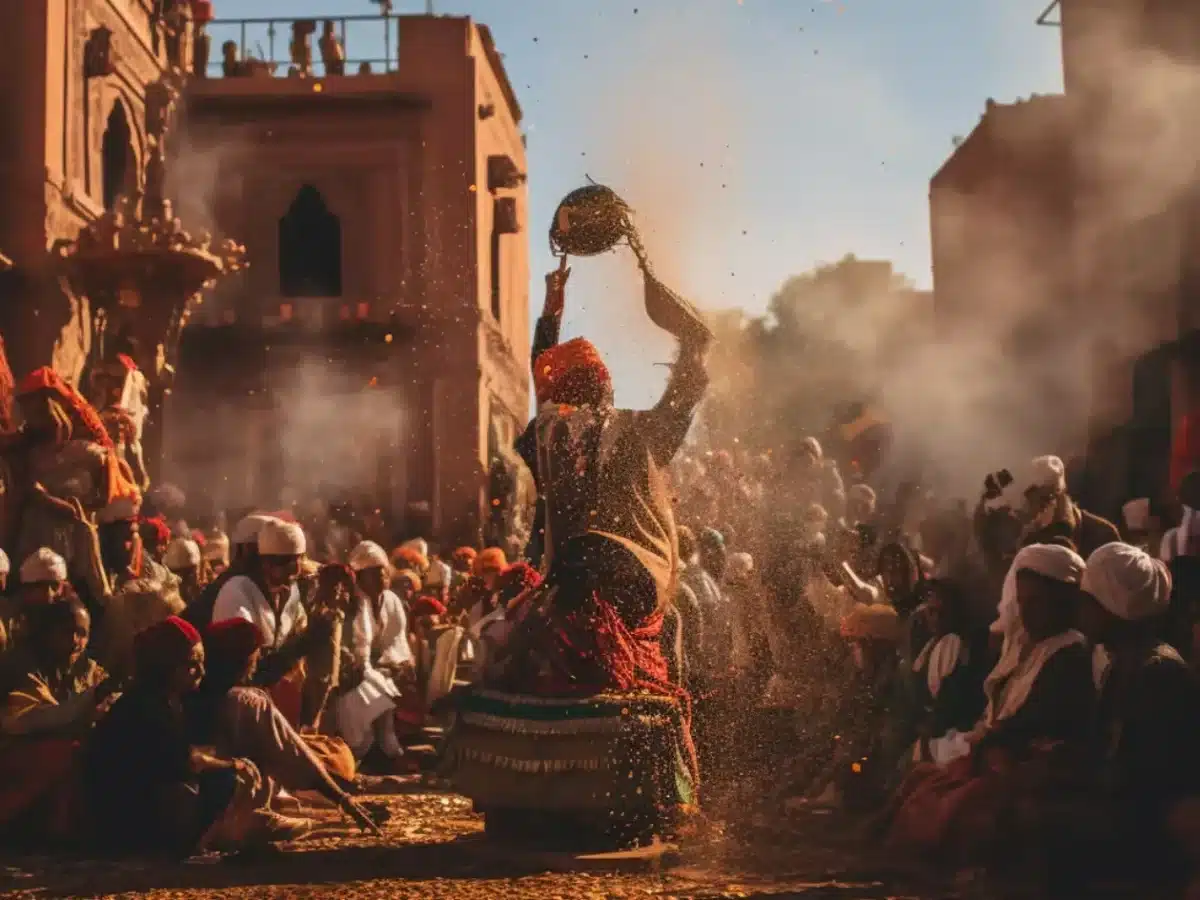
Morocco runs on celebration. Every few weeks, somewhere across the country’s medinas, Atlantic coastline, mountain valleys, and Saharan borderlands, a festival pulls communities into the streets. Some have happened annually for centuries. Others started in the 1990s and now draw millions from around the world. All of them offer something that a museum or a guidebook can’t: Morocco unscripted.
This guide covers the best festivals in Morocco — from the mystical Gnaoua World Music Festival in Essaouira to the rose-soaked streets of El Kelaa des M’Gouna, from the spiritual intensity of the Fez Festival of World Sacred Music to the Amazigh New Year celebrations in the Atlas.
For each event, you’ll find the typical dates, what to expect on the ground, and practical advice for visiting as an international traveler. If you’re planning a trip to Morocco and want to time it around one of these cultural events, you’re making a genuinely excellent decision.
What Is a Moussem? (Morocco’s Unique Festival Tradition)
Before diving into specific events, it’s worth understanding one term that comes up constantly: moussem. A moussem (also spelled mussem or mousssem) is a traditional Moroccan gathering — part religious pilgrimage, part community fair — held annually to honor a saint, mark a seasonal event, or celebrate a regional tradition. They predate Morocco’s modern festivals by centuries and are often far more raw and atmospheric than the internationally promoted events.
Some moussem have been recognized by UNESCO as Intangible Cultural Heritage, including the Moussem of Tan-Tan, which brings together over 30 nomadic Saharan tribes for camel races, poetry, music, and craft markets. If you encounter a moussem while traveling through rural Morocco, count yourself lucky — they’re the real thing.
👉 Planning your trip around Morocco festivals? Make sure you read our full guide, “Is It Safe to Travel to Morocco in 2026,” to travel with confidence and peace of mind.
Morocco Festival Calendar — Quick Reference
Use this table to plan your trip around specific events:
| Festival | Location | Typical Timing | Highlights |
|---|---|---|---|
| Yennayer (Amazigh New Year) | Atlas Mountain villages, Agadir, Tiznit | January 12–13 | Berber music, traditional food, cultural dress |
| Festival of Roses | El Kelaa des M’Gouna (Dades Valley) | May (varies with harvest) | Rose parade, Rose Queen, Berber music, markets |
| Sefrou Cherry Festival | Sefrou (near Fez) | June (2nd week, approx.) | Cherry harvest, Miss Cherry pageant, folklore |
| Fez Festival of World Sacred Music | Fez (various venues) | May–June (10 days) | Sacred music, Bab Makina concerts, Sufi performances |
| Gnaoua World Music Festival | Essaouira | June (4 days) | Gnaoua trance music, global collaborations, free stages |
| Mawazine Festival | Rabat | June (10 days) | 2.5M+ attendees, international headliners, free outdoor stages |
| Asilah International Cultural Festival | Asilah (Atlantic coast) | July (3 weeks) | Mural painting, music, art, Atlantic whitewashed medina |
| Marrakech Popular Arts Festival | Marrakech (Jemaa el-Fna) | July | Gnawa, Berber dance, acrobatics, traditional crafts |
| Imilchil Marriage Festival | Imilchil (Middle Atlas) | September | Berber tribal gathering, traditional betrothals, souks |
| Moussem of Tan-Tan | Tan-Tan (southern Morocco) | Variable | UNESCO event, nomadic tribes, camel races, poetry |
| Ramadan & Eid al-Fitr | Nationwide | Lunar calendar (Feb–Mar in recent years) | Nightly iftar, street life, prayer, family celebration |
| Eid al-Adha | Nationwide | Lunar calendar (approx. 70 days after Eid al-Fitr) | Communal celebration, traditional feasts, animal sacrifice |
Note: Islamic festival dates shift annually with the lunar calendar. Always confirm the exact dates for the year before booking.
Morocco’s Major Music Festivals
Fez Festival of World Sacred Music
Every May or June, the ancient city of Fez hosts what has become one of the world’s most extraordinary music events. The Fez Festival of World Sacred Music was founded in 1994 with a quiet but ambitious purpose: to gather musicians from faith traditions across the globe and let them perform in one of Islam’s great medieval cities.
What makes it genuinely different from other world music events is the architecture. Performances take place in venues that most visitors never access on a normal trip — the courtyard of Bab Makina palace, the gardens of the Bou Jeloud cultural center, and the ruins of the Merenid tombs at night. Sufi chanters share the program with gospel choirs, Andalusian orchestras, and Tibetan monks. The combination is strange and, somehow, exactly right.
Tickets for the main Bab Makina evening concerts typically go on sale in March. Book accommodation in Fez’s medina at least 3–4 months in advance — the city fills quickly during the festival week.
🎒 Attending festivals means being prepared! Check out our complete Morocco Packing List to know exactly what to wear and bring for every season and celebration.
Mawazine Festival — Rabat
Mawazine is Morocco’s largest music festival and one of the world’s biggest outdoor music events, drawing over 2.5 million attendees over its ten-day run in Rabat each June. It operates across multiple outdoor stages throughout the city, with the main OLM-Souissi stage hosting international headline acts — past performers have included international pop and R&B superstars.
What’s unusual about Mawazine is that much of it is free. The paid, ticketed shows at OLM-Souissi are for major headline acts, but the satellite stages (including a dedicated Moroccan music stage) are open-access and often more interesting. If you’re in Rabat during the festival and have no interest in the headliners, you can still spend three or four evenings watching excellent Moroccan and African music at no cost.
Rabat’s medina and kasbah of the Udayas are worth exploring before or after festival shows — the city is often overlooked by visitors who pass through on the way to Marrakech, and the festival is a good reason to linger.

Gnaoua World Music Festival — Essaouira
The Gnaoua World Music Festival was founded in 1998 in Essaouira, Morocco’s wind-battered Atlantic port city, to preserve and share the music of the Gnaoua people — a community descended from sub-Saharan slaves brought to Morocco between the 15th and 19th centuries. Gnaoua music is not simply a performance; it is traditionally tied to healing rituals called lila, in which trance states are induced through repetitive rhythms, specific colors, and incense.
The festival takes what is essentially ritual music and places it in conversation with jazz, blues, and electronic artists from around the world. The collaborations are often remarkable. Past editions have paired Gnaoua masters (called maalem) with jazz musicians, flamenco guitarists, and blues performers to genuinely affecting effect.
Essaouira during the festival is chaotic and wonderful. The medina’s blue-and-white walls throb with sound from multiple stages, including large free outdoor stages on the beach and the main port area. Book accommodation 9–12 months in advance — the town has limited riad stock, and it disappears fast.
📅 Timing is everything! Discover the Best Time to Visit Morocco to align your trip with the most exciting festivals and perfect weather.
Marrakech Popular Arts Festival
The Marrakech Popular Arts Festival (Festival National des Arts Populaires) has run every July for decades, and it remains one of the best introductions to the full breadth of Moroccan traditional performance. Held primarily around Jemaa el-Fna square and the El Badi Palace, the festival brings performers from across Morocco’s diverse regions — Atlas Berber dancers, Gnawa musicians from the south, Aissawa Sufi brotherhoods, fantasia (equestrian display) troupes from the plains.
It’s aimed primarily at Moroccan audiences, which makes it feel more authentic than events designed for international tourists. Expect large crowds, late nights, and street food vendors making the most of the audience. Workshops on Moroccan crafts and music are often available alongside the main performances.
🍲 No festival is complete without food! Dive into Moroccan Cuisine and explore the flavors, street food, and traditional dishes you’ll experience during celebrations.
Traditional and Cultural Festivals in Morocco
Festival of Roses — El Kelaa des M’Gouna
Each spring, the Dades Valley in the foothills of the Atlas Mountains turns pink. The Damask roses grown here — harvested for rose water, essential oil, and perfume — bloom for just a few weeks, and the valley celebrates with its annual Festival of Roses.
The festival typically runs over a weekend in May (though dates shift with the harvest—sometimes late April) —centered on El Kelaa des M’Gouna. A Rose Queen is elected and crowned. Floats covered in rose petals parade through the town while Berber musicians play. The streets fill with vendors selling rose-scented oils, soaps, and cosmetics. Children wear rose garlands. Women arrive in sequined kaftans decorated with petals.
This is one of the most photogenic and genuinely joyful events in Morocco. It’s not a major international draw the way Mawazine or Gnaoua are, which means it’s less crowded and more locally flavored. Combine it with a drive through the Dades Gorge or a night in a desert kasbah at Merzouga.
Imilchil Marriage Festival
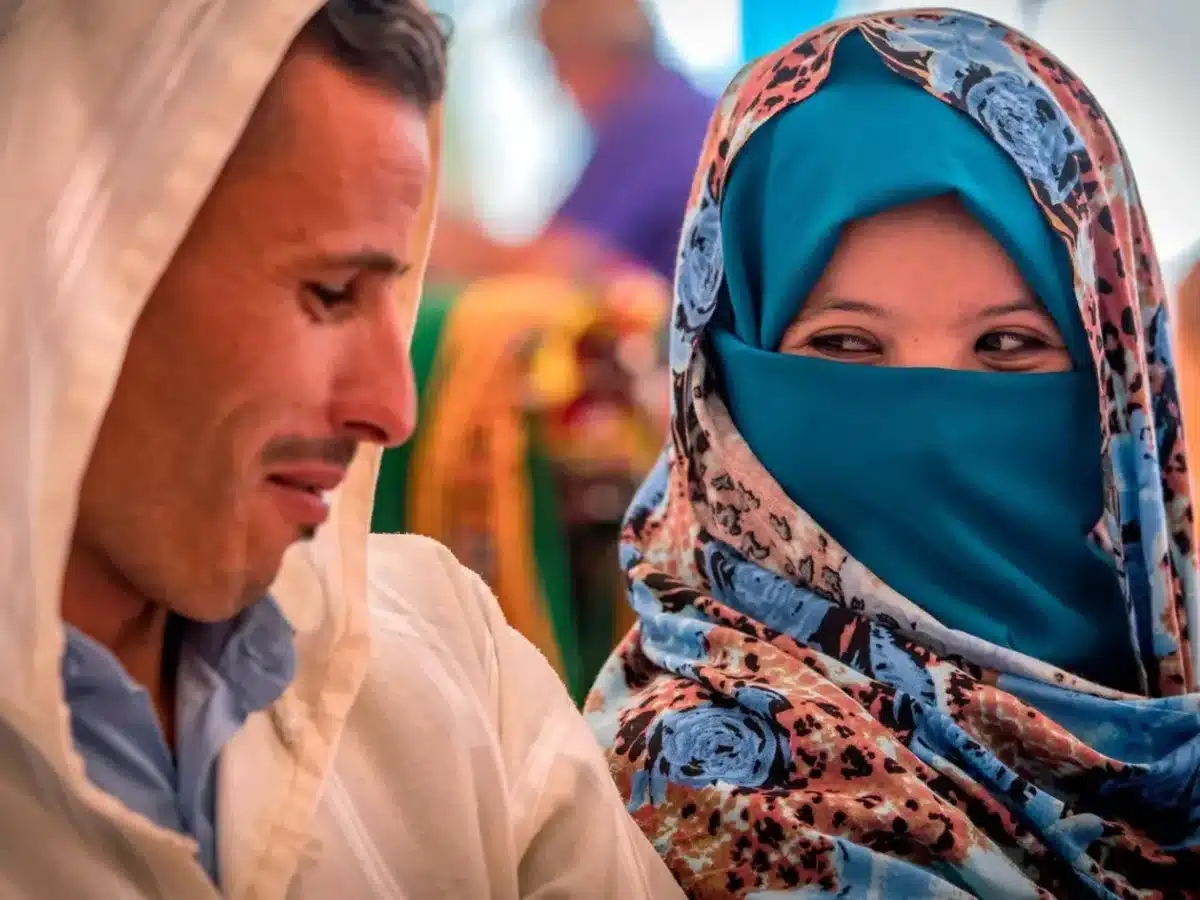
Held each September near the remote village of Imilchil in the Middle Atlas, this is one of Morocco’s most distinctive — and most written-about — annual gatherings. The Imilchil Marriage Festival (Moussem Imilchil) began as a traditional occasion for the Berber Ait Hadiddou tribe to come together, trade, and arrange marriages. Today, the betrothal aspect is more symbolic than legally binding, but the festival itself remains a significant cultural gathering.
Thousands of people descend on a landscape of high plateaus and dramatic lake scenery. Women in distinctive tribal dress — embroidered woolen robes and silver jewelry — mingle with traders selling everything from livestock to carpets. The atmosphere has a market-fair quality that sets it apart from Morocco’s music-focused events.
Imilchil is only accessible by 4WD vehicle or private transfer. There is no public transport. If you want to attend, either rent a 4WD or book through a tour operator who can arrange logistics and accommodation (usually camping or basic guesthouses).
Amazigh New Year — Yennayer
On January 12th and 13th each year, Morocco’s Amazigh (Berber) communities celebrate Yennayer — the new year in the Berber agricultural calendar. The date marks the beginning of the crop year according to the ancient Julian calendar, and it’s celebrated across Atlas mountain villages, Agadir, Tiznit, Draa Valley towns, and communities throughout the Souss region.
Traditional Yennayer food is central to the celebration — couscous prepared with seven vegetables, chicken, and dried fruits. Families gather, elders tell stories, musicians play traditional instruments, and children receive new clothes. In larger towns, public events with folk performances are organized.
For visitors, Yennayer is a quiet, warm event rather than a spectacle. If you happen to be traveling through Amazigh areas in January, you may be invited to share a meal — an invitation worth accepting.
🐪 Combine festivals with adventure! Read our guide on Planning a Sahara Desert Tour in Morocco for an unforgettable cultural and desert experience.
Islamic Festivals in Morocco
Morocco is a predominantly Muslim country, and the Islamic calendar shapes daily life in ways that non-Muslim visitors should understand before they arrive. Three events in particular significantly affect travel.
Ramadan
Ramadan is the ninth month of the Islamic lunar calendar — a period of fasting from dawn to sunset observed by most of Morocco’s population. For visitors, Ramadan in Morocco is genuinely extraordinary to witness. During the day, cities are quieter than usual; many restaurants close or serve only takeaway. After sunset, everything reverses. Streets fill, the smell of harira soup and chebakia pastries drifts from every doorway, families gather for iftar, and the medinas buzz until well past midnight.
Visitor Etiquette During Ramadan
As a non-Muslim tourist, you are not expected to fast. However:• Do not eat, drink, or smoke on the street in public view during daylight hours• Dress more conservatively than usual — cover shoulders and knees• Carry a scarf (women) for visits to mosques or more traditional areas• Restaurant dining is available — most tourist-facing restaurants remain open• Joining an iftar meal if invited is one of the most memorable Morocco experiences available to any visitor
Eid al-Fitr
Eid al-Fitr marks the end of Ramadan with three days of celebration — prayers at the mosque, family visits, new clothing, and feasts. It’s one of Morocco’s most joyful times, though also one where tourist services contract significantly as Moroccan families focus inward. Book transport and accommodation well in advance if traveling around Eid.
Eid al-Adha
Eid al-Adha, the Festival of Sacrifice, commemorates Ibrahim’s willingness to sacrifice his son. It falls approximately 70 days after Eid al-Fitr and involves the ritual sacrifice of a sheep, with meat distributed among family, neighbors, and those in need. As a visitor, you’ll witness a city that feels fundamentally different — quieter, more family-oriented, with the smell of grilling meat everywhere by afternoon.
Planning Your Festival Visit to Morocco
Best Time to Visit Morocco for Festivals
If you’re planning a trip specifically around festivals, spring and autumn are the optimal windows. March to May brings the Rose Festival and the Fez Festival of World Sacred Music, with mild weather across most of the country. September to November offers the Imilchil Marriage Festival, cooler desert temperatures, and the run-up to the Marrakech International Film Festival (November).
June is Morocco’s festival peak — Mawazine, Gnaoua, and Sefrou all run within weeks of each other, making it possible to attend multiple events on a single trip if you plan the routing carefully. The trade-off is summer heat, particularly in inland cities like Fez and Marrakech.
Practical Booking Advice
- Fez Sacred Music Festival: Book accommodation 3–4 months ahead. Tickets for Bab Makina concerts go on sale in March via the official festival website (fezfestival.org).
- Gnaoua Festival: Essaouira has limited riad inventory. Book 9–12 months in advance. Free outdoor stages require no tickets.
- Mawazine: Rabat has more hotel stock than Essaouira or Fez. 2–3 months’ advance booking is usually sufficient. Free stages require no planning.
- Imilchil: Private 4WD transfer is essential. Arrange through a tour operator at least 2 months ahead. Accommodation is camping or basic guesthouses — do not expect riads.
- Rose Festival: El Kelaa des M’Gouna is a small town. Accommodation is very limited. Stay in Ouarzazate (2 hrs away) or book a local guesthouse the moment dates are confirmed.
Cultural Etiquette Tips
- Dress modestly at all cultural and religious events — covered shoulders and knees for both men and women
- Remove shoes before entering private homes or mosques
- Ask before photographing people, especially during religious events
- Alcohol is unavailable or very limited during religious festivals
- If invited into a Moroccan home during a festival, bring pastries or fruit as a gift
- Bargaining is expected in festival markets (souks) — start at roughly half the asking price and negotiate warmly
Fez, Marrakech, and Rabat each host their own major festivals. Our guide to Morocco’s Imperial Cities covers each city’s character and what to expect.
Frequently Asked Questions About Morocco Festivals
What is the biggest festival in Morocco?
The Mawazine Festival in Rabat is Morocco’s largest festival and one of the world’s largest music events, drawing over 2.5 million attendees each June across multiple outdoor stages in the capital city.
When is the Rose Festival in Morocco?
The Festival of Roses in El Kelaa des M’Gouna typically takes place in May, though dates shift annually depending on the Damask rose harvest. In some years, it has fallen in late April. Always check confirmed dates before booking travel.
What is the Gnaoua Festival in Morocco?
The Gnaoua World Music Festival is an annual music event held in Essaouira each June, founded in 1998 to celebrate and preserve the music of the Gnaoua people — a tradition rooted in West African healing rituals. The festival pairs Gnaoua masters with jazz, blues, and world music artists from across the globe.
What is a moussem in Morocco?
A moussem is a traditional Moroccan gathering — part religious pilgrimage, part community fair — held annually to honor a saint, mark a seasonal event, or celebrate regional heritage. Some moussem, such as the Moussem of Tan-Tan, are UNESCO-recognized Intangible Cultural Heritage events.
Can tourists visit Morocco during Ramadan?
Yes, and many find it a rewarding time to visit. Daytime dining on the street is best avoided out of respect for those fasting, but restaurants remain open for tourists. After sunset, Moroccan cities come alive for iftar — the evening meal that breaks the fast — and the atmosphere is unlike any other time of year.
What should I wear to festivals in Morocco?
Modest dress is advised for all cultural and religious events in Morocco: covered shoulders and knees for both men and women. Women should carry a scarf for visits to the mosque or to more traditional areas. At international music festivals like Mawazine, dress codes are more relaxed, though modesty is still respected.
What is the best time to visit Morocco for festivals?
Spring (March–May) and early summer (June) offer the highest concentration of major events, including the Rose Festival, Fez Sacred Music Festival, Gnaoua Festival, and Mawazine. Autumn (September–October) is excellent for the Imilchil Marriage Festival and more comfortable temperatures in the desert south.
How do I get to the Imilchil Marriage Festival?
The festival takes place near Imilchil in the Middle Atlas, accessible only by 4WD vehicle. There is no public transport to the area. The best approach is to book through a tour operator who can arrange private transfer, camping accommodation, and a local guide for the event.
Conclusion
Morocco’s festival calendar is one of the most varied in the world — spanning UNESCO-recognized nomadic gatherings, intimate Berber agricultural celebrations, internationally broadcast music festivals, and the shared spiritual intensity of Ramadan. No single trip will cover it all, which is, honestly, a good reason to come back.
The best starting point depends on what you’re after. For music and atmosphere, the Gnaoua Festival in Essaouira in June is hard to beat. For scale and spectacle, Mawazine in Rabat in June is remarkable. For something quieter and more rooted in Moroccan daily life, the Rose Festival in the Dades Valley or the Amazigh New Year in the Atlas will stay with you longer.
Whatever you choose, timing your Morocco trip around a festival transforms a good holiday into something you’ll talk about for years.
Browse Egy Vacations Morocco tour packages →
