


QUICK ANSWER
Valley of the Kings is a necropolis of New Kingdom pharaohs of Egypt situated on the west bank of the River Nile, facing Luxor. The valley has been used for almost 500 years (1539-1075 BCE) and holds over 63 tombs among which is KV62, the well-known burial site of Tutankhamun. Standard admission ticket price: EGP 750 (enables access to three tombs of your own choice from the available ones). Additional fee for Tutankhamun’s tomb: EGP 700. Additional fee for Seti I (KV17): EGP 1,200. Open daily 6:00 AM – 5:00 PM (in winter: 4:00 PM). No fee for phone photos as of 2026.
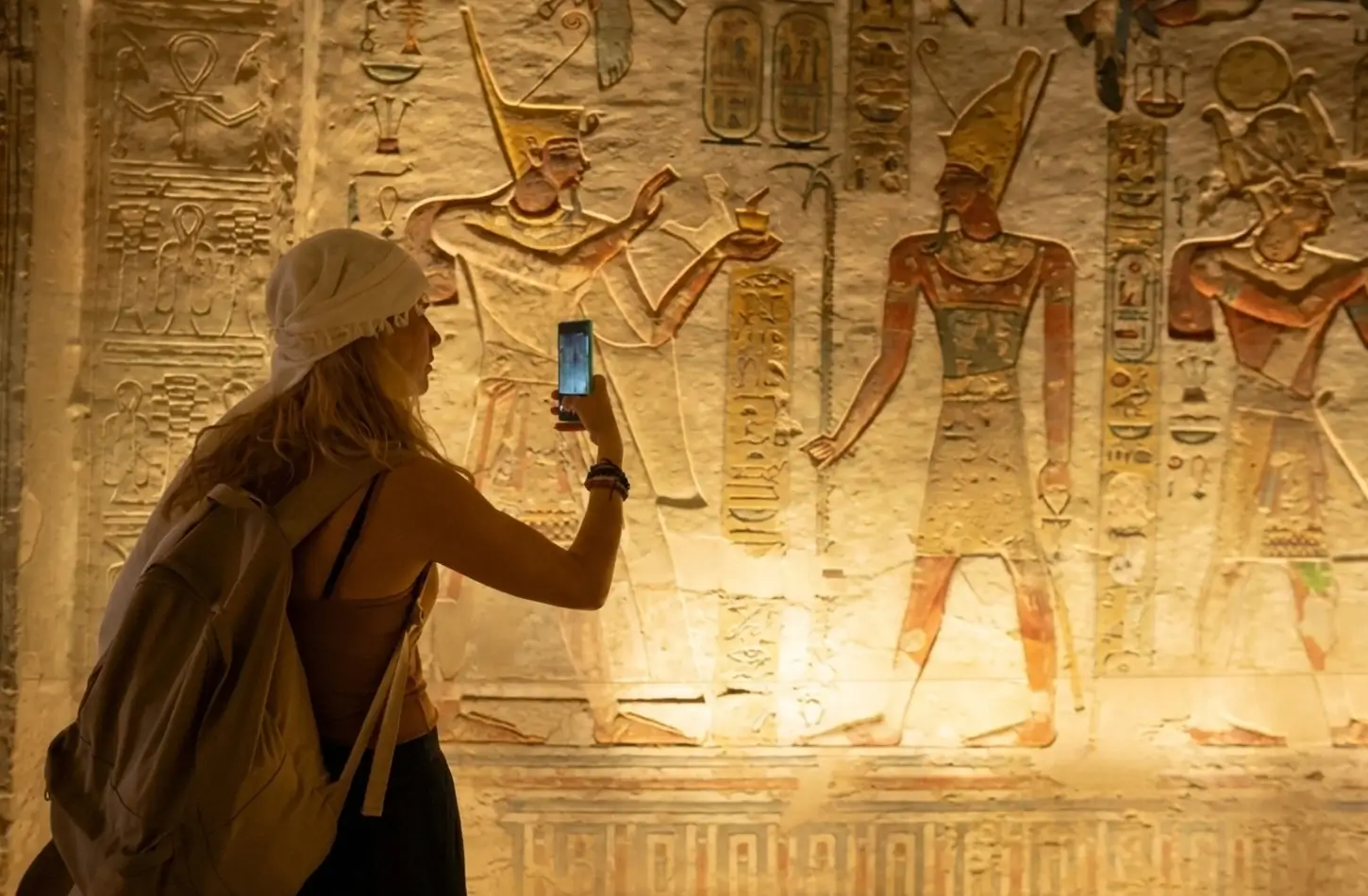
For more than fifteen years now, Yasser Shoaib, Egyptian licensed guide and Egypt travel expert at Egy Vacations, has been conducting his own private tours through the Valley of the Kings. “The first thing I notice every time I conduct a tour underground into one of these tombs,” he says, “is that everyone stops talking. Not because I’ve told them to. It’s because the artwork on the walls is doing its job just like it was meant to 3,300 years ago – telling a story in a way that doesn’t require you to understand a particular language.” This is the kind of guide who can bring you not only the practical information but also the proper perspective on selecting and interpreting the tombs.
Valley of the Kings — Key Facts at a Glance
| Fact | Detail |
|---|---|
| Location | West Bank of the Nile, 6 km from central Luxor — Wadi el-Muluk (“Valley of the Kings”) |
| UNESCO listing | 1979 (part of Ancient Thebes & its Necropolis) |
| Used as royal necropolis | c.1539–1075 BCE — New Kingdom, 18th–20th Dynasties (~500 years) |
| Total documented tombs | 63+ (KV1–KV63); 8–12 open to visitors at any time |
| Standard entrance ticket (foreign) | EGP 750 — covers 3 tombs from the open standard selection |
| Standard entrance ticket (Egyptian) | EGP 100 |
| Student discount | 50% off with valid international student ID |
| KV62 Tutankhamun — extra ticket (foreign) | EGP 700 (on top of standard ticket) |
| KV17 Seti I — extra ticket (foreign) | EGP 1,200 (on top of standard ticket — when open) |
| KV9 Ramesses V/VI — extra ticket (foreign) | EGP 500 (on top of standard ticket) |
| West Valley / Tomb of Ay (KV23) | EGP 200 separate ticket |
| Tram to tomb area | EGP 20 return — not included in entrance ticket |
| Photography (phones/cameras) | Free — no photography pass required as of 2026 |
| Flash photography | Strictly prohibited in all tombs |
| Tripods/professional video | Not permitted without special permit |
| Opening hours (Apr–Sep) | 6:00 AM – 5:00 PM daily |
| Opening hours (Oct–Mar) | 6:00 AM – 4:00 PM daily |
| Best arrival time | 6:00–7:00 AM — before tour buses arrive at 9:30 AM |
| Typical visit duration | 2–3 hours for 3 standard tombs; 3–4 hours with premium tombs |
| Distance from Luxor East Bank | ~6 km; 30–40 min including Nile ferry crossing |
| Luxor Pass | Available — covers Valley of the Kings + most Luxor sites; worthwhile for 3+ days in Luxor |
⚠️ IMPORTANT: PRICES UPDATED 2026
Price for entrance increased to EGP 750 from EGP 500 in 2025. Most of the information on guides and articles written before mid-2025 have outdated pricing details. Moreover, the separate ticket for photos (EGP 300) is no longer available – photography using cell phone cameras is allowed inside almost all of the tombs without any additional cost, but you should remember not to use flash.
Why Did Pharaohs Abandon the Pyramids for Hidden Tombs?
For close to one thousand years, from the pyramid of Djoser in the Old Kingdom period (c.2650 BCE) up until the Middle Kingdom period, the kings of Egypt would construct pyramids as their eternal resting places. However, suddenly, this practice came to a stop.
The reason was because of the inherent impracticality. No matter how grandiose they might have been, the pyramids were robbed of their contents. It is the visible nature of the construction that made it a prime target. By the time of the New Kingdom period (c.1550 BCE), almost all of the pyramids in Egypt were looted of everything – from the mummy, to the treasures and funerary equipment – in just a few hundred years since their burial.
The 18th Dynasty Pharaohs began with Thutmose I (c.1504 BCE) realized that the key was to construct an undetectable tomb. Dig tunnels inside the face of the limestone cliffs located in a far-off desert valley.
It did not work, however; every tomb that was buried in the Valley of the Kings was plundered at some point in history. Yet the effort produced something that had never before been made by any pyramid builders: underground chambers that could be painted wall-to-wall from floor to ceiling, painting walls and ceilings simultaneously and making the entire tomb into a three-dimensional illustrated book of the pharaoh’s voyage through the world of the dead.
That is what one sees when one descends into a tomb in the Valley of the Kings. Not a tomb chamber, but a book. Painted 3,300 years ago in stone.
Planning your visit to the Valley of the Kings? Choosing the right season can make a huge difference in your experience, from avoiding extreme heat to enjoying smaller crowds. Read our Best Time to Visit Egypt in 2026 guide to find the perfect month for your trip and make the most of your Egyptian adventure.

Which 3 Tombs Should You Choose? A Decision Framework
Your regular ticket allows you to visit three tombs from the available choices. Every visitor, on the first time of visiting, wants to know and usually is told somewhat cryptically by the guide, which three?
The real answer depends on your preferences. Here are three different combinations of tombs to try out:
| Your Priority | Tomb 1 | Tomb 2 | Tomb 3 | Why This Combination |
|---|---|---|---|---|
| Best art & colour | KV17 Seti I* | KV9 Ramesses V/VI* | KV11 Ramesses III | Three of the most visually stunning tombs — deep blues, golds, narrative complexity |
| Historical story | KV62 Tutankhamun* | KV8 Merenptah | KV6 Ramesses IX | Famous discovery + nested sarcophagi + well-preserved astronomical ceiling |
| Fewer crowds | KV1 Ramesses VII | KV2 Ramesses IV | KV15 Seti II | Consistently less visited, faster access, still high-quality paintings |
| Best overall balance | KV9 Ramesses V/VI* | KV11 Ramesses III | KV6 Ramesses IX | Standard ticket only — vivid, accessible, well-explained, manageable queues |
*Requires extra ticket on top of standard admission. See ticket breakdown above.
💡 YASSER’S RULE FOR FIRST-TIME VISITORS
If this is your first time here and cost is not an issue: go for the regular ticket and select KV9 and KV11 from the regular list, then go for KV62 (Tutankhamun) as your premium option. You’ll get the most iconic tomb in history along with two of the most aesthetically pleasing regular tombs – and still have some left for yourself to enjoy a cold one at the visitor’s centre. If KV17 (Seti I) is available, go for it instead of Tutankhamun – KV17 is better art-wise.
The Best Tombs in the Valley of the Kings — Ranked & Reviewed
KV17 — Tomb of Seti I (The Undisputed Finest)
Ruling between about 1290 and 1279 BC, Seti I constructed the largest, deepest, and most lavishly decorated tomb in the whole valley. KV17 is 137 metres long and has many descents into its various chambers, making it the deepest tomb in the valley. It is decorated entirely by reliefs and paintings of a standard which was never matched again in the valley.
It is the astronomical ceiling inside the burial chamber which makes KV17 famous. This is a beautiful representation of the night sky filled with constellations, hour deities, and the solar boat’s nightly journey, painted all around the arching ceiling in one register. The colours used – a rich lapis blue, gold, white, ochre, and terracotta – are bright after 3,300 years. Due to the dry desert conditions in the valley, the paint has survived better than in any museum storage environment.
To access KV17, you need an additional ticket (EGP 1,200 for foreign visitors). Sometimes, the tomb is closed for conservation works, check availability at egypttickets.eg or through your tour operator.
★ VERDICT: KV17 SETI I
The finest painted tomb in Egypt and one of the most extraordinary rooms in the world. Open irregularly — when it is, prioritise it above everything else including Tutankhamun.
Wondering if it’s safe to visit the Valley of the Kings? Egypt remains one of the world’s most popular travel destinations, and millions of tourists explore its ancient wonders every year. Read our Is Egypt Safe to Visit? guide for the latest travel safety tips, local advice, and practical information to help you plan your trip with confidence.
KV62 — Tomb of Tutankhamun (The Most Famous)
The tomb of Tutankhamun is the best-known archaeological find ever made, yet is among the tiniest and most sparsely decorated tombs in the entire valley. These facts are not mutually exclusive.
In 1922, Howard Carter’s excavation of KV62, the only royal tomb that had been found in the entire valley with everything intact, yielded 5,398 separate items: the golden funeral mask, the nested shrines, the canopic jars, the chariots, the thrones, the beds, and the full set of burial furniture of an Egyptian monarch. Most of these artifacts are currently displayed at the Grand Egyptian Museum in Giza, inaugurated in November 2025.
All that is left inside KV62 is the burial chamber: the sarcophagus of Tutankhamun (in its original place), his mummy (kept inside the burial chamber under glass), and paintings showing the Opening of the Mouth and the Amduat. The paintings are impressive, and the significance of standing there where Carter made an opening in the sealed doorway on 4 November 1922 is authentic and not created for tourists’ purposes.
KV62 requires an additional fee of EGP 700 and is the busiest burial chamber in the valley. Visit it early in the morning or right before the closure of the site.
★ VERDICT: KV62 TUTANKHAMUN
Essential for the story and the history. The tomb itself is small and not the most visually impressive — but standing in the same room as the mummy of a pharaoh who died at 19 in 1323 BCE is not a visual experience. It’s something else.
KV9 — Tomb of Ramesses V & VI
KV9 is the best standard-ticket tomb available on most days — large, deeply cut, vividly painted, and consistently open. Originally built for Ramesses V and extended and usurped by Ramesses VI, the tomb runs 83 metres into the cliff with a series of descending corridors opening into progressively larger halls.
The ceiling of the burial chamber is exceptional: an astronomical composition showing the solar barque’s journey through the 12 hours of the night, rendered in bright yellow against a deep background, flanked by the full text of the Book of Caverns and the Book of Gates. The scale is overwhelming in the best way — you have to rotate slowly to take in the full programme of the ceiling alone.
★ VERDICT: KV9 RAMESSES V/VI
The best standard-ticket tomb in the valley. Should be the anchor choice in any combination — add premium tombs around it.
KV11 — Tomb of Ramesses III
With a length of 125 metres, KV11 is the longest tomb that can be visited under a normal ticket. The tomb is distinguished by the presence of side chambers, which are small additional rooms that lead off from the main chamber, with painted images of daily activities instead of religious inscriptions. Musicians, cooking scenes, and craftsmen are depicted besides the usual funeral program, thus making this tomb among the most human-friendly tombs in the valley.
★ VERDICT: KV11 RAMESSES III
Best for breadth — the side chambers give this tomb a different feel from the purely theological programme of most others. Pair with KV9 for a strong standard-ticket combination.

KV6 — Tomb of Ramesses IX
Perhaps the least crowded and most straightforward of all standard ticket tombs. This tomb consists of one straight descent into the burial chamber with no complicated maze-like structure. The astronomical ceiling of this tomb is one of the best preserved in the valley. This is definitely one of the best tombs to visit for great paintings without long lines.
KV8 — Tomb of Merenptah
The tomb of Merenptah, a son of Ramesses II and the pharaoh connected with the story of Exodus in the Bible, is characterized by the presence of numerous nested stone sarcophagi in the burial chamber, which is the unique feature of this tomb in the entire valley. The astronomical ceiling is of good quality, and the tomb is much less crowded than KV9 and KV62.
Getting ready to explore the Valley of the Kings? Packing the right clothing and travel essentials will help you stay comfortable while visiting Egypt’s ancient sites, especially under the desert sun. Check out our Egypt Packing List for everything you should bring to ensure a smooth and enjoyable trip.
The Valley of the Kings Ticket System Explained
The ticketing at the Valley of the Kings confuses many first-time visitors. Here is the complete breakdown:
| Ticket | Price (Foreign) | What It Covers |
|---|---|---|
| Standard entrance | EGP 750 | 3 tombs from the standard open selection (typically 8–10 tombs available) |
| Tutankhamun KV62 | EGP 700 extra | Entry to Tutankhamun’s tomb — in addition to standard ticket |
| Seti I KV17 | EGP 1,200 extra | Entry to KV17 — when open; in addition to standard ticket |
| Ramesses V/VI KV9 | EGP 500 extra | Entry to KV9 — in addition to standard ticket |
| West Valley / Ay KV23 | EGP 200 separate | Separate site — requires own ticket, long uphill walk, very few visitors |
| Tram to tomb area | EGP 20 return | Not included in entrance; runs from visitor centre to central tomb area |
| Luxor Pass (Silver) | ~USD 100 (multiple days) | Covers Valley of the Kings + most Luxor sites — worthwhile for 3+ days |
💡 HOW THE 3-TOMB SYSTEM WORKS
Upon entering, there is a guard who will stamp your ticket at the entrance of each tomb — three stamps means that you have utilized your three tickets. The guard is NOT the one who will be choosing the tombs for you; you do that. Pass through any tomb that you do not wish to visit, but then go in three tombs of your choice. Premium tombs (KV62, KV17, KV9) are different from the regular tombs, and getting a premium tomb ticket like KV62 will not take up your three tomb tickets.
The Mummy Caches — The Untold Story of the Valley
Here is the detail that most visitor guides either skip or mention in passing: the tombs in the Valley of the Kings are empty. The mummies they were built for are not there. Where are they?
The Great Caches
When the New Kingdom came to an end around 1075 BCE, the Valley was facing a critical situation. There were systematic incidences of grave robbing where groups of individuals would rob tombs. This prompted the guardians of the king’s graves to take some extreme measures to protect them – they decided to gather all the royal mummies from their plundered tombs, rewrap them, and put them in two caches.
The first cache was discovered at Deir el-Bahari (DB320) in 1881; it held 40 royal mummies who made up a Who’s Who of the greatness of New Kingdom: Ramesses II, Seti I, Thutmose III, Ahmose I, among others – all of them packed in one secret room which had remained sealed for about 3,000 years. The second cache was discovered in 1898 in the tomb of Amenhotep II (KV35); it held 18 royal mummies.
Where the Mummies Are Now
Nearly all of the royal mummies have been moved to the Royal Mummies Hall at the National Museum of Egyptian Civilization (NMEC) in Fustat, Old Cairo. The new museum has a Royal Mummies Hall that opened in 2021 with 22 royal mummies housed in special climate-controlled cases, arranged in chronological order along with proper information and context.
The tour that Yasser suggests to his every client with sufficient time is to visit the Valley of the Kings in the morning, and two or three days later go to the Royal Mummies Hall at the NMEC in Cairo. When standing in front of the real mummy of Ramses II after visiting his own tomb that very morning, you close a circle that will stay with you for years.
💡 NMEC ROYAL MUMMIES HALL
The National Museum of Egyptian Civilization is situated at Fustat, Old Cairo, around 20 minutes from Cairo city center. The Royal Mummies Hall has a different admission from the rest of the museum. Photography is prohibited inside the hall. The mummies are arranged together with their names, years of their reign, and identification. If you have planned visits to Egypt including Luxor and Cairo cities, then this is one of the best sequences that you can opt for.
Practical Visitor Guide — Valley of the Kings 2026
| Detail | Information |
|---|---|
| Opening hours (Apr–Sep) | 6:00 AM – 5:00 PM (last entry 4:00 PM) |
| Opening hours (Oct–Mar) | 6:00 AM – 4:00 PM (last entry 3:00 PM) |
| Best arrival time | 6:00–7:00 AM — tomb corridors are cool, crowds minimal |
| Worst time to arrive | 9:30–10:30 AM — Red Sea resort buses arrive; most popular tombs queue badly |
| Getting there from Luxor East Bank | Ferry across Nile (EGP 5, 5 min) + taxi; or Luxor Bridge south + taxi. Total 30–45 min |
| Getting there from Nile cruise ship | Ship’s excursion desk arranges transfer — join earliest morning departure |
| Ticket purchase | Visitor centre at valley entrance; also available at egypttickets.eg in advance |
| Tram | EGP 20 return; not included in entrance; runs from visitor centre to tomb area (1 km) |
| Photography | Phone cameras free; no flash in any tomb; tripods not permitted |
| What to wear | Light, breathable clothing; hat essential; closed shoes (tomb floors uneven) |
| Water | Bring minimum 2 litres per person — no vendors inside valley; vending machines at visitor centre |
| Inside tomb temperature | Cooler than outside (~22–25°C) but humid with many visitors — improves early morning |
| Touching walls | Strictly prohibited — oils from hands accelerate pigment deterioration; guards enforce actively |
| Bags | Checked at entrance; small daypack acceptable; leave large luggage at hotel |
| Summer visit warning | July–August valley temperatures exceed 45°C by midday with zero shade — extreme caution |
| Time needed | 2–3 hours for 3 standard tombs; 3–4 hours with premium tombs added |
| Combine with | Hatshepsut Temple (20 min drive), Colossi of Memnon (15 min), Medinet Habu (25 min) |
The Perfect West Bank Day: Valley of the Kings + Hatshepsut + Colossi
Most visitors to the West Bank — whether from a Nile cruise or based in Luxor — combine three sites in a single half-day morning. Here is the sequence Yasser uses with private tour clients:
| Time | Site | Duration | Notes |
|---|---|---|---|
| 6:00–6:30 AM | Depart hotel / cruise ship | — | Aim to reach valley at opening |
| 6:30–9:00 AM | Valley of the Kings | 2–2.5 hours | Visit 3 tombs before crowds arrive; premium tombs first |
| 9:15–9:30 AM | Colossi of Memnon | 15–20 min | Photo stop; two 18-metre seated statues; no interior |
| 9:30–11:00 AM | Temple of Hatshepsut | 60–90 min | Punt reliefs, Hathor chapel, upper terrace |
| 11:00 AM | Return to ship / hotel | — | Back before midday heat peaks |
If there is extra time, these attractions can be added to your visit: Medinet Habu (funerary temple of Ramses III – not as busy as Hatshepsut’s temple and architecturally similar), which takes 1 to 1.5 hours. The Valley of the Queens and Nobles’ Tombs are good for a second day in the West Bank.
💡 NILE CRUISE TIMING ADVANTAGE
The cruisers are structurally ahead of the hotel visitors because the ship arranges for transport to the Valley of the Kings to start at 6:00 – 6:30 AM. The day tourists, whose numbers account for the 9:30 AM rush, will leave their hotels 3 – 4 hours early but will still get there late. If you are on a Nile Cruise with an excursion program in the West Bank, ask for the earliest possible departure.
Valley of the Kings on Your Egypt Vacation
The Valley of the Kings is the key emotional location on almost all Egypt trips – the point at which the culture stops being a museum piece and becomes tangible and immediate. Where it comes within the broader context of your tour is dependent on where you start from.
As Part of a Luxor City Stay
Luxor day Tours for Those who stay in Luxor for 2-3 days usually spend an entire morning visiting the sites of the West Bank (Valley of the Kings, Hatshepsut, and Colossi), while spending the next day visiting Karnak and Luxor Temples on the East Bank. Another day will allow visitors to see the Nobles’ Tombs, Medinet Habu, and the Valley of the Queens.
As Part of a Nile Cruise
Nile Cruise: On a 4-night Luxor-to-Aswan cruise, the West Bank is visited on Day 1 — usually the morning after boarding in Luxor. On a 3-night Aswan-to-Luxor cruise, it’s the final morning before disembarkation. In both cases, the ship’s excursion desk arranges transport; book the earliest available morning slot.
As Part of an Egypt Vacation Package
Egypt Vacation Package: The Valley of the Kings comes as the center piece of Egy Vacations’ conventional Egyptian package, following Giza and Cairo, in the Luxor phase of your travel, before the Nile cruise heading down south to Aswan. Such a chronological sequence makes perfect sense because the Old Kingdom pyramids in Cairo (2580 BC) will be followed by the New Kingdom tombs in Luxor (1539-1075 BC), followed by the Ptolemaic temples in Aswan (332-30 BC).
💡 EGY VACATIONS RECOMMENDATION
Our 8-day Classic Egypt tour dedicates a full morning to the Valley of the Kings with a licensed Egyptologist guide on Day 4, following two days in Cairo (Pyramids, GEM) and a day exploring Luxor’s East Bank (Karnak). The West Bank morning is timed for 6:30 AM arrival. Contact us to build your itinerary around your travel dates and group size.
Frequently Asked Questions
What is the Valley of the Kings?
Valley of the Kings (Wadi el-Muluk in Arabic) refers to the royal burial ground which was employed by the Pharaohs of Egypt’s New Kingdom Dynasty for almost half a millennium from 1539 to 1075 B.C.E. Situated on the West bank of the Nile River opposite Luxor, it boasts of 63 tombs that have been documented so far that were carved into the limestone hills, including KV62, the tomb of Tutankhamun.
How much does it cost to visit the Valley of the Kings in 2026?
The regular ticket price for foreigners is EGP 750, which includes three tombs in the standard selection. There is an additional charge for premium tombs, in addition to the regular price ticket: EGP 700 additional for Tutankhamun’s tomb (KV62), EGP 1,200 additional for the tomb of Seti I (KV17) and EGP 500 additional for Ramesses V/VI tomb (KV9). The ride by the tram from the visitor center to the tombs is EGP 20 round trip. Egyptians pay EGP 100 for the standard ticket.
Can you take photos inside the Valley of the Kings tombs?
Yes – as of 2026, photography using cell phones and cameras will be free of charge in almost all tombs. The additional photography fee, previously EGP 300, has been discontinued. Flash photography continues to be strictly forbidden in all tombs as it damages the old paint colors. Professional video equipment is also not allowed without permission. There might be some exceptions for certain individual tombs.
Which tombs are the best to visit in the Valley of the Kings?
KV17 Seti I is the most beautifully decorated tomb in the entire valley, as everything inside is painted with bright colors of excellent quality, but this tomb is not always accessible to visitors, because it demands an additional ticket to enter it. The best paintings that can be seen without paying for additional tickets are the paintings in KV9 (Ramesses V/VI), KV11 (Ramesses III), and KV8 (Merenptah). The most important historically is Tutankhamun’s tomb (KV62), which is small and less decorated.
Is Tutankhamun’s tomb worth the extra cost?
This depends on your values. KV62 is small and is not richly decorated compared to the regular ticket tombs because the artifacts have been moved to the Grand Egyptian Museum in Giza. All that you will see here is the burial room, the mummy (inside the glass case) and the original coffin. The additional EGP 700 gets you the experience and the feeling of being inside the very room in which Howard Carter opened the sealed door back in 1922. Yes, it is worth it for most first-time tourists.
What time should I arrive at the Valley of the Kings?
Come at 6:00 AM when the site is opened – or as close to this time as you can manage with your schedule. Early morning is the best time: cool weather in the tombs, no queues at the entrances, and the special light in the desert at sunrise. The buses from Hurghada and Sharm el-Sheikh come between 9:30 and 10:30 AM, after which the most frequented tombs get quite crowded.
Where are the mummies from the Valley of the Kings?
However, there are no mummies inside the tombs since all the mummies have been taken out of the tombs in ancient times by the priests who hid them from the tomb robbers and the discovery of the hidden tombs took place in 1881 and 1898. Almost all the mummies of the kings can be seen in the Hall of Royal Mummies in the National Museum of Egyptian Civilization (NMEC), located in Fustat, Old Cairo.
How many tombs can you visit in the Valley of the Kings?
Standard tickets allow access to three tombs of your choice from among those that are open (usually 8 to 12 tombs are open each day). However, premium tombs (Tutankhamun, KV62; Seti I, KV17; Ramesses V/VI, KV9) need an additional premium ticket and are not included in your three tombs for which you have already paid through your standard ticket. In theory, you can visit up to five or six tombs each day if you buy both types of tickets.
Do I need a guide for the Valley of the Kings?
It is not compulsory to engage a tour guide. The area is well signposted, the tombs are numbered, and there is no need for help to find your way around the area. But, without a tour guide, while the tomb paintings are indeed stunning, they lack much of their meaning because without understanding the religious text you are reading on the ceiling, the identity of the pharaoh whose journey this is, and the significance of the different images, the depth of what you are seeing is lost on you. A licensed Egyptologist will give your trip more meaning.
Is the Valley of the Kings safe to visit?
Absolutely. The Valley of the Kings is considered to be one of the most popular and managed archaeological sites in Egypt where there is a constant presence of tourist police and restrictions on access. There are the usual rules that apply when traveling: buying travel insurance, staying in your group while visiting the site, and following the instructions of guides and guards. The potential hazards are only environmental, including extremely hot summers (temperatures may reach 45° in July-August), uneven floor in the tombs, and the difficulty in moving along the narrow and steep corridors.
