


Quick Answer
The best time to visit Morocco is the period of spring (March-May) or fall (September-November), where temperatures reach about 18-29°C (64-86°F). This period is ideal since it avoids both the summer period with temperatures soaring above 38°C (100°F) in most parts and the cold, wet weather experienced in the winter season along the northern coastal areas and mountains. The perfect month will depend on what type of adventure one prefers to pursue – beach, dune or mountain.
Morocco Weather and Travel at a Glance: Month-by-Month
Use this table to scan conditions before diving into the detail below. Desert and mountain temperatures swing more sharply than these city averages, especially overnight — see the FAQ section for specifics.
| Month | Avg. Temperature | Rainfall | Crowd Level | Best For |
|---|---|---|---|---|
| January | 12-18°C / 54-64°F | Moderate (highest) | Low | Budget travel, mountain skiing, quiet medinas |
| February | 13-19°C / 55-66°F | Moderate | Low | Almond Blossom Festival season, cool-weather sightseeing |
| March | 16-22°C / 61-72°F | Light | Low-Moderate | Yennayer aftermath, start of spring bloom, Atlas hiking begins |
| April | 18-26°C / 64-79°F | Light | High | Peak spring weather, Sahara still cool enough to camp |
| May | 20-29°C / 68-86°F | Minimal | High | Mawazine Festival, Fez Festival season, coastal escapes |
| June | 24-32°C / 75-90°F | Minimal | Moderate | Gnaoua World Music Festival, coastal surf & beach |
| July | 28-38°C / 82-100°F | Minimal | Moderate | Atlantic coast, mountain bases, indoor culture |
| August | 28-38°C / 82-100°F | Minimal | Moderate-High | Beach holidays; eclipse day (Aug 2, 2027) in the far north |
| September | 24-32°C / 75-90°F | Minimal | Moderate | Heat eases, cities and mountains reopen |
| October | 20-28°C / 68-82°F | Light | High | Gold-standard month: desert, dunes, kasbahs |
| November | 16-24°C / 61-75°F | Light-Moderate | Moderate | Marrakech Popular Arts Festival, crisp evenings, photography |
| December | 13-19°C / 55-66°F | Moderate | Moderate (holiday spike) | Festive sun, cozy riads, quiet sites pre-Christmas |
Morocco by Season: What Each One Actually Feels Like
Spring (March to May): The Most Popular All-Rounder
It is during spring that Morocco has its most scenic landscapes to offer. There are wildflowers covering the Atlas foothills, greenery covering the valleys of Dades and Todra, while the climate in the Sahara is comfortable for camel trekking and overnight camping, usually with a temperature of between 18-28°C (64-82°F). As regards the cities of Marrakech and Fez, walking tours around their medinas are enjoyable with temperatures of 18-26°C (64-79°F).
Several big cultural events in Morocco are organized during spring and among these is the Fez Festival of World Sacred Music, which is spiritual in nature, as well as the Rabat’s Mawazine Festival. For exact dates of these festivals, see the Moroccan festival schedule. Hotels and desert camps fill up quickly with people attending these events; in addition, there is more activity at places such as Jemaa el-Fnaa Square in the daytime. If Ramadan happens to coincide with these months (it starts about 11 days earlier each year), you would find different timings of the restaurants and an even livelier night environment.
- Best for: first-time visitors, photographers, hikers, families wanting comfortable sightseeing
- Watch for: rising accommodation prices and crowd density in Marrakech and Fez from mid-April onward
Summer (June to August): Coastal Relief, Inland Heat
Summer is the season most articles tell you to avoid entirely, but that oversimplifies it. Inland and desert temperatures are genuinely punishing — the Sahara can reach 50°C (122°F) on the hottest days, and exploring on foot becomes uncomfortable outside the early morning and evening hours. The Sahara is best avoided altogether in July and August unless you’re prepared for extreme daytime heat; our full breakdown of seasonal desert conditions is in the guide to planning your desert tour in Morocco
The story told by the Atlantic coastline is a very different one. Essaouira, Asilah, and Taghazout fall within the comfortable temperature zone of 24-29°C (75-85°F), complemented by cool sea breezes. This makes it perfect timing for surfing, kitesurfing, and seafood-filled coastal tours. Essaouira also hosts the annual Gnaoua World Music Festival, usually occurring in June, where Gnaoua trance music is combined with music from around the world. Another feature of the season includes the slightly cooler temperatures of the High Atlas foothills surrounding Imlil, compared to the lower-lying cities.
One important exception for August 2026 and especially 2027: the far north of Morocco sits inside the path of the August 2, 2027 total solar eclipse, with totality beginning around 9:44 AM in Tangier. See best places to watch the Morocco solar eclipse for full viewing-city details, and the full Morocco Solar Eclipse 2027 tour lineup if you’re planning around the event.
- Best for: surfers, beach-focused trips, families on fixed school-holiday dates, Atlas base-camp stays, eclipse chasers (northern coast only, August 2027)
- Watch for: extreme midday heat inland; plan desert and city sightseeing for early morning or after 5pm
Autumn (September to November): The Quiet Favorite
While spring may be the most popular time to visit Morocco, autumn could well be its best-kept secret. Summer ends, temperatures remain around low to mid-20 degrees celsius (low to mid-70s Fahrenheit), and by October the Sahara opens up with cool nights and clean skies, free from sandstorms. This is generally regarded as the one best month to travel into the desert. November marks one of the best times for photography, coupled with the Marrakech Popular Arts Festival that celebrates Moroccan music and dancing.
Crowds and costs are usually lower than during springtime, especially after early September. In northern Morocco, the first rains of the season may occur as early as late November.
- Best for: desert trips, photographers, travelers who want spring-level weather without spring-level crowds
- Watch for: early rain in the north by late November
Winter (December to February): Budget Season With Surprising Upside
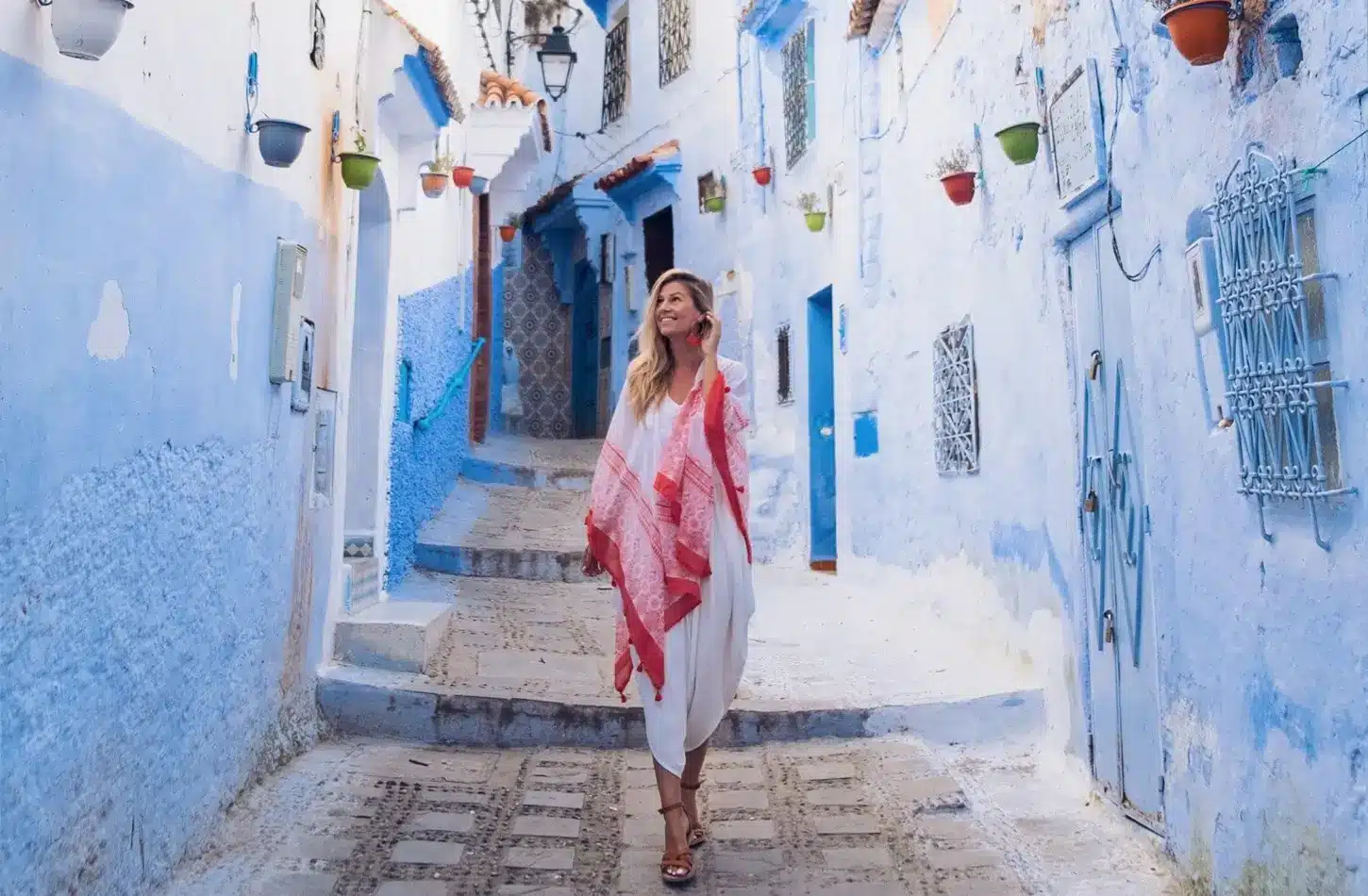
It’s important to know that winter is actually the least understood season in Morocco. While it is true that it is the coldest and rainiest time of the year, and that some parts of the Atlas Mountains do experience snowy weather, as well as having the resort of Oukaïmeden operating successfully as a ski resort, coastal and southern cities remain pleasant, and the deserts are warm enough by day while being cool at night.
The best value can be had during this season, as there are low prices on rooms and accommodations, lower traffic in places and less crowds in cities such as Casablanca and Rabat. It is also a good period to visit due to Yennayer, the Amazigh New Year celebrated in mid-January. However, one should still pack appropriately no matter where they are going, as the difference between night and day temperatures is significant and often underestimated by visitors visiting for the first time. Our full Morocco packing list breaks this down season by season.
- Best for: budget travelers, winter-sun seekers, mountain trekking and skiing, crowd-averse city breaks
- Watch for: cold desert nights (down to 0-5°C / 32-41°F) and a late-December price and crowd spike
Best Time to Visit by Region
“Best time to visit Morocco” isn’t really one answer — it’s four, because the country’s climate zones behave so differently from each other. Here’s how to match your region of interest to its ideal window.
Marrakech and the Imperial Cities (Fez, Meknes, Rabat)
March to May and September to November are ideal here. Summer heat in Marrakech is intense enough to limit comfortable medina exploring to the early morning and evening, while winter is mild but grey skies are more common. Browse our full lineup of Morocco tours and packages for itineraries built around these cities.
The Sahara Desert (Merzouga, Erg Chebbi, Zagora)
The period between October to April is ideal, with October and March offering the best balance in the difference in temperature throughout the day and night. July and August, however, are not recommended for overnight camping in the desert since daytime temperatures are always about 50°C (122°F), despite the warmth of the night. For detailed seasonal information and what to pack, see our complete guide to planning your desert tour in Morocco.
The Atlas Mountains (Imlil, Toubkal, Ouirgane)
April to October suits most trekking itineraries, with April and May offering the most dramatic scenery as snowmelt feeds the valleys below. Winter (December-February) is for skiing and snow-trekking specifically, not general hiking, given trail conditions at altitude.
The Atlantic and Mediterranean Coast (Essaouira, Asilah, Tangier, Taghazout)
April to November works well along the coast, with June to August standing out specifically for surf and watersports thanks to steady Atlantic winds. Coastal cities are also Morocco’s most forgiving winter destination if you want mild weather without summer’s inland heat.
Visiting Morocco During Ramadan
Ramadan deserves your attention, not to be ignored. As the Islamic calendar follows the moon-based calendar system, the dates will move back by roughly 11 days every year. It’s advisable to check this year’s dates before booking than assume what they were last year.
Ramadan entails fasting during the day from dawn until dusk; thus, in small towns, there will be limited dining and coffee shop operations during daytime. However, in big cities, hotels and restaurants catering to tourists will operate normally. In exchange for this, there is a unique nightlife experience with the streets and squares bustling with activities after dusk when iftar takes place. For those interested in tasting their food, breaking the fast presents the perfect opportunity to do so since our Morocco foods guide discusses all the meals served.
Key Festivals and Events to Plan Around
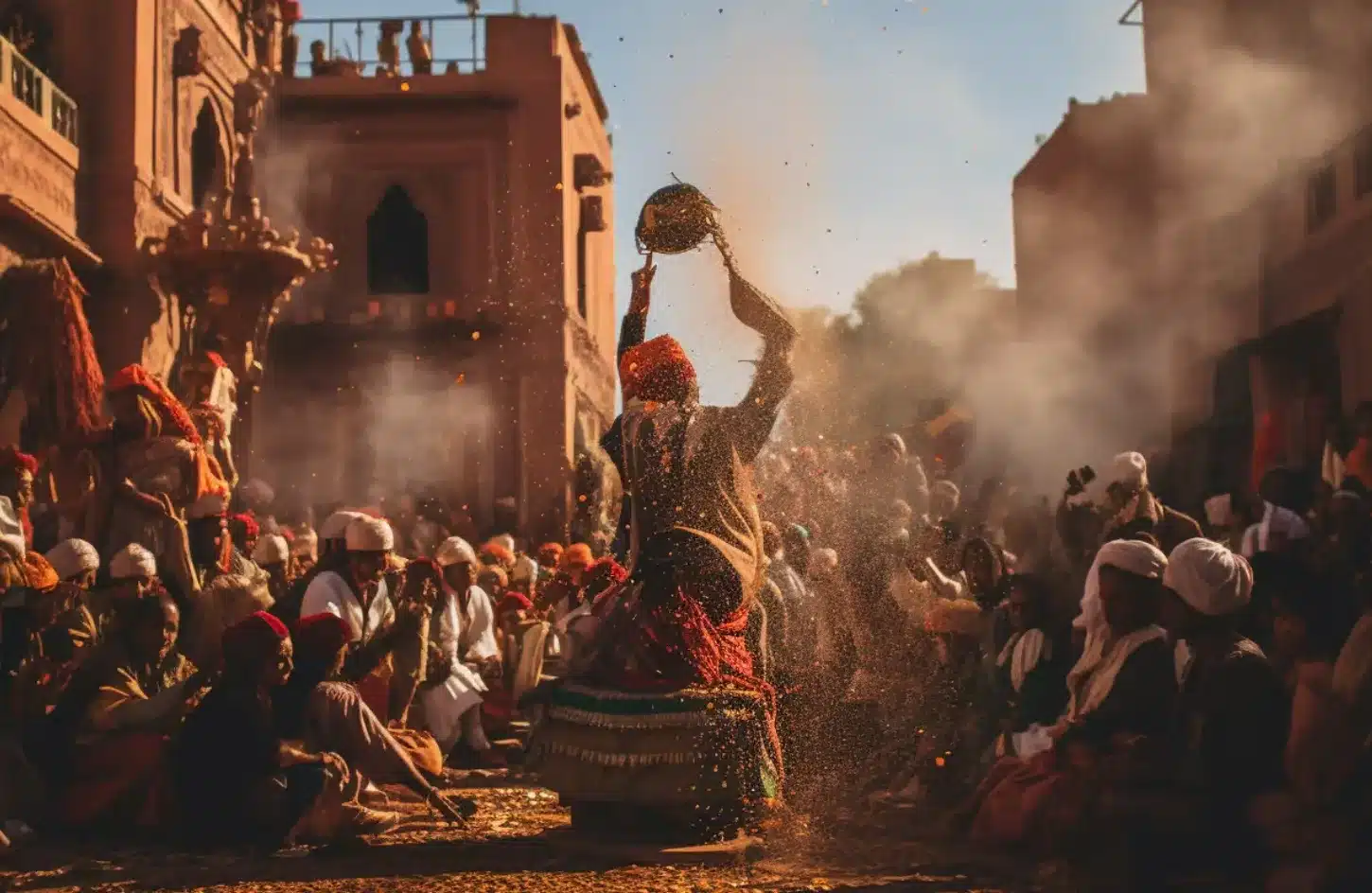
Morocco’s festival calendar is one of the richest reasons to time a trip carefully. For exact yearly dates, see our full guide to festivals in Morocco. Highlights include:
- Yennayer (Amazigh New Year) — early-to-mid January, celebrating Morocco’s indigenous Berber heritage
- Fez Festival of World Sacred Music — spring, drawing musicians and spiritual-music fans from around the world
- Mawazine Festival — Rabat’s major international music festival, typically held in spring
- Gnaoua World Music Festival — Essaouira, usually June, blending Gnaoua trance music with global performers
- Marrakech Popular Arts Festival — autumn, showcasing traditional Moroccan music, dance, and performance
- Ramadan and Eid al-Fitr / Eid al-Adha — dates shift yearly; evenings come alive with communal iftar celebrations
Planning Around the 2027 Total Solar Eclipse
For those considering the possibility of traveling in August 2027, the timing will be somewhat different from that presented throughout the remainder of this article. On August 2, 2027, there was a total solar eclipse in the very northern part of Morocco, where totality began around 9:44 AM in Tangier (lasting about 4 minutes 51 seconds) as well as in Tetouan and Chefchaouen. The cities of Marrakech, Casablanca, and Rabat are outside of the totality path and will only witness a partial eclipse.
Furthermore, August weather in northern Morocco is noticeably cooler than in the country’s desert region; in Tangier, there is a chance of about 79% of clear skies.Full viewing-city comparisons, timing tables, and safety guidance are covered in our best places to watch the Morocco solar eclipse guide, and our Morocco Solar Eclipse 2027 tours combine eclipse viewing with the imperial cities and Sahara.
Which Season Fits Your Trip? A Quick Decision Guide
- First-time visitor wanting a balance of everything: April or October
- Photographer chasing landscape and light: late March-April (bloom) or October-November (golden light)
- Desert-focused trip (camping, camel trekking): October to March, avoiding peak summer entirely
- Beach or surf trip: June to September along the Atlantic coast
- Mountain trekking: April to October for hiking, December to February for skiing
- Budget-conscious traveler: November, January, or February, outside the Christmas/New Year spike
- Eclipse chaser: early August 2027, northern coast only (Tangier, Tetouan, or Chefchaouen)
- Traveling with school-age children: July or August, accepting the heat trade-off for fixed holiday dates
FAQs About: Best Time to Visit Morocco
What is the cheapest time to visit Morocco?
Winter, excluding the last two weeks of December, typically offers the lowest accommodation and tour prices, alongside noticeably thinner crowds at major sites.
How cold does the Sahara get at night?
The temperature at night in the desert is much lower than that during the day. From December to February, one can expect around 0 to 5°C (32 to 41°F) at night; between March and November around 8 to 14°C (46 to 57°F); while during May to September, it’s between 18 to 24°C (64 to 75°F). — see our Sahara desert tour planning guide for a full packing breakdown.
Can I visit Morocco during Ramadan?
Yes. Major cities and tourist-facing businesses continue serving visitors throughout Ramadan, though smaller-town restaurants may keep reduced daytime hours. Evenings are arguably the most atmospheric time of year to be there, with iftar celebrations animating the medinas after sunset.
What is the best month to see the Sahara Desert?
October and March stand out as the strongest single months, balancing comfortable daytime heat with manageable, rather than bitterly cold, desert nights.
Is Morocco too hot to visit in summer?
Inland and desert regions get genuinely hot, with the Sahara capable of reaching 50°C (122°F), making summer a poor fit for desert camping or extended city walking. The Atlantic coast and Atlas Mountain villages, however, stay comfortable and are a strong summer alternative.
Is Morocco safe to visit year-round?
Yes — Morocco is considered one of the safer destinations in North Africa across all seasons, with standard travel precautions in busy tourist areas. Our full Morocco safety guide covers regional safety, solo travel, and current travel advisories in more detail.
Planning Your Trip Around the Right Season
In fact, for those travelers who want to have an adventurous experience in Morocco, planning a trip depending on the calendar is better than choosing any time of year arbitrarily. Spring and fall are always the two most suitable options, yet choosing the best one will still come down to the kind of attraction that interests you. Take a look at all the Morocco tours we offer here.
