


QUICK ANSWER
Both 3-star budget Nile cruise and 5-star ultra luxury Nile cruise will have the same visits to temples, sail the same river and employ the same Egyptologists as guides when they are on land. However, what differs in accordance with pricing: cabin size (16 square meters versus more than 35), buffet versus à la carte menu options, quality of pools, ratio between number of crew members and guests, and overall ship ambience. Budget cruises cost around $380-550 per person for 3-4 days trip. Prices for luxury ships begin from $900-$1,500+ per person. Your choice should be made according to what is offered, not which one is better.
Licensed guide and Egypt travel expert Yasser Shoaib of Egy Vacations has put his clients on all kinds of Nile cruise ships in fifteen years as a guide. “The first question I will ask,” says Shoaib, “is what is important for you outside of the temple, because inside the temple everyone gets the same Karnak.” This guide tells it like it is – the facts, the prices, and the decision making process.
What Stays the Same on Every Nile Cruise — Regardless of Budget
Before comparing what changes, it’s worth being clear about what doesn’t. Understanding this prevents the most common cruise-category mistake: paying for luxury when budget delivers the same outcome, or saving on a budget ship and missing something that mattered.
| What Stays the Same | Budget Cruise | Luxury Cruise |
|---|---|---|
| Temple sites visited | Valley of the Kings, Karnak, Hatshepsut, Edfu, Kom Ombo, and Philae | Identical — the same major sites with the same general access |
| Egyptologist guide quality | Licensed by the Egyptian Tourism Authority — professional and knowledgeable | Licensed by the Egyptian Tourism Authority — same licensing standard |
| Nile route | Luxor ↔ Aswan, typically 3–4 nights | Identical route — same river, scenery, and main stops |
| Entrance fees | Included in most packages across cruise categories | Included in most packages, with some luxury options offering broader coverage such as additional tomb access |
| Abu Simbel option | Available as a day-trip add-on from Aswan | Available as an add-on and sometimes included in the luxury package |
| Sunrise and sunset on the Nile | Same river, same light, and the same unforgettable scenery | Identical — the Nile views are not exclusive to luxury cruises |
★ THE MOST IMPORTANT THING TO UNDERSTAND
The temples are identical. The river Nile is the same. The history is also identical. The Egyptologist, certified to tell you all about the Punt reliefs in Hatshepsut’s temple, is certified according to the same standards on the budget cruise liner and the luxury liner. What differs from one to another based on prices is everything surrounding these experiences; your sleeping arrangements, your meals, your privacy, the number of people who share these facilities with you, and the level of services offered to you. If these things matter a lot to you, choose up.
The 4 Nile Cruise Categories Explained
The Egyptian Ministry of Tourism rates cruise ships from 3 to 5 stars, but within the 5-star category there is a significant further distinction between standard 5-star and ultra-luxury. In practice, the market divides into four meaningful tiers:
| Category | Star Rating | Passengers | Price (per person, 3–4 nights) | Best Description |
|---|---|---|---|---|
| Budget / Standard | 3-star | 100–150 | $380–550 | Functional, clean, full-board; emphasis on cost over comfort |
| Deluxe | 4-star to 5-star | 60–120 | $600–900 | Strong value; good cabin size; improved dining; most popular category |
| Luxury | 5-star premium | 40–80 | $900–1,500 | Quality throughout; à la carte option; better crew ratio; private excursion option |
| Ultra-Luxury | 5-star deluxe+ | 12–50 | $1,500–3,000+ | Boutique experience; large cabins; gourmet dining; near-private Egyptologist guide |
Note that the above-mentioned rates apply to a 3-4 night stay on full board basis with guided tours per person. Rates for summer (June-August) season are around 20-30% less in all the categories mentioned above. Sailings in dahabiya are an independent category discussed in detail in our Dahabiya vs Nile Cruise guide.
Luxury vs Budget: Side-by-Side Comparison
| Factor | Budget (3-star) | Deluxe (4–5 star) | Luxury (5-star premium) | Ultra-Luxury |
|---|---|---|---|---|
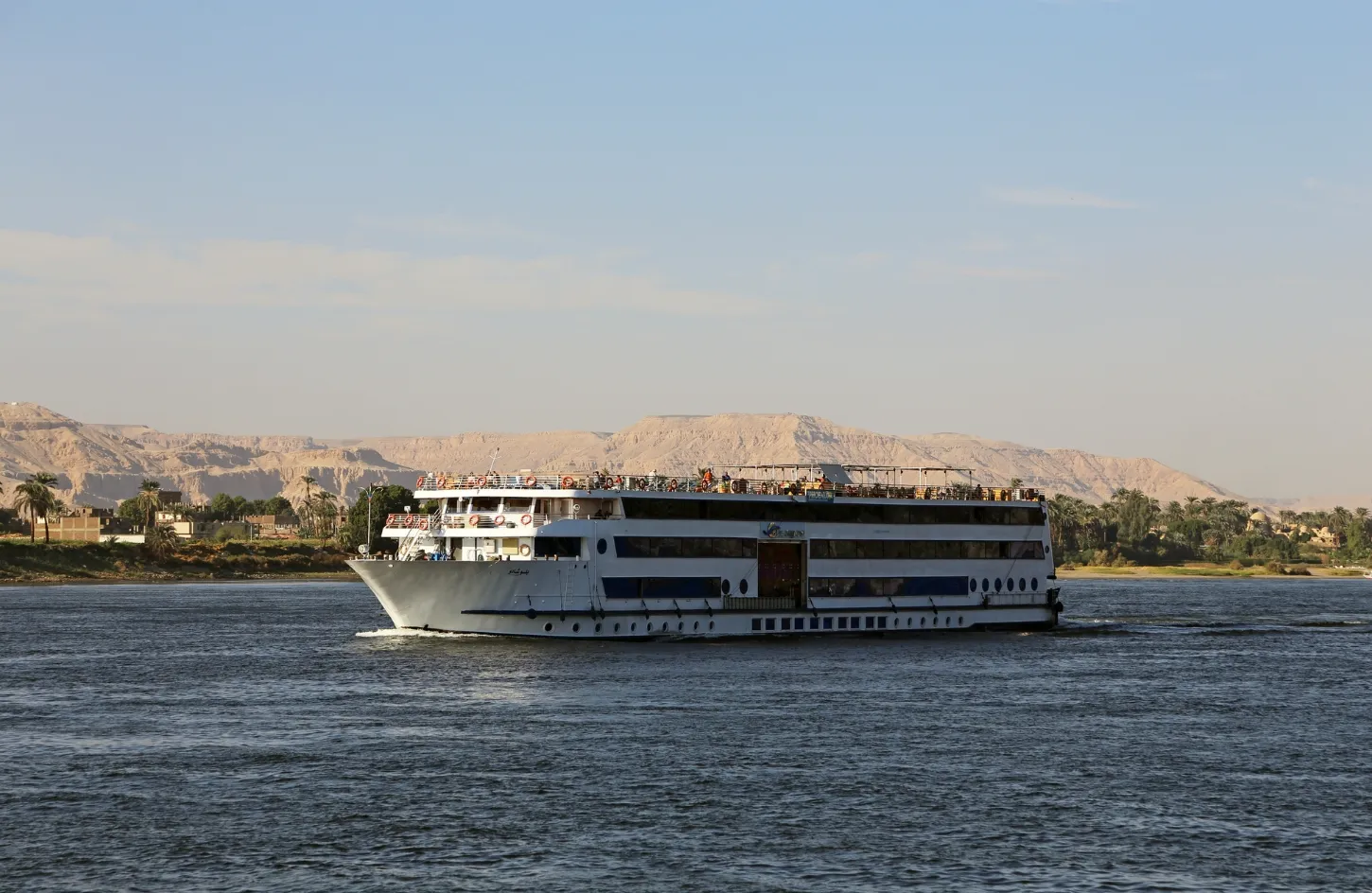
| Cabin size | 14–18 sqm | 20–26 sqm | 28–35 sqm | 35–55+ sqm |
| Balcony / window | Fixed window or small porthole | French balcony or full balcony | Full walk-out balcony on most cabins | Private walk-out balcony; some with sun loungers |
| Dining style | Buffet only | Buffet + some à la carte options | À la carte available; higher quality ingredients | Full à la carte; gourmet kitchen; dietary customisation |
| Pool | Small sun-deck pool; unheated | Mid-size pool; sun deck with loungers | Larger pool; heated in some ships | Heated pool; some with infinity edge; spa access |
| Crew-to-guest ratio | 1:5 to 1:8 | 1:3 to 1:5 | 1:2 to 1:3 | 1:1 to 1:2 — near-private service |
| Egyptologist guide | Licensed; group of 20–40 pax | Licensed; group of 15–30 pax | Licensed; smaller groups or private option | Licensed; private guide per family/couple |
| Wi-Fi | Slow to non-existent | Available; quality varies | Reliable; satellite-based in most cases | High-speed satellite; works underway |
| Entertainment | Evening programme (music, shows) | Similar; higher quality production | More intimate; curated cultural evenings | Minimal formal entertainment — quiet, private atmosphere |
| Drinks inclusion | Soft drinks at meals; alcohol extra | Similar; some all-inclusive options | Often all-inclusive including alcohol | Fully all-inclusive; premium spirits |
| Cabin soundproofing | Light; engine noise audible in lower cabins | Better; upper deck cabins quieter | Good throughout | Excellent — sound-isolated cabins |
| Excursion inclusions | Standard temples; entrance fees extra sometimes | Standard temples + most entrance fees included | Standard + some premium temples included | All temples + private scheduling option |
What You Actually Get for More Money
Cabin Size & Quality — The Most Tangible Difference
A cabin is a place where one spends around 10-12 out of 24 hours per day during a Nile cruise: resting, showering, getting ready for excursions and recovering from visits to temples. On a budget liner, a 15-sqm cabin is a small room with a bed, a tiny bathroom and a window. On a luxury liner, a 40-sqm suite has a double bed, a lounge area, a bathroom with a bathtub and a shower, a private balcony and proper black out curtains.
The most valuable cabin feature upgrade is a balcony. The presence of a French balcony (full-height glass windows without any outside area) or a walk-out balcony influences the ability to relax outside with your coffee in the morning and watch the Nile going by. This is no small issue because it affects the amount of the Nile experience one gets without even trying from his/her cabin. On a budget liner, a Nile outside the porthole is just something one sees. On a cabin with a walk-out balcony, it is something one sits in.
Dining — Buffet vs À la Carte
Budget and deluxe Nile cruises offer dining by way of buffets: plentiful, varied, and practical. Food will be decent, consisting of salads, hot foods, Egyptian cuisine, and dessert. The dining area will be crowded during fixed meal times, the service being necessarily attentive, and the dining experience will be communal.
For luxury dining, the addition is an à la carte menu, higher-caliber food preparation facilities, and personalized service. An ultra-luxury cruise will resemble a restaurant in many ways; for instance, Oberoi cruise boats have a dining experience that might stand alone in any metropolitan area as a top-flight restaurant. The chef knows all about the dietary restrictions each guest has. The courses come in the right order. The bread is prepared on board.
Whether this makes a difference depends on how much importance you place on dining while on vacation. For many Egypt travelers, whose primary concerns include temples and antiquities, dining by buffet is quite adequate. For those who regard dining as an essential part of the vacation experience, the upgrade is worthwhile.
Guide Quality & Group Size
All Nile cruise Egyptologists must be certified by the Egyptian Tourism Authority, which means that their language skills, Egyptology, and guiding qualifications have been tested and confirmed by a government body. Whether it’s a budget or luxury cruise ship, all guides must have this certificate to work.
What distinguishes the two types of services is the number of people in each group and the format. When you’re aboard a budget ship, there are 120 passengers altogether, so you’ll be grouped into groups of 30–40 people per site, and you’ll see everything in groups using headphones. In the case of an ultra-luxury ship with 25 people onboard, you’ll have much smaller groups of 8–12 people, almost like a private tour, where conversations become possible, and you can spend extra time on interesting parts of each monument.
If you want to receive detailed information for the first time, either format will work. If you wish to ask questions and discuss things, the smaller groups are definitely better.
The Pool — and Why It Matters More Than You’d Think
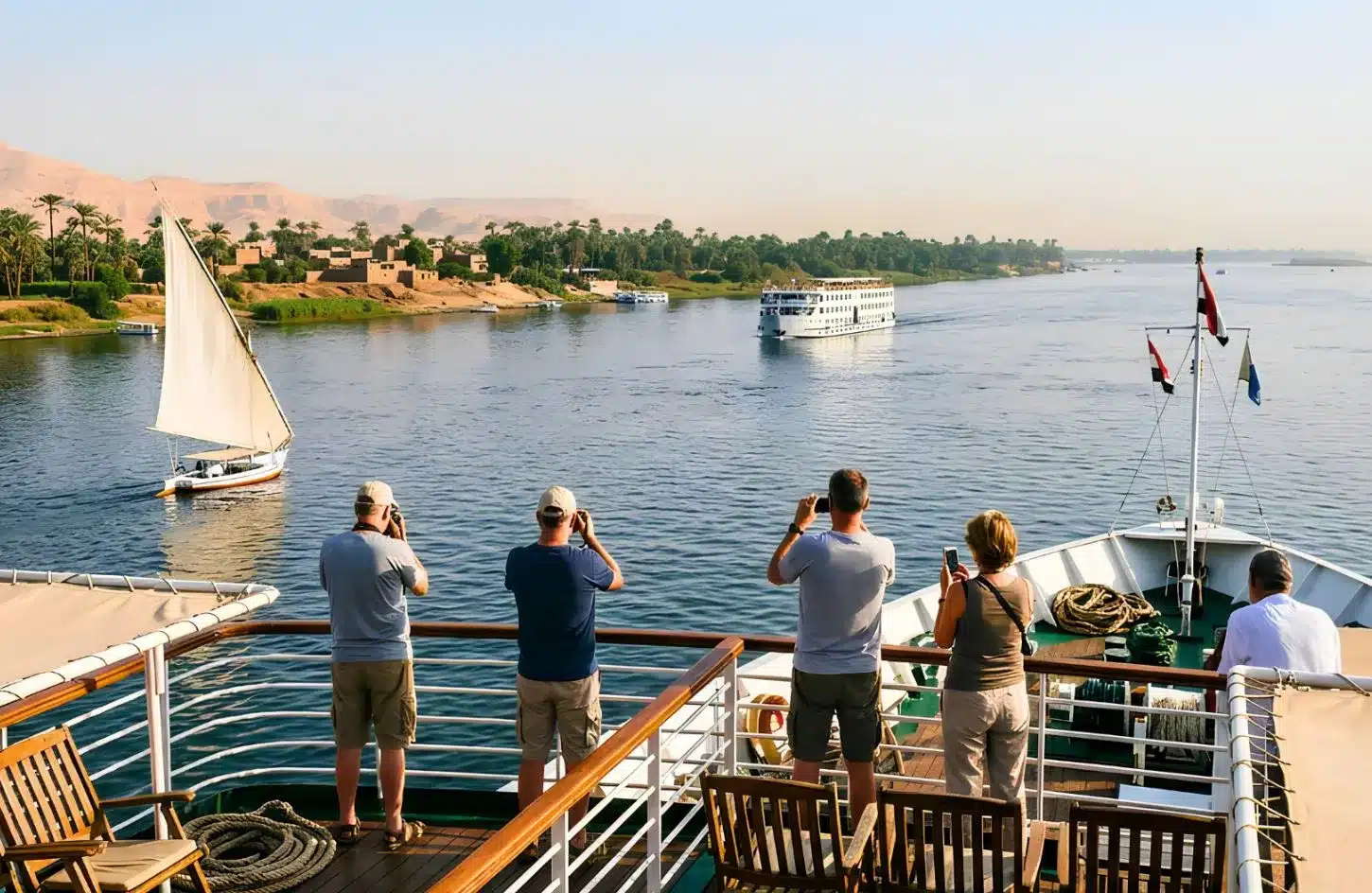
The pool on the Nile cruise will be useful for the 2-4 hour period during the middle of the day while the ship is traveling between the temple stops – that is, while the ship is in transit after the completion of shore visits in the morning and before resuming them in the afternoon. During October and November, which are the peak months, the temperature at the sun deck of the ship is 25-30°C – hot but perfectly comfortable for swimming in the pool. During July and August, when the cost of budget cruises goes down, the same sun deck has the temperature of 40-44°C.
For the peak period, a small pool (unheated) for six people will be enough on a budget cruise ship. However, on the luxury cruise ships, the same period requires a heated mid-size pool with proper sun loungers and a full-fledged pool service.
What the Extra Money Does Not Buy
- A different Nile — the river is the same from a budget or luxury deck
- Different temples — the site visits are to the same monuments
- Shorter queues at major sites — crowd management at temples is handled at the site level, not by the cruise ship
- Better weather — October in perfect weather on a budget ship is better than November in rain on a luxury ship
- A better story to tell — the Valley of the Kings is equally moving from either vessel
Hidden Costs: What Budget Doesn’t Always Include
Budget Nile cruise pricing is often presented as all-inclusive when it isn’t. Understanding what is excluded prevents the onboard price surprises that generate the most negative reviews of budget ships.
| Cost Item | Budget (3-star) | Deluxe (4–5 star) | Luxury (5-star+) |
|---|---|---|---|
| Alcoholic beverages | Extra — significant markup | Extra on most; some all-inclusive options | Often included; premium spirits on ultra-luxury |
| Temple entrance fees | Sometimes excluded — verify before booking | Usually included in all standard stops | Included, with some premium tombs covered |
| Bottled water onboard | Sometimes charged even at meals | Usually included at meals | Fully included; premium water brands |
| Wi-Fi | Often paid (slow and expensive) | Included but quality varies | Included; reliable |
| Tipping | Expected: $15–25/person/day total (guides, crew, cabin steward) | Same expectation | Same; some luxury ships include service charge |
| Abu Simbel day trip | Always extra — EGP 600+ plus flight costs | Always extra | Sometimes included in total package price |
| Gratuities / service charge | Always separate | Always separate | Sometimes included (check carefully) |
| Optional excursions (hot air balloon, private tomb) | Always extra | Always extra | Sometimes partially covered |
⚠️ THE BUDGET CRUISE HIDDEN COST WARNING
A budget cruise with a quoted price of $450 per person will actually cost between $650-$700 per person when expenses for drinks ($20/day), tips ($20/day), and non-included entrance fees are considered. ALWAYS make sure to ask your travel agency: “What is not included in this price?” Before booking. At Egy Vacations, our quotation of packages includes what is and is not included in the price.
Who Should Choose What: A Practical Framework
| Traveler Profile | Best Category | Key Reason |
|---|---|---|
| First-time Egypt visitor, budget-conscious | Budget or Deluxe | Core experience is identical; spend saved on optional extras or additional days |
| First-time visitor — comfort matters | Deluxe (4–5 star) | Best value-to-comfort ratio; meaningful upgrade from budget without luxury price |
| Honeymooner / anniversary couple | Luxury or Ultra-Luxury | Walk-out balcony, private dining option, smaller groups — the details matter for romance |
| Family with children (teenagers) | Deluxe | Pool deck, flexible dining times, good cabin size; luxury adds cost without proportional benefit for families |
| Solo traveler | Budget or Deluxe | Solo supplements vary; budget ships often have better solo rates; deluxe for more comfort |
| Repeat Egypt visitor — seen the temples | Ultra-Luxury or Dahabiya | Deeper guide engagement, private scheduling, higher-quality onboard experience worth the premium |
| History / archaeology enthusiast | Luxury with private guide option | Smaller groups allow genuine engagement with Egyptologist; private guide available at premium |
| Budget traveler willing to accept trade-offs | Budget (3-star) | The temples are identical; the ship is functional; the savings are real — $300–500 per person |
| Traveler who prioritises food quality | Luxury+ | À la carte dining and gourmet kitchen are the clearest upgrade at the table |
Best Nile Cruise Ships by Category (2026)
These are ships Egy Vacations works with directly or knows from industry knowledge. We name only vessels we would genuinely recommend — not a comprehensive list.
Budget / Standard (3-star)
There are many budget boats operating along the Nile – over several hundred vessels sail from Luxor to Aswan. Quality of budget vessels varies greatly. However, those budget vessels that Egy Vacations cooperates with on a regular basis have stable crews and hulls that get regular maintenance. Please ask about such issues as cabin deck (engine decks are noisy), ship age, and inclusion of entrance fees.
💡 BUDGET SHIP SELECTION TIP
The key element within this topic is crew stability. A vessel where the same captain, the same Egyptologist, and the same cabin steward are working together for some number of years provides much better services than a vessel where new staff comes frequently. It is recommended to ask your operator about the service period of current staff on board.
Deluxe (4–5 star)
Deluxe is the most competitive category on the Nile River – that’s where most foreign travelers make their bookings and competition is fierce there both in terms of prices and service level.
- Sonesta St. George: French interior, excellent reputation for its service, wine cellar, marble bathrooms which surpass the category’s standard
- Mövenpick Royal Lily: high standards of Swiss hospitality, neat cabins, good family-friendly mix, reliable Egyptologist program
- MS Nile Adventurer (previously Steigenberger): well-equipped ship, nice ratio between number of cabins and number of passengers
Luxury (5-star Premium)
- Sonesta Star Goddess: the most consistently recommended luxury ship on the Nile among Egypt specialists; 57 cabins, high-quality kitchen, attentive service
- Sanctuary Sun Boat III and IV: boutique luxury, 20 cabins or fewer, adult-oriented atmosphere, consistently rated among Egypt’s best
- Historia: newer vessel, strong design, excellent food programme, popular with European luxury market
Ultra-Luxury
- Oberoi Zahra and Oberoi Philae: the category benchmark — 27 or fewer cabins, Oberoi’s five-star hospitality standards, private excursion scheduling, gourmet kitchen, private Egyptologist per small group
- Sanctuary Nile Adventurer: ultra-boutique, 18 cabins, the quietest and most private atmosphere on the river
- Waldorf Astoria Nile River Experience: launching late 2026 — 29 suites, Waldorf Astoria brand standards, first internationally-branded ultra-luxury vessel on the Nile
Value for Money: An Honest Assessment
★ YASSER’S HONEST VERDICT
Based on the past 15 years of placing people on every class of Nile cruise ships, I can be honest and say that the value of the trip lies with the luxurious class (4–5 stars). You get a considerable upgrade from budget class in terms of a better cabin, better food, and a better swimming pool, all while not having to explain the need for buying something luxurious. From luxurious to the super luxurious class, the difference is real but is becoming marginal as well – you get less people in your group and a walking out balcony; something that is more important if you are on honeymoon or if you come back here.
When Luxury Is Worth It
- Whether it’s honeymoon or an anniversary, there is a real qualitative difference made by having access to the private balcony, private dining, and a group guide
- Repeat customers that have visited the temple ruins and find all the archaeological information already known to them – in this case, the experience of the cruise itself is the highlight of the vacation
- Vacationers who appreciate good food and hotel services in general – in case you always stay in a nice hotel and enjoy the food, the quality of the kitchen in the luxury cruise ship would be important in the same way
- Individuals who book the ship for their personal private cruise group – the experience of such cruises on luxury ships would be totally different from any other booking type
When Budget Is the Smart Choice
- First-time visitors whose primary goal is the ancient sites — you’ll spend 6–8 hours per day at temples; the remaining hours on the ship are secondary
- Solo travelers or pairs on a tight budget who want the Nile experience without the financial commitment of luxury
- Travelers adding the cruise to a longer Egypt itinerary (Cairo, Abu Simbel, Red Sea) — better to allocate budget across the full trip than concentrate it on the cruise vessel
- Anyone travelling in summer (June–August) when prices across all categories drop 20–30% — the budget category in summer can represent exceptional value
Book Your Nile Cruise with Egy Vacations
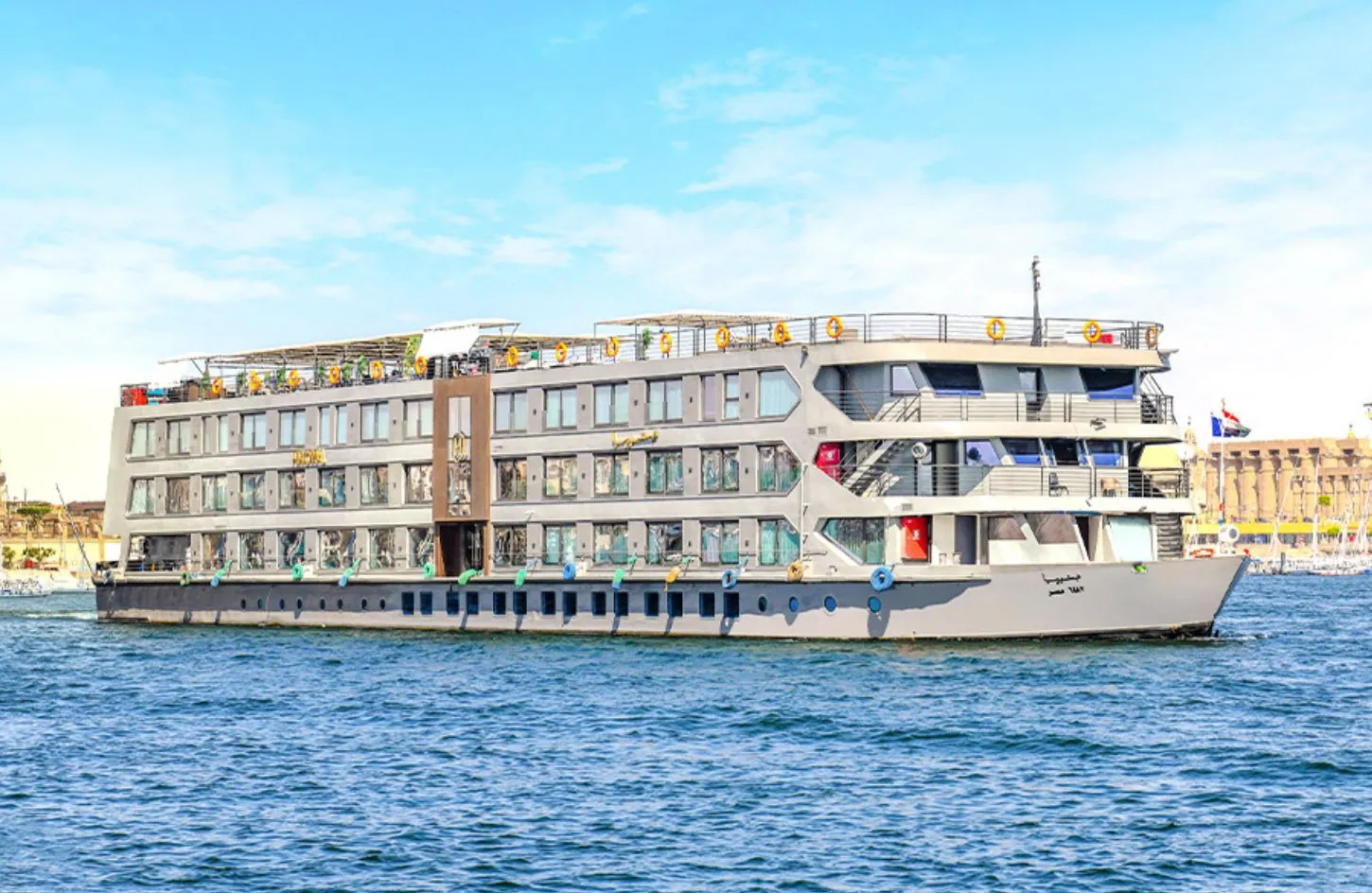
At Egy Vacations, Nile cruises are available in all four categories – from budget standard to ultra luxury – and pricing is completely clear about what does and doesn’t come with the trip before you buy. We don’t sell any specific category; rather, we sell the right cruise ship for the individual.
- Standard cruises (budget): starting at $380 per person – full board, licensed guide, standard temple itinerary
- Deluxe cruises (most popular): starting at $600 per person – improved cabins, improved dining and improved service standard
- Luxury cruises: starting at $900 per person – quality in everything, small group and near-private guide itinerary
- Ultra luxury (Oberoi, Sanctuary): starting at $1,500 per person – the best of the Nile, private booking, gourmet kitchen
- Private charter (any category): please contact us – prices vary with ship and dates
💡 EGY VACATIONS RECOMMENDATION
For the first time visitors: our premium 4-night trip from Luxor to Aswan comes as the primary suggestion – the one that best combines comfort, cost, and the ability to have the guides on board. For the honeymooners and returning visitors: luxury and ultra-luxury trips on the same path. Let us know your travel dates, number of people, and preferences; we will provide ship recommendations with pricing information.
Frequently Asked Questions
What is the difference between a luxury and budget Nile cruise?
Both take the same temples tour on the same Luxor to Aswan itinerary escorted by licensed Egyptologists – these aspects remain the same irrespective of budget. The differences based on price are: cabin space (14–18 square meters on budget and 35+ square meters on ultra-luxury), meal plan (buffet vs. à la carte), swimming pool, ratio of staff to passengers (1:6 on budget and 1:1 on ultra-luxury), guide group size (30–40 persons on budget vs. 8–12 persons on luxury), and onboard ambiance. Budget 3-night cruises cost from $380–550 per person; ultra-luxury from $1,500+.
Is a budget Nile cruise worth it?
Yes, but not for everyone. A budget Nile cruise stops at all the same temples as a luxury cruise, uses an Egyptologist licensed by the Egyptian government, and travels on the same stretch of the river. The difference is that if you care about seeing the ruins more than being comfortable on the boat, you will get the same basic experience without paying a lot of money. You will have smaller rooms, buffet meals, a bigger group of people to be your guide, and slower internet.
What is the best value Nile cruise category?
Deluxe class 4-5 stars is the most economical choice. The level of comfort is better by a significant margin (cabins size 20-26 sqm, French or full balconies, improved dining and crew/guest ratio) for a price of 20-40% more expensive than budget ships, compared to 150-200% for luxury. For the majority of first-time visitors from abroad, it’s the best class to choose. The Sonesta St. George and Mövenpick Royal Lily are the most popular recommendations among them.
Do budget and luxury Nile cruises visit the same temples?
Yes, because all Nile cruises following the usual Luxor-Aswan itinerary have the same stopovers at the Valley of the Kings, Hatshepsut temple, Karnak temple, Luxor temple, Edfu, Kom Ombo, and Philae. However, the differences are in how the excursions are arranged (size of group and flexible scheduling), which entrance fees are included. Premium programs will cover premium entry tickets to tombs like that of Tutankhamun and Seti I.
Are the Egyptologist guides better on luxury cruises?
There is no formal distinction between the Egyptologists that lead tours on budget and luxury Nile cruises – both must have an Egyptian Tourism Authority accreditation. The main factor that differentiates the tours is the group size. If the Egyptologist tour is on a budget ship, he will be leading tours of groups of 30-40 tourists. However, on a high-end ship, the groups will usually consist of 8-12 people. Smaller groups mean better interaction, more room for asking questions, greater flexibility, and closer relationships with the guide.
