

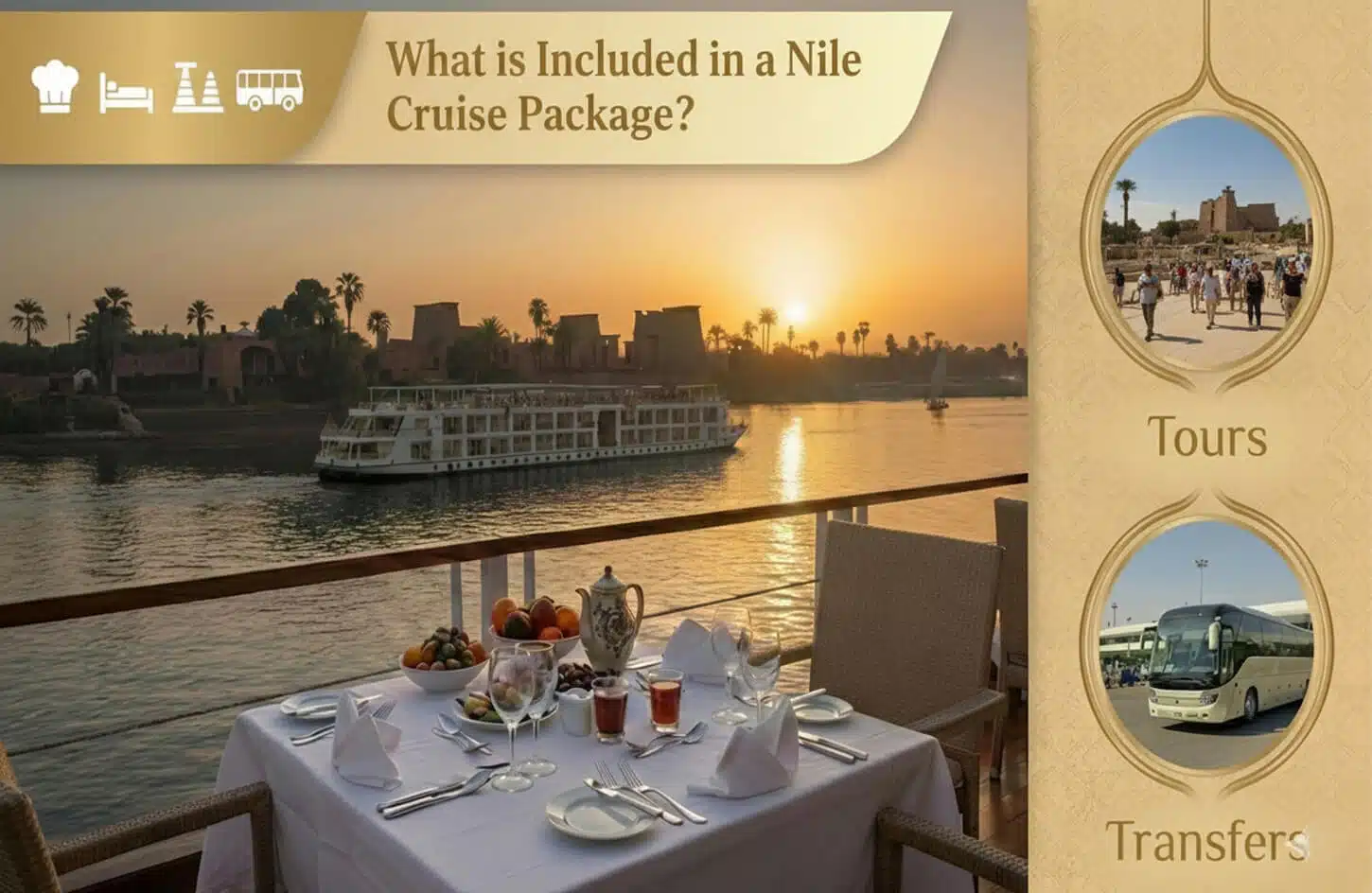
A Nile cruise package typically includes: private cabin accommodation with Nile views, all daily meals (breakfast, lunch, dinner), guided Egyptologist-led excursions to temples and tombs, airport-to-ship transfers, and onboard entertainment. Drinks beyond water, tea, and coffee usually cost extra, as do tips, optional excursions, spa treatments, and Wi-Fi.
What Does a Nile Cruise Package Include?
Booking a Nile cruise is one of those decisions where the details matter. You want to know what’s covered before you commit — and rightly so, because packages vary more than most operators advertise.
I’ve sailed the Nile in January’s crisp light and in July’s heavy heat, on standard ships and on private dahabiyas. The question I hear most from travelers before they book isn’t ‘which temples will I see?’ It’s this one: what exactly am I paying for?
This guide breaks it down clearly — what’s almost always included, what you’ll likely pay extra for, and what to ask your operator before signing anything.
👉 Discover our full range of Nile cruise packages designed for every travel style
The Standard Nile Cruise Package: What’s Included

Most 3, 4, or 7-night packages running between Luxor and Aswan cover the following:
Cabin Accommodation
Every package includes onboard accommodation — the question is what level? Standard cabins are compact but comfortable, usually around 18–22 square meters, with a private bathroom, air conditioning, and a window or small porthole. Step up to a superior cabin or suite, and you get a proper balcony, which makes the sail past the Edfu temple in the evening a different experience altogether.
Luxury ships — and Egy Vacations works with some of the best on the river — offer suites that rival boutique hotels, with floor-to-ceiling windows, walk-in closets, and butler service. All cabins on reputable vessels include a flat-screen TV, a safe, a minibar, and daily housekeeping.
👉 Start by understanding overall expenses in our Egypt travel cost guides.
Daily Meals (Full Board)
Every standard Nile cruise package includes full board: breakfast, lunch, and dinner served daily in the main restaurant. Breakfasts are typically buffet-style with a mix of Egyptian and Western options — ful medames, eggs, cheeses, fresh bread, and fruit. Lunches and dinners follow a similar buffet format, featuring Egyptian classics such as koshari, grilled meats, fresh Nile fish, and a rotating international selection.
One thing worth knowing: water, tea, and coffee at mealtimes are almost always included. Soft drinks, juices, alcohol, and premium beverages are not — those run on a pay-as-you-go basis at the bar. Some higher-tier all-inclusive packages fold in soft drinks; a few include beer and wine at dinner. Ask specifically.
👉 Timing can impact your experience—see our blog for advice on the best time to take a Nile cruise.
Guided Shore Excursions
This is where the real value of a Nile cruise package shows up. Included excursions are led by licensed Egyptologist guides — not just local drivers, but trained historians who know why the reliefs in Karnak’s hypostyle hall are painted differently on the eastern and western walls. That distinction matters when you’re standing in front of 134 columns trying to make sense of 3,300 years of history.
Standard itinerary excursions on a Luxor–Aswan cruise include:
- Karnak Temple Complex and Luxor Temple (East Bank, Luxor)
- Valley of the Kings, Temple of Hatshepsut at Deir el-Bahari, Colossi of Memnon (West Bank, Luxor)
- Temple of Horus at Edfu
- Kom Ombo Temple (Sobek and Haroeris double temple)
- Philae Temple on Agilika Island, Aswan
- The Unfinished Obelisk and Aswan High Dam
All entrance fees for these sites are included in quality packages. Verify this with your operator — some budget cruises list ‘guided tours’ but charge entrance fees separately.
Abu Simbel is not part of the standard Luxor–Aswan itinerary, but is often available as an add-on excursion from Aswan. If it’s on your bucket list, confirm availability and extra cost upfront.
Airport and Hotel Transfers
Standard packages include private transfers from the arrival airport (Luxor or Aswan, depending on your route) to the cruise ship, and a return transfer at the end of the cruise. These are typically in air-conditioned vehicles with a representative waiting for you at arrivals.
If your itinerary includes flying into Cairo and taking a domestic flight to join the cruise, that transfer leg is usually also included — though the domestic flight itself may or may not be, depending on the package. This is the detail most travelers miss. Ask whether ‘transfers’ means airport-to-ship only, or whether it covers the full journey from your international arrival airport.
Onboard Entertainment
Evenings on the Nile have their own rhythm. After dinner, most cruise ships offer nightly entertainment — and on the better ships, this means something more interesting than background music.
Expect a weekly Galabeya party: passengers are invited to wear a galabeya (the traditional Egyptian robe — the ship usually provides them if you don’t have one) and spend an evening with live music, Egyptian dancing, and a lot of photos. Folklore shows featuring Nubian music and Tanoura dancers’ spinning are common. Some ships offer lectures on Egyptology, film screenings about ancient Egyptian history, and cooking demonstrations of Egyptian dishes.
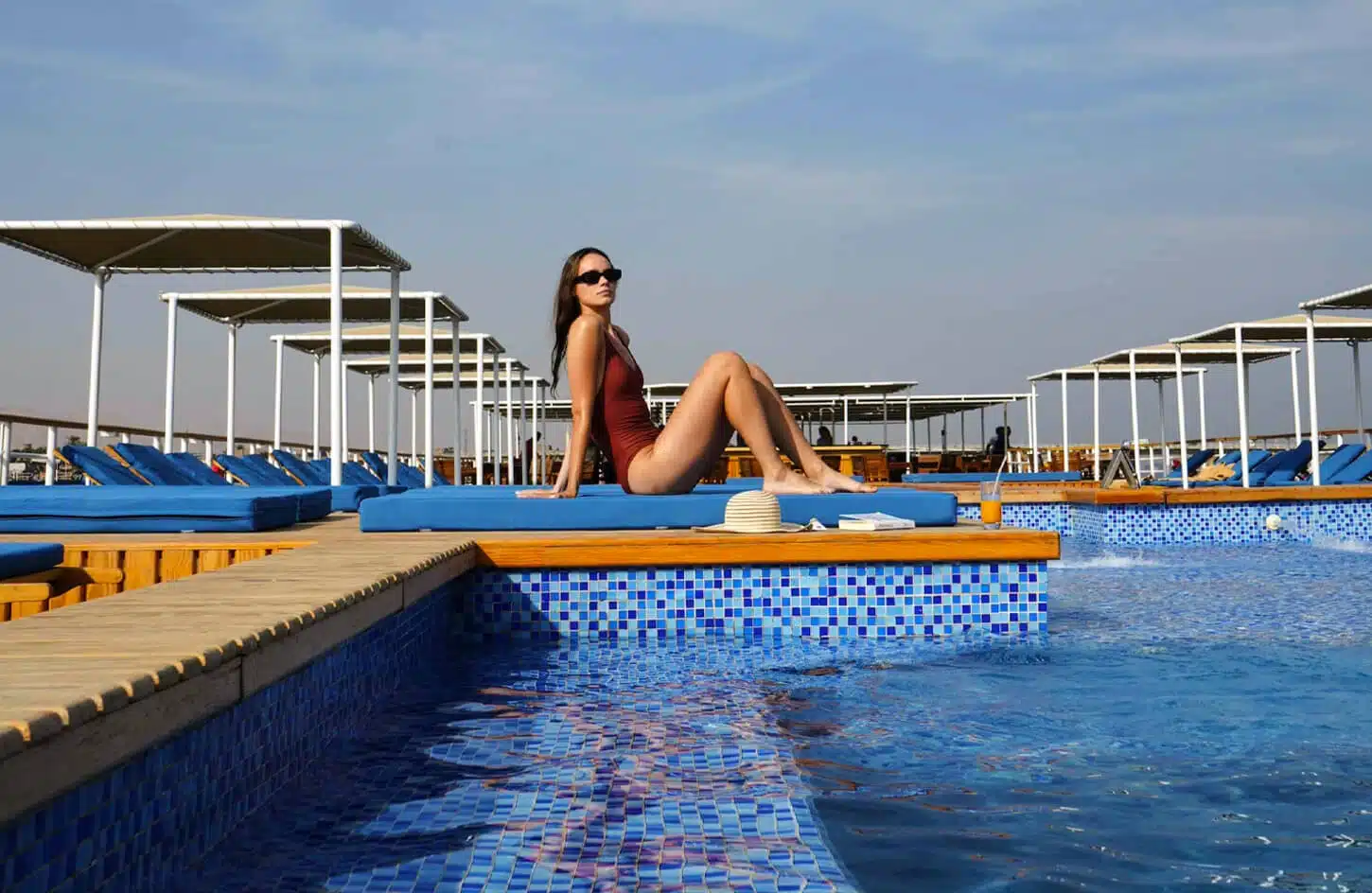
Daytime on the ship — when you’re sailing between stops — includes sun deck access, swimming pool, and lounge areas. Most ships have a library with books about Egypt and a small gift shop for last-minute purchases.
Full Board vs. All-Inclusive: What’s the Difference?
These two terms are used loosely in the Nile cruise world, and they don’t always mean what you’d expect.
| Feature | Full Board | All-Inclusive |
|---|---|---|
| Meals | Breakfast, lunch, and dinner included | Breakfast, lunch, and dinner included |
| Water / tea / coffee | With meals | Usually unlimited |
| Soft drinks | Extra cost | Often included |
| Alcohol / beer | Extra cost | Varies — confirm with operator |
| Excursion entrance fees | Usually included in quality packages | Included |
| Tips / gratuities | Not included — budget $50–$75 per person | Not typically included — same budget applies |
💡 My honest recommendation: for most international travelers, full board with a quality operator covers everything you actually need. All-inclusive adds convenience, but the price difference rarely reflects value unless you drink heavily or want to avoid thinking about anything. The quality of the Egyptologist guide matters far more than whether your Pepsi is free.
What Is NOT Included in a Nile Cruise Package
This section saves you the most money. Read it before you budget.
Tips and Gratuities
Tips are not included in any standard Nile cruise package, and they’re not optional — they’re an expected part of the local economy for service workers. Budget roughly $50–$75 per person for a 4-night cruise, split between the cabin crew, dining staff, and your Egyptologist guide. Your guide typically receives the largest portion. A good guide makes a real difference to your experience; tip accordingly.
Alcoholic Beverages
Beer, wine, and spirits are almost never included in standard packages. A Stella beer (Egypt’s local lager) runs about $3–$5 at the ship bar; wine is $6–$15 per glass, depending on the vessel. If you plan to drink regularly, budget $20–$40 per day and check in advance whether your package includes any beverages beyond the basics.
Optional Excursions
Standard packages cover the core Luxor–Aswan temple circuit. These extras usually aren’t included but are worth considering:
- Hot air balloon over Luxor’s West Bank at sunrise (approx. $120–$200/person)
- Abu Simbel day trip from Aswan by plane or coach (approx. $80–$150/person)
- Felucca sail at sunset in Aswan ($15–$30/hour)
- Nubian village boat tour ($20–$50/person)
- Sound & Light Show at Karnak Temple (evening, approx. $25/person)
Wi-Fi
Satellite connectivity on the Nile is inconsistent. Most ships offer Wi-Fi at docking ports; open-water connection is unreliable. Expect to pay $5–$10/day for shipboard Wi-Fi if you need it. Download your maps and reading material before you board.
Personal Expenses
Laundry, phone calls, souvenirs from the ship shop, medications, and any treatments from the onboard spa (if the ship has one) are all out-of-pocket. Spas on luxury ships offer massages from $40–$80; basic ships may not have spa facilities at all.
Cruise Lengths and What Each Covers
The length of your cruise changes what you see — not just how long you’re on the water.
- 3–4 nights (Aswan to Luxor or reverse): Covers the main temples — Karnak, Valley of the Kings, Edfu, Kom Ombo, Philae. The standard choice for first-time visitors with limited time.
- 5–7 nights: Adds more leisure time at each site, optional sunrise excursions, and room for an extension to Abu Simbel from Aswan. Better pacing, more depth.
- 7+ nights / Dahabiya: A slower, more private experience on a traditional sailing vessel. Limited to 8–12 guests. Stops at smaller sites that most cruise ships skip. Suited to travelers who’ve done Egypt before or want something off the beaten path.
Staff and Service: What to Expect
The crew on quality Nile cruise ships works hard. Cabin stewards clean twice daily and turn down beds at night. Dining staff learn your preferences quickly — by day two, they usually know whether you prefer your coffee black or your toast light. The Egyptologist guide is arguably the most important person on your trip.
The standard tipping breakdown at the end of a 4–5 night cruise, per person:
- Cabin steward: $10–$15
- Dining staff (shared tip): $10–$15
- Egyptologist guide: $20–$40 (more if the guide was exceptional — and a great guide genuinely earns it)
- Bus driver: $3–$5
Leave tips in US dollars or Egyptian pounds. Most crew prefer dollars.
Health, Safety, and Practical Notes
- No vaccinations are required for Egypt, but your doctor may recommend Hepatitis A and Typhoid, and ensure routine vaccinations are up to date. Carry any prescription medications on board — pharmacy access from the ship is limited.
- Sunscreen is your most important packing item. Temple visits in summer mean standing in direct sunlight for hours. A hat and a lightweight long-sleeved shirt for site visits (required at some religious sites) are essential.
- Egypt requires a visa for most nationalities. US, UK, EU, and Australian travelers can get a visa on arrival or apply online via Egypt’s official e-visa portal. Your operator will remind you, but don’t leave this until the last minute.
- Medical facilities on the ship are basic. Larger vessels carry a first-aid kit, and some staff may have first-aid training. Serious medical needs require evacuation to shore.
Frequently Asked Questions
Are drinks included in a Nile cruise?
Water, tea, and coffee with meals are included on almost all packages. Soft drinks, juice, beer, wine, and spirits are typically extra. Some all-inclusive packages include soft drinks or a limited drinks package — confirm before booking.
How much should I budget for tips on a Nile cruise?
Budget $50–$75 per person for a 4-night cruise. This covers the cabin crew, dining staff, your Egyptologist guide (who receives the largest share), and drivers. Tips are paid in cash at the end of the cruise.
Is Wi-Fi available on Nile cruise ships?
Wi-Fi is available on most ships, but it is only reliable when docked at port. The open-water satellite connection is weak and inconsistent. Most ships charge $5–$10/day for Wi-Fi access. Download offline maps and entertainment before boarding.
Are entrance fees to temples included?
With quality operators — including Egy Vacations packages — entrance fees for all standard itinerary sites are included. This covers the attractions in Karnak, the Valley of the Kings, Edfu, Kom Ombo, Philae, and Aswan. Budget packages sometimes exclude these; read the fine print.
What is not included in a Nile cruise?
Tips, alcoholic beverages, optional excursions (hot air balloon, Abu Simbel, Nubian village), Wi-Fi, laundry, spa treatments, and personal shopping are not included. International flights and travel insurance are always separate.
Is Abu Simbel included in a Nile cruise?
Abu Simbel is not part of the standard Luxor–Aswan itinerary. It’s available as a day trip from Aswan by plane (1 hour, approx. $80–$150/person) or overnight coach. Many travelers consider it the highlight of an Egypt trip — it’s worth budgeting for separately.
Can I take a Nile cruise as a solo traveler?
Yes, and it’s one of the more sociable ways to travel in Egypt alone. Most cruise ships seat passengers at shared dining tables, and the group excursion format means you spend the day with a consistent crew of fellow travelers. Solo supplements apply to most ships — ask your operator.
Ready to Book Your Nile Cruise?
If you want an honest conversation about which Nile cruise package fits your travel style and budget, our team at Egy Vacations has been handling this since before most travel apps existed. We work with a carefully selected range of cruise ships — nothing that ends up on ‘worst of Egypt’ lists.
Browse our Egypt Nile River Cruises to see current packages, or explore our Luxury Nile Cruise options if you want the balcony-suite-and-private-guide version. For something smaller and slower, our Dahabiya Nile Cruises page explains why this traditional style of sailing has made a comeback.
Related reading:
- Is Egypt Safe to Visit in 2026? — the honest answer, not the tourism board version
- Nile Cruise: Luxury vs. Budget Options — what you actually get at each price point
- Egypt Packing List — what to bring, what to leave behind
