

Quick answer
The easiest way to see Egypt if you have limited mobility is a Nile cruise (your hotel moves with you and you only unpack once) combined with selective sightseeing: the Grand Grand Egyptian Museum, Luxor Temple, Edfu, the Temple of Hatshepsut, and a viewpoint of the Pyramids. Skip the Great Pyramid interior, the long tombs, and the hot air balloons. Go between November and March, keep sightseeing to 2-3 hours a day, and ask every operator about vehicles, gangways, and accessible rooms.
Egypt is not a barrier free country and any guide that tells you it is is selling you something. A lot of the heritage is ancient stone, sand and steps. It is also a country where a significant proportion of the best of what it has to offer can be achieved by simply sitting down or with a few hundred meters of walking if you plan your trip around your own pace rather than some standard itinerary.
This guide rates the best things to do for seniors and travelers with limited mobility (i.e., those who walk slowly, use a stick or rollator, or use a wheelchair for distance). It gives each site an honest effort rating and tells you what to skip, how to pace your days, and what to ask the operator before booking.
First, Know Your Mobility Level
“Limited mobility” covers a wide range, and what is realistic depends on where you fall. Use this as a starting point and tell your operator which level fits you.
| Level | Description | What is realistic |
| 1 | Walks slowly, tires easily, may use a stick; needs frequent rests | Most Easy and Moderate sites with good pacing; skip the Demanding list; driver drops you at the entrance |
| 2 | Walks short distances with a walker or rollator; needs a seat often | Easy sites and some Moderate ones; a wheelchair on standby for long stretches makes a big difference |
| 3 | Uses a wheelchair for distances; can stand and transfer with help | Many outdoor sites with assistance over rough ground; transfers into vehicles and boats need planning |
| 4 | Full-time wheelchair user; cannot transfer without equipment | Needs specialist planning (adapted vehicle, accessible cabin); not every site or ship will be feasible; talk to your operator before choosing a trip |
The Best Things to Do in Egypt with Limited Mobility
Effort ratings: Easy = short, fairly level with vehicle right beside you. Moderate = longer walks, some uneven ground or steps, manageable with a bit of pacing and assistance. Demanding = long and/or steep, best to skip or heavily modify.
1. A Nile Cruise (Effort: Easy)
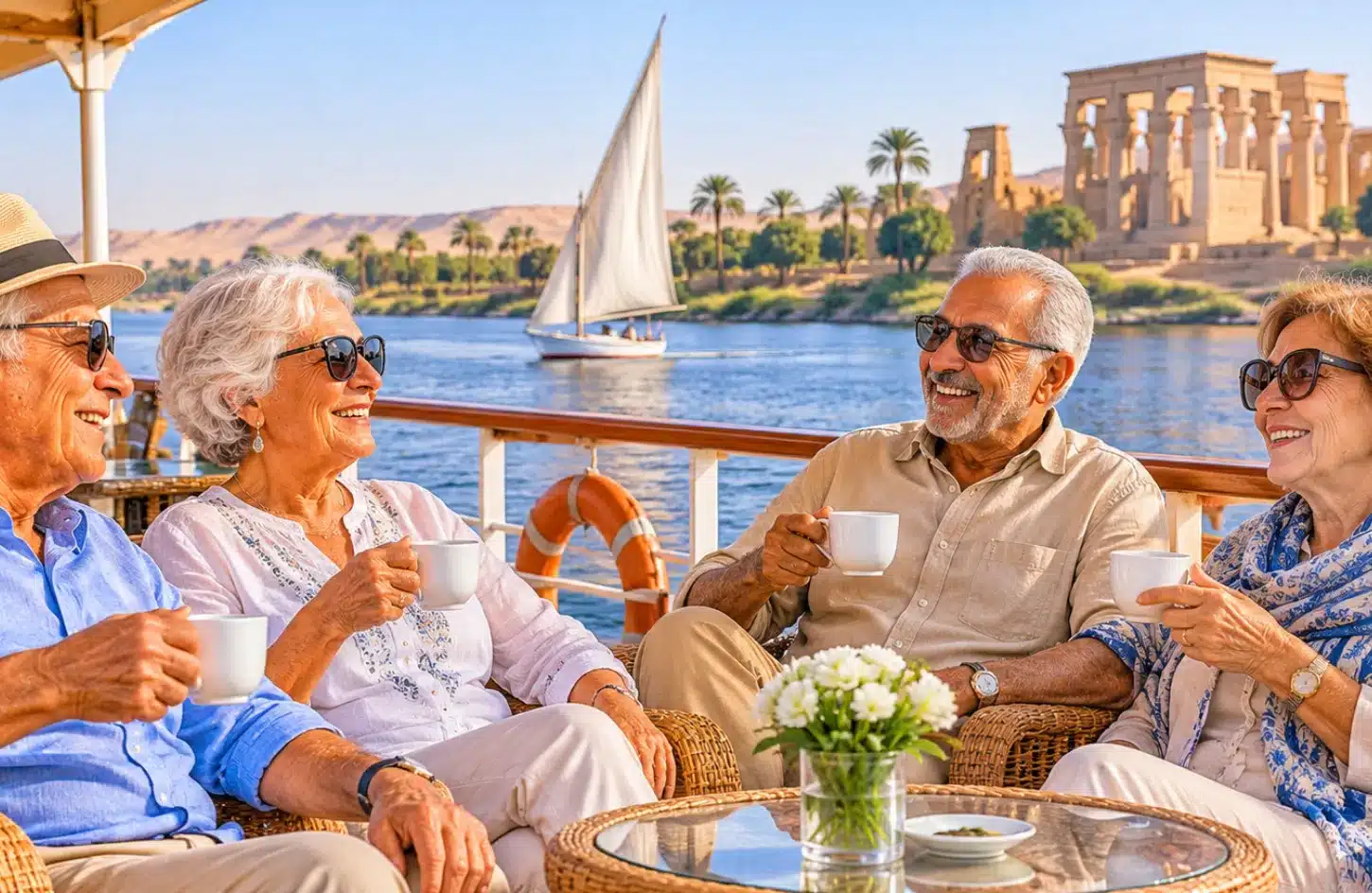
A Nile cruise is by far the best option for the mobility impaired and we’d strongly recommend it over any land based itinerary. You travel with your cabin, your dining room and your sun deck so there’s no repacking, no changing hotels every night and no long transfers between sites. The excursions are short and you can of course skip any one stop and just rest on board while the rest of the group go ashore.
Two practical points. Firstly ships are frequently berthed side by side so you may well have to cross the lobbies of adjacent ships to get to the quay. Find out how boarding works and whether a member of the crew will be on hand to help. Secondly there is a great deal of variation in terms of accessibility from ship to ship: some will have lifts, some will have accessible cabins and some will have very steep gangways. The Dahabiyas in particular are generally not the most accessible.
2. Grand Grand Egyptian Museum (Effort: Easy)
The Grand Grand Egyptian Museum is a modern, air-conditioned, purpose-built museum and is by far the most comfortable of the major sights. It’s designed for the very large crowd and has vast halls, ramps and lifts. It houses the full Tutankhamun collection. The size of it is the issue really as it’s large enough to take several hours on foot so if you’re prone to tiring quickly then do ask for a wheelchair on arrival and plan in a seated break and a meal. Best to go in the morning when it’s quieter.
3. The Pyramids and Sphinx from a Viewpoint (Effort: Easy)
You do not have to walk the plateau to see the Pyramids. The panorama viewpoint gives the classic view of all three, and a car or the electric shuttle buses reported inside the plateau can take you from stop to stop. Check current arrangements with your operator, because access on the plateau has been changing. Plan around early morning to avoid heat and crowds.
The plateau is all sand and gravel so wheelchairs and rollators find it very difficult indeed and a helper makes a huge difference. The interior of the Great Pyramid with its steep, low passages is not at all suitable for people with limited mobility.
4. Luxor Temple (Effort: Easy to Moderate)
Luxor Temple is small and is in the middle of the city so the walk is very short and your vehicle is right up to the door. The paths are mostly flat with some uneven stone. It’s absolutely lovely at sunset and in the evening when it’s lit up and the temperature has dropped. One of the most pleasant things to do in Egypt in the evening.
5. Karnak Temple, Shortened (Effort: Moderate)
Karnak is massive but you don’t necessarily have to walk the whole thing. A good guide will take you on a much shorter route from the entrance to the Great Hypostyle Hall (the main attraction and the highlight) which is pretty much level and then return. Take breaks, bring water and a hat and use a wheelchair or seat if the full length is too much. Go early or late as there’s very little shade.
6. Temple of Hatshepsut (Effort: Moderate)
Hatshepsut Temple has three terraces connected by long ramps and there is a shuttle from the entrance to the base of the temple so it’s actually quite manageable compared to most of the sites on the West Bank. The surfaces are all stone and the ramps are quite long so wheelchair users will definitely want a helper. Go early, before the heat and the crowds.
7. Edfu Temple (Effort: Easy)
Edfu is one of the best preserved temples in Egypt and one of the easiest to get to. It’s very flat and the interior is partially roofed and shaded. The cruise passengers generally get there by horse-drawn carriage from the pier (which is a bit of a bumpy ride but it’s a very short one). It’s a good option if you’re only doing one temple that day.
8. Kom Ombo Temple (Effort: Easy to Moderate)
A very short approach from the pier, a compact double temple and a riverside setting. There’s a ramp and some steps from the quay so be sure to check the access on the day. A number of cruises call here at sunset which is undoubtedly the best light.
9. Philae Temple (Effort: Moderate)
Philae is on an island and is accessed by a very short motorboat ride so the main bit of difficulty is actually getting on the boat (you need to be able to get a good footing or have some assistance to get down into it). The paths on the island are short but very uneven stone. It’s quite worthwhile for most people who can cope with the boat.
10. Abu Simbel (Effort: Moderate, but a Long Day)
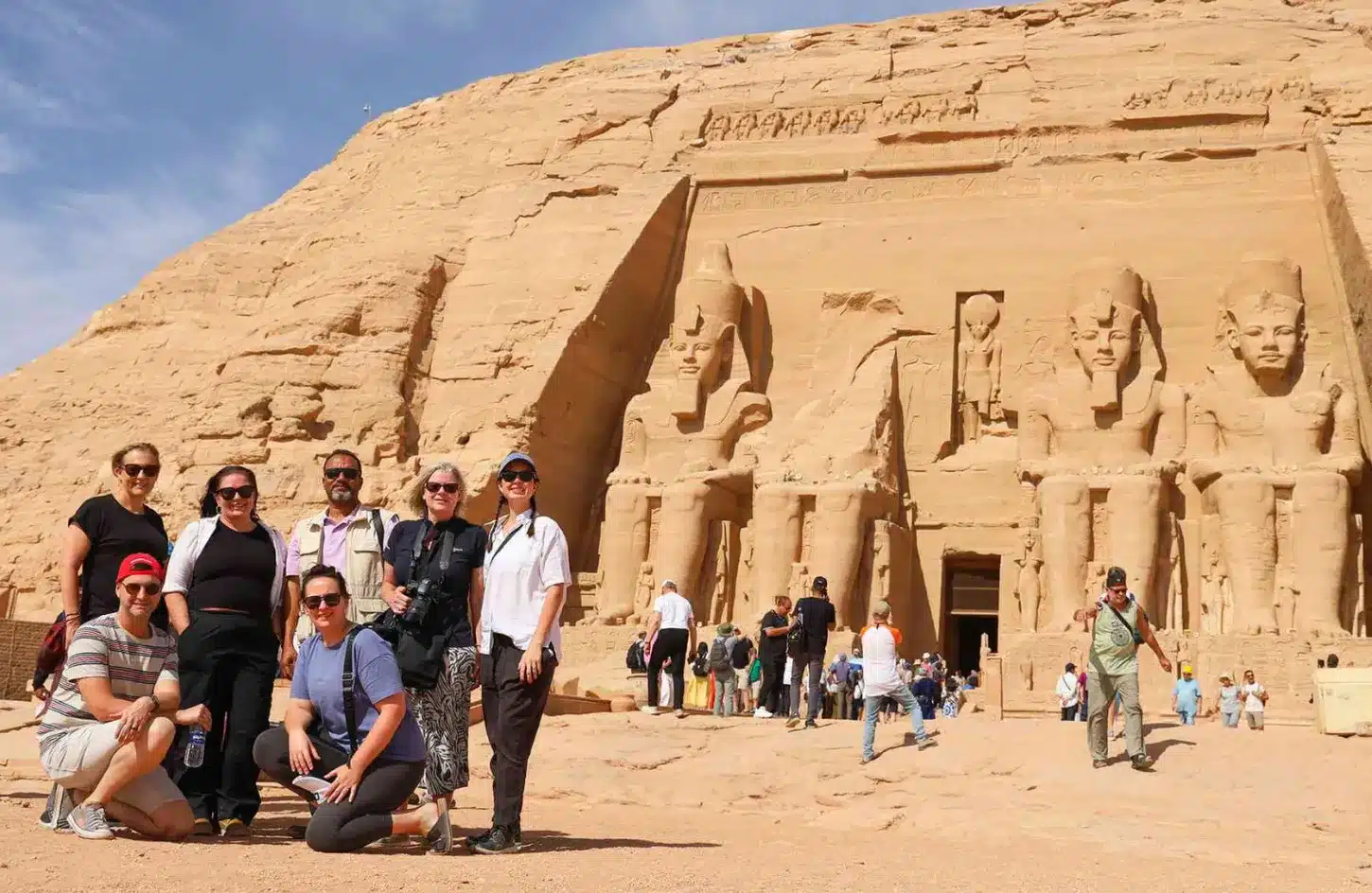
The approach to the facade is on level ground and the temple is very easy to see, but there is a walk from the entrance and no shade at all. The real effort is in getting up early. Fly rather than drive and find out if assisted transport is available at the site. For many of the older people it’s far more comfortable to spend an overnight at Abu Simbel and then visit the temple the following day than to do a dawn day trip.
11. Valley of the Kings, Selectively (Effort: Moderate to Demanding)
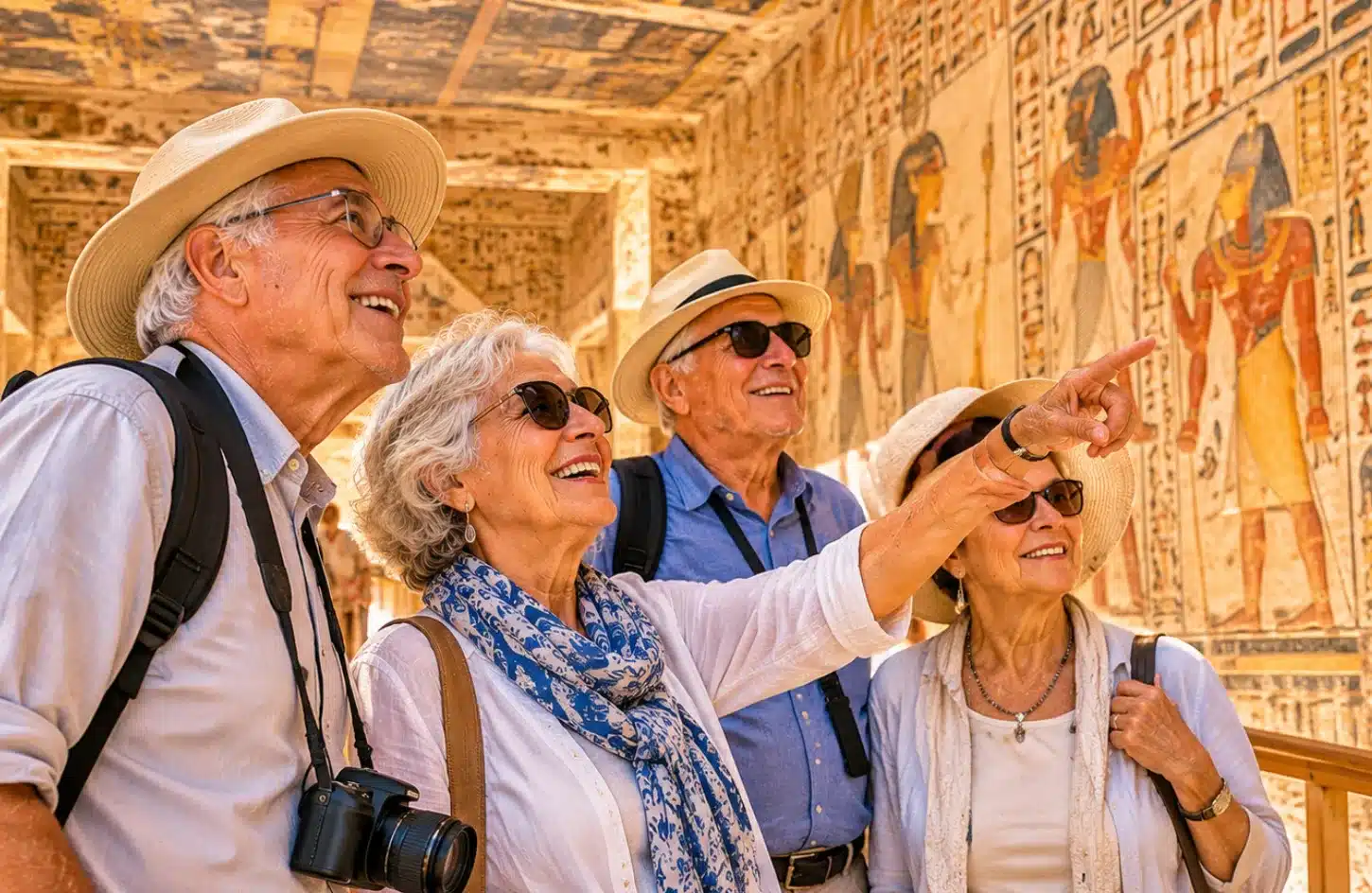
A tram runs from the visitor centre to the tomb area (which eliminates the longest walk). Valley of the Kings tombs are the real challenge in terms of effort as most have very long descending corridors and steps and the climb back out is the real effort in the warm, close air. You could pick one or two tombs with fairly short corridors and ask your guide which ones to go to. Alternatively you could just go to the valley for the setting and skip the tombs entirely. Go early.
12. A Felucca Sail and the Corniche at Aswan (Effort: Easy)
Aswan is the gentlest city on the classic route. The Corniche is flat, and a felucca sail at sunset only requires that you can step down into the boat with help. It is the sort of slow, beautiful hour that suits every pace.
Bonus: Red Sea Resort Days (Effort: Easy)
If you’re doing the Red Sea then Hurghada and Sharm El Sheikh both offer resort days with level walking, pools and glass bottom boats so you can see the reef without actually having to get in the water. A couple of easy days on the coast is a good way to finish off a trip.
Effort Ratings at a Glance
| Sight | Effort | What makes it easier | What to watch |
| Nile cruise | Easy | Hotel moves with you; skip any stop | Boarding and gangway; ship accessibility varies |
| Grand Grand Egyptian Museum | Easy | Modern, air-conditioned, lifts and ramps | Very large; allow rests and a wheelchair |
| Pyramids viewpoint | Easy | Vehicle close; classic view without walking | Sand and gravel; heat; avoid the interior |
| Luxor Temple | Easy–Moderate | Compact; evening visit is cooler | Uneven stone; some steps |
| Karnak | Moderate | Short route to the Hypostyle Hall | Distances; little shade |
| Hatshepsut | Moderate | Shuttle and ramps | Long stone ramps; sun glare |
| Edfu | Easy | Mostly level; short walk | Bumpy carriage ride |
| Kom Ombo | Easy–Moderate | Compact; short approach | Ramp and steps from the quay |
| Philae | Moderate | Short island paths | Boarding the boat; uneven stone |
| Abu Simbel | Moderate | Level approach; short visit | Early start; walk from entrance; no shade |
| Valley of the Kings | Moderate–Demanding | Tram to the tomb area | Steep corridors and steps; hot, close air |
| Aswan felucca and Corniche | Easy | Seated; flat promenade | Stepping into the boat |
What to Skip or Modify
| Activity | Why it is hard | What to do instead |
| Great Pyramid interior | Steep, low, narrow passages | See it from outside and visit the viewpoint; the Grand Grand Egyptian Museum covers the funerary story |
| Hot-air balloon over Luxor | Climbing into a high basket in the dark | Enjoy the sunrise from the Nile or your cabin balcony |
| Khan el-Khalili and Old Cairo on foot | Cobbles, crowds and narrow lanes | Enjoy a seated tea at El-Fishawy or take a short vehicle tour of Islamic Cairo |
| Citadel and Old Cairo hills | Uphill walks and steps | Choose the Grand Grand Egyptian Museum and the Nile instead |
| Tombs with long descents | Easy to go down, hard to come back up | Pick one or two shorter tombs, or visit for the setting only |
| Overnight trains and dawn flights | Tiring and hard to recover from | Use mid-day flights and keep early starts to the days you need them |
| Dahabiya sailing | Steep stairs and small decks | Choose a larger Nile cruise ship with a lift |
How to Pace a Senior-Friendly Trip
- Allow 8–10 days rather than 5–6. The extra days are rest, not more sights
- Plan 2–3 hours of sightseeing per day and one major site per half-day
- Start early to beat the heat and the crowds, then rest in the middle of the day
- Leave a free afternoon every two or three days
- Prefer a Nile cruise to a land tour with many hotel changes
- Use a private car which stops at the entrance to each site and a guide who will tailor the route to you.
- Avoid early-morning flights on consecutive days
Sample 9-Day Gentle Egypt Itinerary
| Day | Plan | Why it works |
| 1 | Arrive in Cairo; rest at the hotel | No sightseeing on arrival day |
| 2 | Grand Grand Egyptian Museum in the morning; Pyramids viewpoint in the afternoon | Indoor and air-conditioned first, outdoor viewpoint second |
| 3 | Free morning; late flight to Luxor; board the Nile cruise | Avoids an early flight; the ship becomes your base |
| 4 | Luxor West Bank: Hatshepsut Temple and a viewpoint at the Valley of the Kings; afternoon rest | One site per half-day |
| 5 | Karnak (short route) in the morning; Luxor Temple at sunset | Hypostyle Hall only, then an evening visit when it is cooler |
| 6 | Sail to Edfu: temple by carriage; relax on deck | One easy temple and a day on the river |
| 7 | Kom Ombo at sunset; arrive in Aswan; felucca sail | Short stops, then a seated sunset |
| 8 | Philae by boat; free afternoon (optional Abu Simbel flight) | Moderate morning, rest in the afternoon |
| 9 | Fly to Cairo or depart | Mid-day flight, no early start |
Best Season and Time of Day
- Best months are November to March. Daytime temperatures in Luxor and Aswan are pleasant, though it can be quite cold at dawn and in the evenings, so pack warm layers.
- Don’t go to Upper Egypt between May and September for sightseeing, as it can get over 40°C at midday, which can be a real problem for older people.
- Best time of day: early morning for the outdoor sites, rest at midday and a short evening sortie when it’s cool.
- December and January are peak season: book early, because accessible cabins and rooms sell out first
Accessibility Realities: What to Expect
- Surfaces: the vast majority of sites are uneven stone, sand and gravel. Rollators and wheelchairs find it very difficult so a helper makes a huge difference.
- Toilets: accessible toilets are very limited at a number of sites. The only sites you can be confident of having them at are modern hotels, cruise ships and the Grand Grand Egyptian Museum. Take tissues and small notes for the attendants.
- Curbs, steps and crowds: expect uneven pavements and steep curbs in cities, and crowds at the major sites
- Airports: request wheelchair assistance when you book flights, and reconfirm before you travel
- Hotel rooms: ‘accessible’ varies. Ask for photos of the bathroom, whether the shower is roll-in, and whether the room is on a lift-served floor.
- Ships: confirm the lift, the cabin and the boarding arrangements for your specific vessel
A Honest Rule Of Thumb
Egypt’s most modern destinations (the new museums, the new hotels, the bigger ships) are the most accessible and the oldest sites are the most difficult to get to. A good trip will make use of the former to offset the latter.
10 Questions to Ask Any Tour Operator
- Is the vehicle air-conditioned, and can it stop close to each site’s entrance?
- How do I get into the vehicle? Is there a step, a ramp, or a lift?
- Which of the Nile cruise ships have lifts and accessible cabins and how does the boarding work?
- Will my guide plan a shorter route and include rest stops, and will a helper be available?
- Can the itinerary include a rest afternoon every two or three days?
- Which of the hotel rooms have roll-in showers or grab bars? Can you send us some photos?
- Do you arrange airport assistance for flights?
- What if I’m unwell? Which hospitals are in the vicinity and what’s the cancellation policy?
- Can you send us some photos or videos of the sites we’ll be visiting?
- What does the price include: entrances, boat rides, wheelchairs, and a helper
An operator who answers these up to the point of saying ‘you should skip that site’ is someone you can trust. One who just says everything is fully accessible is not.
Health and Safety for Senior Travelers
- See your doctor before booking, and carry a short medical summary and a list of medicines
- Take travel insurance that covers pre-existing conditions and medical evacuation
- Bring enough medicine for the whole trip in original packaging, with a doctor’s letter
- Drink plenty of water and carry rehydration salts; heat is the main risk
- Use sun protection and a wide-brim hat, and rest in the middle of the day
- Do not drink tap water; use bottled water
For more information before your trip, read our guides on whether Egypt is safe to visit and solo female travel in Egypt.
Plan a Mobility-Friendly Egypt Trip with EgyVacations
EgyVacations is a licensed Egyptian tour operator running private tours, Nile cruises and multi-country trips with their own guides and their own vehicles. Let us know your mobility level, your dates and what’s important to you and we’ll be honest with you about which sites are actually going to work and which ones you should just skip. We’d rather say skip it than sell you something that doesn’t work.
- Private tours at your pace, with the route adjusted to you
- Nile cruises with a choice of ships, so you can pick the accessibility that suits you
- Wheelchair accessible Egypt tours
- Honeymoon, luxury and small-group trips
- Egypt Tours for Seniors Designed especially for you
Frequently Asked Questions
Is Egypt good for the elderly with limited mobility?
Yes, absolutely with the right planning. Egypt isn’t a barrier free country by any means but a Nile cruise, the GEM, Luxor Temple, Edfu and the various viewpoints of the Pyramids can all be done with very little effort. Just pick the season, the pace and the operator wisely and skip the sites that are simply too much.
What are the easiest places to go to in Egypt for the elderly?
The easiest are a Nile cruise, the Grand Grand Egyptian Museum, a viewpoint of the Pyramids, Luxor Temple, Edfu Temple and a felucca sail at Aswan. Kom Ombo, Karnak (shortened) and the Temple of Hatshepsut are all doable with a bit of pacing. The Valley of the Kings and the Great Pyramid interior are the ones that are going to be the most difficult.
Is a Nile cruise suitable for the elderly with limited mobility?
Yes it is the best format. Your cabin and dining room move with you, there’s no repacking and no long transfers and you can just rest on board whilst the others go ashore. Check the ship’s lift, the accessible cabins and the boarding arrangements as these vary. Avoid the dahabiyas as they invariably have very narrow stairs.
Can I visit the Pyramids with limited mobility?
Yes from the outside. The panorama viewpoint and a vehicle/shuttle on the plateau give you the classic view with minimal walking. The ground is sand and gravel so wheelchairs and rollators will need assistance and the interior of the Great Pyramid is not suitable for people with limited mobility.
Is the Valley of the Kings accessible?
Partly. There’s a tram from the visitor centre to the tomb area, but most of the tombs have long, steep descending corridors and steps and the climb out is quite a hike. You could pick one or two tombs with shorter corridors or just go down to the valley for the setting and skip the tombs altogether.
Can people in wheelchairs visit the Egyptian temples?
Many can, with help. Edfu, Luxor Temple and the Temple of Hatshepsut are among the more manageable, but surfaces are uneven stone, so a helper is important. Ask your operator which sites are realistic for your mobility level, and see our wheelchair-accessible Egypt tours.
What’s the best time to go to Egypt for seniors?
Nov to March (when Upper Egypt is comfortable by day), but mornings and evenings can be quite cold, so pack layers. Don’t go May to September, as midday temperatures in Luxor and Aswan can be well over 40 °C.

Written by
Yasser Shoaib
Operations Manager, EgyVacations
Yasser Shoaib is an Egyptian tour guide, travel expert, and Operations Manager at EgyVacations, with more than 15 years of experience in Egypt’s tourism industry. Specializing in cultural tours, Nile River cruises, and tailor-made travel experiences, Yasser combines operational expertise with firsthand knowledge of Egypt’s most remarkable destinations. Over the years, he has guided travelers through world-famous landmarks, including the Great Pyramid of Giza and the Valley of the Kings, offering valuable insights into Egyptian history, culture, and local travel experiences. As a content writer and travel expert, Yasser shares practical advice, insider tips, and detailed knowledge of destinations to help travelers plan memorable, seamless journeys across Egypt.