


QUICK ANSWER
Egyptian Red Sea shore is perfect for snorkeling and diving out of two resorts: Sharm el-Sheikh (Sinai Peninsula, Gulf of Aqaba) and Hurghada (Red Sea Governorate, 500 km north of Sharm). Both have the same excellent visibility of water (25–30 m and more) and biodiversity in the water. Sharm is better for divers – the wreck of SS Thistlegorm (the best wreck in the world), Ras Mohammed rocks, and Tiran Island. Hurghada is good for families and novices – Giftun Island and Dolphin House. Day tour prices for snorkeling cost $35–60 USD; for diving – $70–120 USD. Best time is March-May and September-November.
Yasser Shoaib, registered Egyptian guide and Egypt tour expert at Egy Vacations, has been arranging Red Sea tours from both Sharm El-Sheikh and Hurghada for more than fifteen years. “What people outside Egypt generally do wrong,” he says, “is compare the two destinations not by what underwater world they want to explore but by its cost and availability. Sharm and Hurghada have their own waters with distinct features. And here you’ll find out more about each one.”
Sharm El-Sheikh vs Hurghada: Which Should You Choose?
| Factor | Sharm El-Sheikh | Hurghada |
|---|---|---|
| Best for | Serious divers; wreck diving; advanced certification | Families; beginners; budget travelers; combining with Nile or Cairo |
| Signature site | SS Thistlegorm (world’s best wreck dive) | Giftun Island National Park + Dolphin House |
| Water type | Gulf of Aqaba — deeper, colder, stronger currents, higher visibility | Red Sea — slightly warmer, calmer, shallower reefs |
| Visibility | 25–35+ metres | 25–30 metres |
| Water temperature | 22–28°C (cooler in winter) | 23–29°C (slightly warmer year-round) |
| Coral health | Exceptional — Ras Mohammed among most protected reefs on Earth | Very good — Giftun National Park protected; some resort areas affected |
| Crowd level at reefs | Moderate — less European package tourism | Higher — major European charter destination; more crowded at popular sites |
| Access from Nile or Cairo | Direct flights from Cairo (1h); no direct connection from Luxor/Aswan | Direct flights from Cairo (1h); 1h flight or day-trip drive from Luxor |
| Dive certification needed | Open Water for most sites; Advanced for Thistlegorm deep | Open Water for most; some excellent beginner/intro sites |
| Best for families | Good (White Island, Naama Bay) — but less resort infrastructure than Hurghada | Excellent — calmer water, family-friendly island tours, Dolphin House |
| Price level | Generally slightly higher | Slightly lower — more competition between operators |
★ THE HONEST CHOICE IN ONE SENTENCE
Select Sharm El-Sheikh for a dive destination that includes quality of the diving and the wreck of the SS Thistlegorm. Select Hurghada for an Egypt holiday that includes Luxor and Nile tour, family travel plans or best suited to beginners. When planning an Egypt holiday to include Cairo and the Nile, then the best choice to follow on from there would be Hurghada.
Why the Red Sea — The Numbers That Matter
| Stat | Detail |
|---|---|
| Water visibility | 25–35 metres (among the highest in the world) |
| Water temperature | 22–29°C year-round — warm enough for snorkeling without a wetsuit in summer |
| Marine species | 1,000+ documented Red Sea species; 17% found nowhere else on Earth |
| Coral health | Red Sea corals among the world’s most bleach-resistant — high salinity and unique thermal tolerance |
| UNESCO protection | Ras Mohammed National Park (Sharm) + Giftun National Park (Hurghada) |
| Wetsuit requirement | 3mm shorty (summer); 5mm full (Oct–Apr); 7mm for extended winter dives |
| Certification required? | No for snorkeling or intro dives; Open Water minimum for standard diving |
| Best overall season | March–May and September–November (calm seas, warm water, good visibility) |
Snorkeling vs Diving: Which Is Right for You?
| Your Profile | Best Option | Recommended Sites |
|---|---|---|
| Non-swimmer or nervous in water | Glass-bottom boat (both resorts) | Naama Bay (Sharm); Hurghada Bay glass-bottom boats |
| Basic swimmer, first-time snorkeler | Guided snorkeling tour (calm sites) | White Island (Sharm); Mahmya Island or Giftun (Hurghada) |
| Comfortable swimmer, no dive cert | Snorkeling day boat to best reefs | Ras Mohammed (Sharm); Giftun Island + Orange Bay (Hurghada) |
| Want to swim with dolphins | Guided snorkeling (Hurghada only) | Dolphin House / Sha’ab El Erg (Hurghada) — wild spinner dolphins |
| First-time diver (no cert) | Intro dive (Discover Scuba — both resorts) | Ras Mohammed (Sharm); Giftun reefs (Hurghada) |
| Open Water certified | Day dive boat (both resorts) | Jackson Reef, Ras Mohammed (Sharm); Abu Nuhas wrecks (Hurghada) |
| Advanced / technical diver | Liveaboard or specialty day trip | SS Thistlegorm + Blue Hole (Sharm); Sha’ab Abu Nuhas + offshore (Hurghada) |
Sharm El-Sheikh
Sharm El-Sheikh is located at the southern part of the Sinai Peninsula where the Gulf of Aqaba and the Red Sea come together. The unique underwater setting has been brought about by the coming together of two different marine currents providing the nutrients required for one of the most productive reef ecosystems in the world with visibility of up to 30 metres.
Top Snorkeling Sites — Sharm El-Sheikh
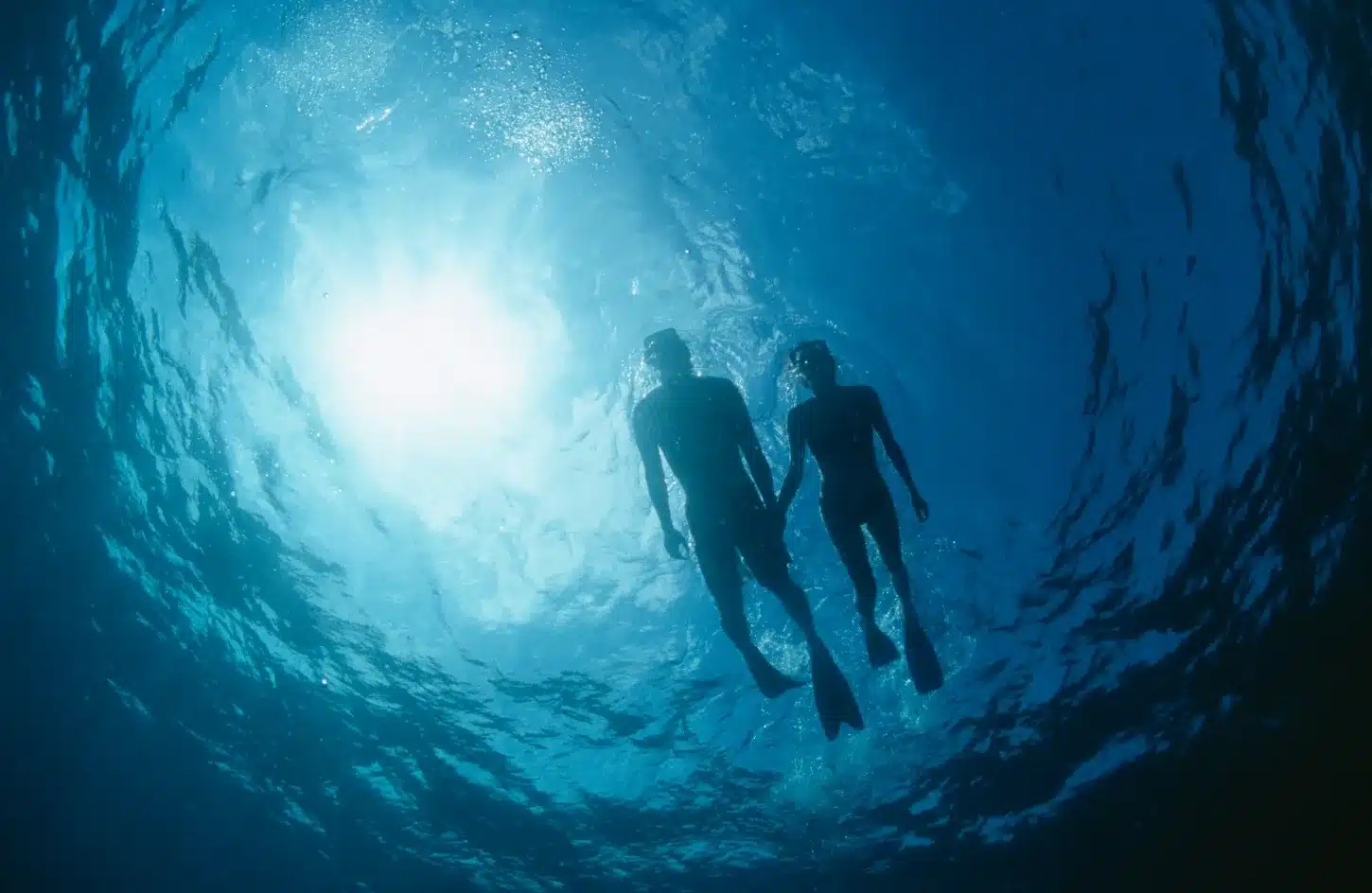
1- Ras Mohammed National Park
First marine national park of Egypt and the most renowned site for snorkeling and scuba diving in the Red Sea. The Shark and Yolanda Reef plateau forms a relatively shallow (2–8 metres) zone of coral garden where various reef fish, sea turtles, barracudas, and sometimes even sharks can be observed. The world-famous Yolanda Reef is named after a Cypriot freighter that was sunk in 1980 and whose load of bathroom fixtures lying around the bottom of the reef form one of the most bizarre scenes of diving.
- Best for: Intermediate snorkelers comfortable in open water
- Cost: $45–70 USD per person including equipment, lunch, guide
- Access: 1–1.5 hour boat from Sharm marina
★ YASSER’S VERDICT
The benchmark Red Sea snorkeling site. Marine life density and coral health here surpass any shore-accessible site on either coast.
2- Tiran Island – Four Reefs
Island of Tiran is located 10 km to the northeast of Sharm and is encircled by four reefs namely, Jackson, Thomas, Woodhouse and Gordon. This full day tour will visit 2-3 reefs, with a seafood lunch served onboard. Visibility of water around Tiran is normally more than 30 meters.
⚠️ TIRAN ISLAND STATUS 2026
Transfer of Tiran Island to Saudi Arabia occurred in 2017. In 2026, day boat trips to the island from Sharm will be ongoing without any hindrance. Please check with your operator before booking the tours.
- Best for: All levels — choose reef stop by experience (Thomas = calm; Jackson = current)
- Cost: $50–80 USD per person including equipment, lunch
3- White Island
A shallow, crescent-shaped sandbar near Ras Mohammed with turquoise water so clear it is consistently described as ‘the Egyptian Maldives.’ Ideal for beginners and families. Usually a second stop on Ras Mohammed day tours.
- Best for: Beginners, families, photography
4- Shore Snorkeling in Sharm
- Ras Nasrani: Natural reef 15 km north; best in the morning before wind; intermediate
- Ras Um Sid: South of Old Town; strong currents in sections; assess before entering
- Naama Bay: Central; calm; best for complete beginners; coral less impressive than offshore
Top Diving Sites — Sharm El-Sheikh
1- SS Thistlegorm — The World’s Greatest Wreck Dive
A cargo vessel from Britain during World War II that was sunk by German air raids on 26th October 1941 at a depth of 16 to 32 metres. The holds are packed with locomotives, motorbikes, trucks, rifles, and field guns which have been perfectly preserved due to the saline nature of the Red Sea.
- Depth: 16–32 metres | Cert: Open Water minimum; Advanced recommended
- Access: 3–4 hour boat from Sharm; best as 2-night liveaboard
- Cost: Day trip $120–160 USD; liveaboard from $250–400 USD (2 nights)
★ NON-NEGOTIABLE FOR CERTIFIED DIVERS
Book the liveaboard format — you get the wreck at dawn and dusk before the day-trip crowds, and multiple dives across 2–3 days.
2- Ras Mohammed Walls
The Shark and Yolanda Reef Walls descend from 5 meters to over 100 meters, making it one of the world’s most amazing wall dive sites. Covered in soft coral sea fans, gorgonians, hard corals, and schools of jacks, barracudas, and grey reef sharks in the blue. Drift diving at the tip of the park requires an intermediate/advanced level of skills.
- Depth: 5–60+ metres | Best: Advanced for drift conditions
3- Blue Hole — Dahab (90 min from Sharm)
The Blue Hole is situated 90 kilometers north of Sharm via road route; it’s an underwater sink hole that drops to a depth of 130 meters vertically into the ocean. The Blue Hole features a shallow lagoon for snorkelers and also features the world famous Arch, which is 55 meters deep.
⚠️ BLUE HOLE SAFETY
The Blue Hole has an estimated 130–200 diver fatalities on record. The lagoon and rim (0–15m) are safe for snorkelers. The Arch at 55m should only be attempted by technical divers with nitrox or trimix. This is not a caution — it is a firm guideline.
4- Jackson Reef & Thomas Reef (Tiran Strait)
Jackson Reef descends to over 200 meters with huge sea fans and barracuda groups. Hammerhead sharks can be seen in the winter season (November – March) in the morning. Thomas Reef is more serene and suitable for OW level divers.
- Best season for hammerheads: November–March at Jackson Reef
5- The Canyon — Naama Bay
Accessible from central Naama Bay in 2 minutes by boat. A canyon from 5–55 metres with soft coral walls, glassfish, lionfish, and moray eels. One of Sharm’s best night dive sites — resident octopus and moray activity after dark.
- Best for: All certified levels; excellent night dive; convenient location
Hurghada
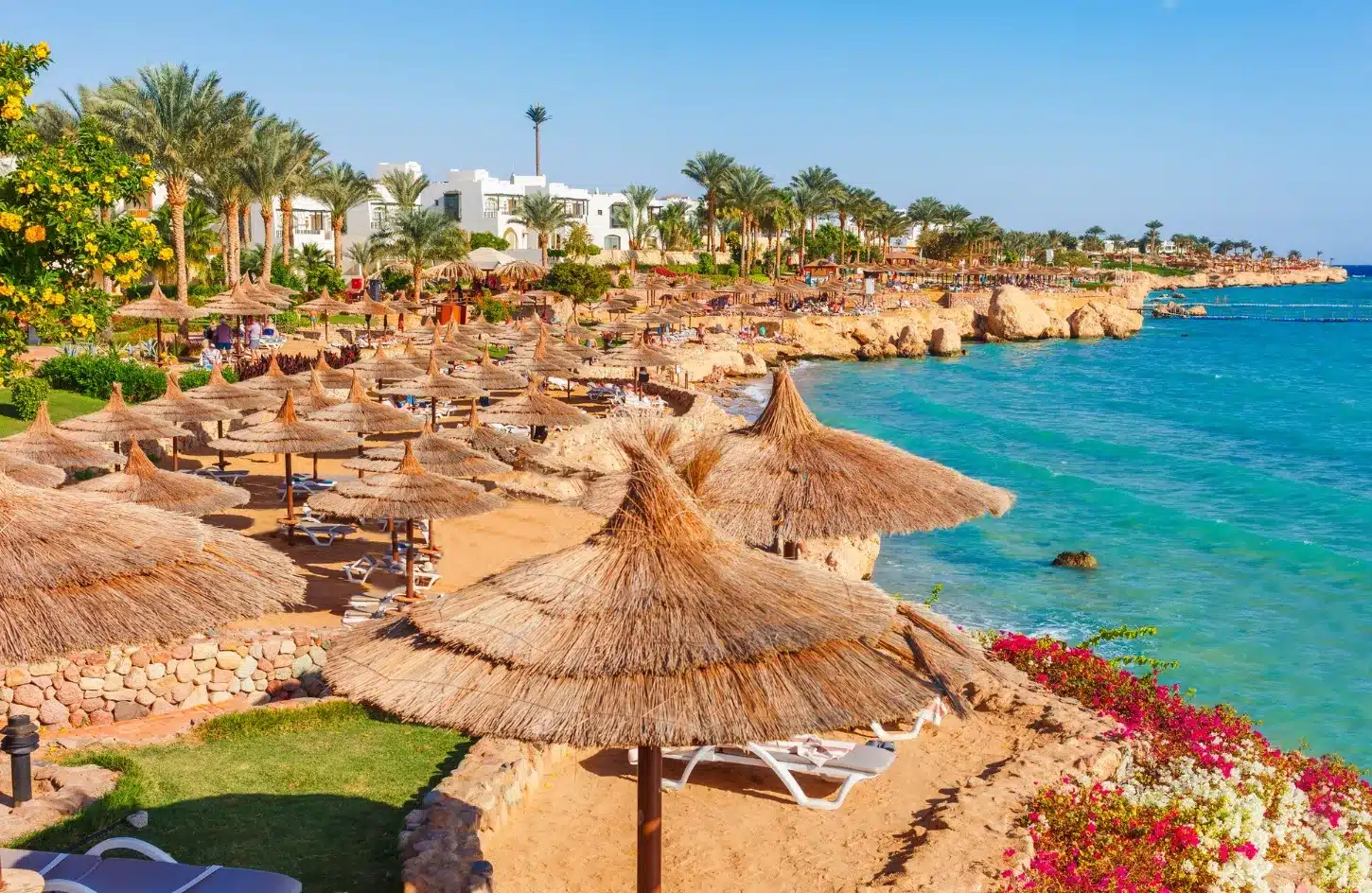
Hurghada is located along the mainland coast of the Red Sea of Egypt, located 500 km north of Sharm El-Sheikh, and approximately 65 km away from Luxor, through the Eastern Desert. What started out as a small fishing community is now the largest resort town of the Red Sea in Egypt and the most accessible one for those combining a beach holiday with visits to the Nile River or Cairo.
The undersea ecosystem in Hurghada is somewhat different from that of Sharm – the water is somewhat warmer, the currents are calmer, making it easier for beginners, and although the reef system is fantastic, it has endured some pressure due to the bigger number of resorts built here rather than the pristine waters of Ras Mohammed.
Top Snorkeling Sites — Hurghada
1- Giftun Island National Park — The Flagship
Giftun Island and the nearby Mahmya Island make up the main attraction for marine tourism in Hurghada. The designation of Giftun National Park as a protected area was made to safeguard the reef systems impacted by resort building on the mainland. This includes Giftun Island, Mahmya Island, Orange Bay, and Paradise Island – all of which can be reached on day boats from the Hurghada Marina.
Mahmya Island (‘Egyptian Maldives’) is the island most frequently photographed, featuring a wooden walkway leading down to a clean beach surrounded by shallow turquoise waters with beautiful coral gardens at depths of 2–5 metres. The Orange Bay provides a similar setting on the other side of Giftun Island. Both areas are great places for beginners and families, offering protected conditions from swells and easy access to coral gardens.
- Best for: All levels — Mahmya for complete beginners; outer reefs for intermediate
- Cost: $50–80 USD per person including equipment, lunch, snorkeling guide
- Access: 45–60 min boat from Hurghada marina
★ YASSER’S VERDICT: GIFTUN ISLAND
The most family-friendly snorkeling destination on the Egyptian Red Sea coast. Mahmya’s calm lagoon and the outer Giftun reefs together cover every level from non-swimmer to strong snorkeler in a single day-trip format.
2- Dolphin House (Sha’ab El Erg) — The Signature Hurghada Experience
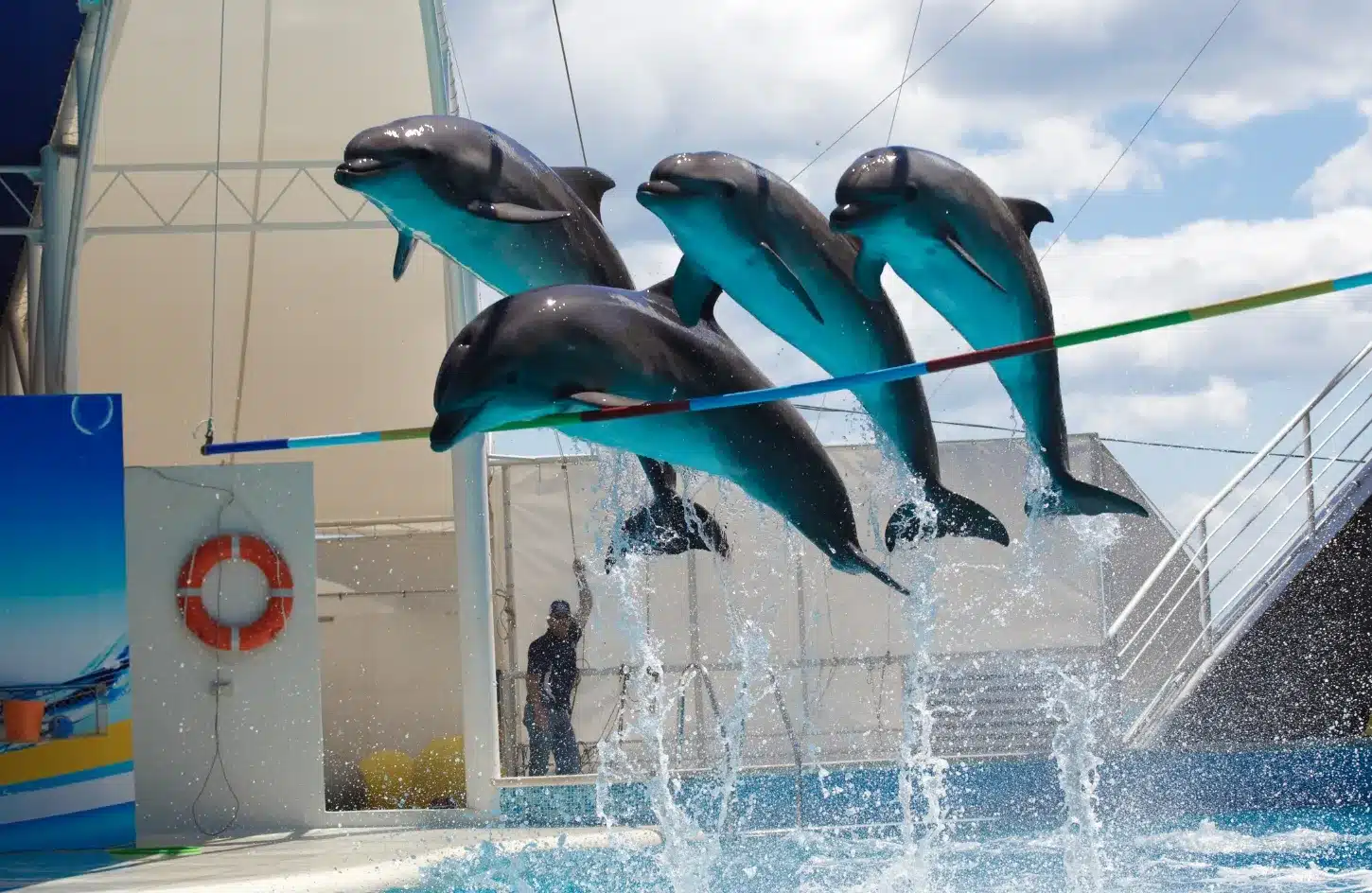
Dolphin House, alternatively named Sha’ab El Erg, is a series of reef systems that lie about 25km off Hurghada and which serve as a home to a pod of spinner dolphins that resides in the reefs. While the dolphins in aquariums or swim-with-dolphin programs are there on account of conditioning by humans through the feeding and training process, Dolphin House is a natural habitat for the spinner dolphins. The operators take time to approach the reefs at a relaxed pace while giving the clients the opportunity to enter the water gently and wait for the dolphins to approach them.
Spinner dolphins are very friendly and interactive when comfortable, and one of the most spectacular wildlife experiences one can have in the Red Sea is having a morning experience with the dolphins at Dolphin House where a pod of 20-50 dolphins surrounds the snorkelers. Spinner dolphins are very friendly and interactive when comfortable, and one of the most spectacular wildlife experiences one can have in the Red Sea is having a morning experience with the dolphins at Dolphin House where a pod of 20-50 dolphins surrounds the snorkelers.
- Best for: All snorkeling levels; exceptional for families and wildlife photographers
- Best time: Early morning (8:00–10:00 AM) — dolphins most active at surface before heat builds
- Cost: $45–70 USD per person including equipment, lunch, guide
- Responsible practice: Choose operators who approach slowly, limit time in water, and never feed dolphins
💡 DOLPHIN ENCOUNTER EXPECTATIONS
Dolphins in the wild are never a guarantee for any one day, as they could be feeding further out or simply resting somewhere else near the reef. A good tour guide will tell you this. If an operator guarantees dolphins, he is either using a semi-captive program or lying to you. At Dolphin House, it should be a high possibility rather than a guarantee — and the reef makes great snorkeling even without dolphins!
3- Abu Ramada Reef (‘The Aquarium’)
The island of Abu Ramada, together with its adjacent reef known as “The Aquarium” due to a rich collection of fish species, is the best snorkelling destination in Hurghada, always being suggested by divers. The depth of the reef varies between 1 and 8 meters; sometimes the visibility even exceeds 25 meters near the water surface. The schooling fish can be seen there: surgeonfish, parrotfish, triggerfish, and even turtles eating from sea grass areas behind the island.
Abu Ramada is a place less exposed than Giftun outer reefs and is also often part of the Dolphin House tour, which includes seeing dolphins and snorkelling at Abu Ramada in the early afternoon after the morning encounter.
- Best for: Intermediate snorkelers; often combined with Dolphin House as a day trip
- Cost: Usually included in Dolphin House day tour ($45–70 USD)
4- Orange Island (Sha’ab Abu Hashish)
Orange Island is a small sandy island, located about 15 km north of Hurghada, which has been encircled by a system of shallow reefs recently incorporated into the Hurghada National Park expansion. Coral reefs are in great condition, being well protected from boat traffic seen at other more central locations. This location is particularly suitable for observing soft corals and moray eels that live in crevices of the reef.
- Best for: Intermediate snorkelers looking for a quieter alternative to Giftun
- Cost: $40–60 USD per person
5- Sharm El Naga (Shore Snorkeling)
Sharm El Naga is an enclosed bay 25 kilometers south of Hurghada where the coral reef is reachable right off the beach; no boats are needed to access it. The bay is very quiet; the reef begins from 1-meter depth; the marine life – parrotfish, butterflyfish, Moorish idols, and reef sharks (found at depths of 8-12 meters) – is very good for a shore diving site. Access is controlled – entrance fee is charged – and this is a beach resort-like place that does not have reef crowds like those on resort beaches.
- Best for: Shore snorkeling; no-boat access; good for independent travelers
- Cost: ~EGP 150–200 entry; equipment rental on site
- Access: Taxi from Hurghada ($15–20 USD return); 25 km south
Top Diving Sites — Hurghada
1- Sha’ab Abu Nuhas — The Ships Graveyard
- Giannis D (sunken 1983): Most photographed and the most famous – a Greek freighter that has been capsized and is lying on one side at depths of 24-28 metres; completely covered with soft coral
- Carnatic (sunken 1869): Oldest wreck at 27 metres; a 19th century paddle steamer of the P&O company; Victorian era engineering evident beneath the layers of coral
- Chrisoula K (sunken 1981): Shallowest part at 18 metres; tiles from the cargo of this ship are found on the reef
- Kimon M (sunken 1978): Deepest part at 30 metres; least frequented among the other wrecks; great for marine life encounters
★ YASSER’S VERDICT: SHA’AB ABU NUHAS
Four wrecks in one day cannot be realistically done; select the Giannis D for the centerpiece and the Carnatic wreck if possible. The soft corals on the Giannis D wreck are fantastic, and the holds remain open to divers of Open Water certification without incurring the delay associated with the SS Thistlegorm wreck.
- Depth: 18–30 metres | Cert: Open Water sufficient for main sections
- Access: Day boat from Hurghada (2–3 hours) or liveaboard
- Cost: Day trip $90–140 USD; liveaboard from $200–350 USD
2- Giftun Island Outer Walls
While diving the Giftun National Park snorkel reefs, the outer edges of Giftun Island extend from a depth of 8 meters down to depths of more than 50 meters, making up the coral wall dive for Open Water divers and featuring lots of fish along with the rare napoleon wrasses, who are becoming uncommon on the heavily visited spots. The parts of the wall that face the Red Sea currents are home to pelagic species and their food source.
- Depth: 8–50+ metres | Cert: Open Water for upper sections; Advanced for deeper
3- Fanadir Reef
Fanadir consists of a series of reefs north of Hurghada renowned for their populations of morays, nudibranchs, and macro organisms, making it a top choice among underwater photographers. Fanadir is a reef that rises to 12–25 meters deep with currents that form thermoclines and increase visibility to more than 30 meters. Not as impressive as Abu Nuhas but consistently interesting for divers who enjoy reef studies rather than spectacle.
- Depth: 12–30 metres | Cert: Open Water
4- Marsa Abu Galawa
Corals at a horseshoe shaped lagoon to the north of Hurghada 20km — this being one of the easiest dive sites for beginners at Hurghada but with plenty of corals and fishes. A sunken ship (MV Salem Express) is located close to this lagoon at 30 metres depth — it is a complex wreck dive and one should handle it with care as it is a war grave dating back to a ferry accident in 1991.
- Depth: 5–30 metres | Cert: Open Water for lagoon sections
5- Makadi Bay & Soma Bay (South Hurghada)
For tourists residing in the luxurious resorts 30-45 km south of central Hurghada – Makadi Bay, Soma Bay and Sahl Hasheesh – there is a fantastic choice of house reefs available locally that provide fantastic house reefs for diving, equal to those of central Hurghada. The Soma Bay reefs drop off from 3 meters right from the shore, offering one of the finest shore diving arrangements in Egypt.
- Best for: Guests at south Hurghada resorts; excellent shore diving
Types of Tours Available — Both Resorts
| Tour Type | Duration | Best For | Cost (approx.) |
|---|---|---|---|
| Day snorkeling boat | 6–8 hours | Beginners, families, non-divers — 2-3 reef stops, lunch included | $40–80 USD/person |
| Glass-bottom boat | 2–3 hours | Non-swimmers, young children, elderly | $20–35 USD/person |
| Dolphin House tour (Hurghada only) | 6–7 hours | Families, wildlife lovers — wild dolphin encounter + reef snorkeling | $45–70 USD/person |
| Private speedboat charter | 4–6 hours | Couples, small groups — flexible stops, no crowds | $200–400 USD/boat |
| Intro dive (Discover Scuba) | Half day | First-timers wanting diving experience — no cert required; max 12m | $60–90 USD/person |
| Certified diver day boat | Full day | 2 dives at main reef sites — equipment included | $70–120 USD/person |
| Abu Nuhas wrecks day (Hurghada) | Full day | Certified divers — Giannis D + Carnatic; 2–3 hour boat transit | $90–140 USD/person |
| Thistlegorm day trip (Sharm) | Full day (long) | Certified divers — 2 dives on the WWII wreck; long transit | $120–160 USD/person |
| Liveaboard (2–7 nights) | Multi-day | Serious divers — remote sites, multiple daily dives | $250–600 USD/night |
| PADI Open Water Course | 3–4 days | Full beginner certification — both resorts | $350–500 USD |
Practical Information for 2026
Water Temperature & Wetsuit Guide
| Month | Sharm Water Temp | Hurghada Water Temp | Wetsuit |
|---|---|---|---|
| January–February | 22–23°C | 23–24°C | 7mm full (diving); 5mm (snorkeling) |
| March–April | 23–25°C | 24–26°C | 5mm full (diving); 3mm (snorkeling) |
| May–June | 26–28°C | 27–28°C | 3mm shorty optional; rash guard (snorkeling) |
| July–September | 28–29°C | 28–29°C | Rash guard only; wetsuit optional |
| October–November | 26–28°C | 27–28°C | 3mm full (diving); rash guard (snorkeling) |
| December | 23–25°C | 24–25°C | 5mm full (diving); 3mm (snorkeling) |
💡 REEF-SAFE SUNSCREEN — MANDATORY
Chemical sunscreens like oxybenzone and octinoxate are harmful to the coral reefs and not allowed at Ras Mohammed National Park and Giftun National Park. You can use sunscreen containing zinc oxide or titanium dioxide (SPF 30+) or UV-protective rash guards that are the most effective and environmentally friendly means of protection. Apply it before going out of your hotel. Both resorts provide reef-safe sunscreen.
| Season | Sharm El-Sheikh | Hurghada |
|---|---|---|
| March–May | Excellent — 23-26°C water, 25-30m visibility, fewer crowds | Excellent — warm water, calm seas, good visibility |
| June–August | Good — warmest water 28-29°C; hot above water (38-42°C) | Good — warm water; very hot air; lower prices; fewer Europeans |
| September–November | Best overall — 26-28°C water, peak visibility, manageable crowds | Best overall — warmest comfortable water, strong visibility, ideal conditions |
| December–February | Peak season — good visibility, coldest water (22-23°C), most crowded | Peak season — slightly warmer than Sharm, busy with European winter packages |
Combining Red Sea with Your Egypt Vacation
Cairo + Red Sea (3–5 days)
Best Egypt Combo Tour: 2 Days/2 Nights Cairo (Egyptian Pyramids & Grand Egyptian Museum) + 2–3 days either in Hurghada or Sharm El Sheikh. Both destinations have direct flights from Cairo Airport (approx. 1 hr flight). Hurghada is slightly easier to reach on Cairo tour as there is a regular flight connection and also to Luxor.
Nile Cruise + Red Sea Extension
The Egy Vacations program most favored by tourists: 8 days of Cairo (2 nights), 4 days cruise along the Nile from Luxor to Aswan and 2-3 days in Hurghada/Sharm el Sheikh. The Hurghada leg fits very well into the itinerary, following the Nile cruise ending in Aswan – a 1-hour flight from Aswan to Hurghada (with transfer in Cairo) or overland route through the Eastern Desert from Luxor.
The logic behind this sequence of programs is as follows: monuments of Ancient Egypt in the first week and undersea life of the Red Sea in the second week.
Sharm El-Sheikh + Dahab Day Trip
Dahab, located 90 km to the north of Sharm, is a laid-back dive resort town renowned for the Blue Hole and freediving. Include in your itinerary for Sharm an excursion to Dahab ($40 – $60 USD depending on transportation included) for Blue Hole snorkeling and the beachside cafe ambiance.
💡 EGY VACATIONS RECOMMENDATION
First-time Red Sea travelers on Nile extension: our suggestion is Hurghada for 3 days (Day 1: Giftun Island + Mahmya snorkeling; Day 2: Dolphin House + Abu Ramada; Day 3: Abu Nuhas wrecks for certified divers or more island snorkeling for non-divers). For serious diving in combination with Nile: Sharm El-Sheikh with Thistlegorm liveaboard is the top choice. Contact us to book your trip according to your schedule.
FAQs: Snorkeling and Diving in Sharm El-Sheikh & Hurghada
Which is better for snorkeling — Sharm El-Sheikh or Hurghada?
Both places are good, but in different ways. Sharm el Sheikh is a better option for experienced snorkeling to famous reefs such as Shark Reef and Yolanda Reefs in Ras Mohammed National Park – the most diverse and best-visibility snorkeling in the Red Sea. Hurghada is a better option for families and novices due to calm waters, beginner-friendly tours and unique Dolphin House encounters (wild spinner dolphins). If you add a Nile cruise or Luxor visit, the geographical advantage of Hurghada is obvious.
What is Dolphin House in Hurghada?
Dolphin House (official name is Sha’ab El Erg) is a shallow reef, 25 km north of Hurghada which is home for wild pod of spinner dolphins permanently. In contrast to managed dolphin swimming, it is an encounter in the natural habitat of these friendly creatures. Morning tours (8:00 – 10:00 AM) give the highest chances of successful encounters. It is impossible to give any guarantees regarding wild animals, and good tour operators will be clear about it. But the reef itself is a wonderful place for snorkeling.
What is Sha’ab Abu Nuhas (Ships Graveyard) in Hurghada?
The Sha’ab Abu Nuhas is a reef that is located 70 km to the north of Hurghada. It is also referred to as the ‘Ships Graveyard’ because it has sunk four cargo ships, namely the Giannis D (1983), Carnatic (1869), Chrisoula K (1981) and Kimon M (1978). The four ships are situated between 18 and 30 metres below water and can be visited by those who have Open Water certification. The Giannis D is the most popular wreck: it is a Greek cargo ship covered with soft coral.
Is the SS Thistlegorm accessible from Hurghada?
Yes, technically, but only on a long (4-5 hour one way) trip or liveaboard basis. The Thistlegorm wreck is 100+ km NW of Hurghada and 100 km NW of Sharm; either one-way trip is roughly equivalent from either resort. However, the liveaboard industry that targets the Thistlegorm wreck out of Sharm is far more well-developed and cheaper. If the Thistlegorm wreck is your destination, you should be based in Sharm El Sheikh.
Can I snorkel in Hurghada without a boat?
Yes, snorkeling from the shore can be done in Sharm El Naga (25km south of Hurghada center) where corals start at 1 meter depth. Some hotels in Hurghada have house reefs which can be reached from the beach or jetty. However, the snorkeling sites of Hurghada (Giftun Island, Mahmya, Dolphin House, Abu Ramada) are only accessible by boat (45-60 min boat ride from the marina).
What certification do I need for diving in Hurghada and Sharm?
For snorkeling and intro dives (Discover Scuba): no certification required. For joining standard dive boats: PADI Open Water (or equivalent SSI, CMAS, NAUI) is the minimum. Advanced certification is recommended for Sha’ab Abu Nuhas deeper sections (Hurghada) and the SS Thistlegorm’s lower holds (Sharm). The Blue Hole Arch (Dahab, near Sharm) should only be attempted by technical divers with appropriate gas mixes — not an Open Water site.
